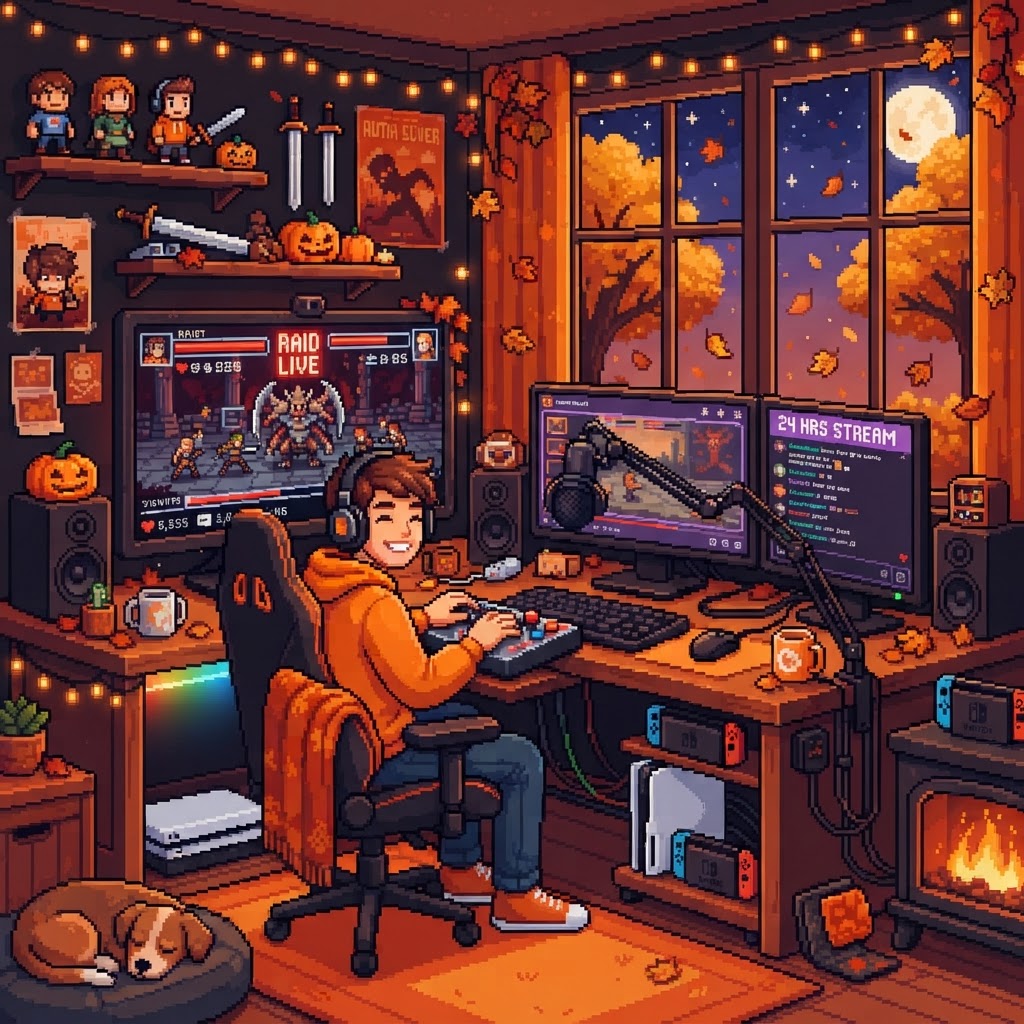
My 24-Hour Livestream Diary of the Autumn Raid
A candid, behind-the-scenes diary for TikTok gaming creators considering a cross-platform raid, from pre-stream nerves to the quiet moments that turn viewers into a real community.
At 6:12 a.m., my phone was already vibrating on the bedside table. Not because the stream had started, but because three people in our Discord had posted the same question: “Are we still raiding tonight?”
That was the first reminder that this campaign was not really about fitting my channel into a polished brand script. It was about showing up for the people who had made my tiny corner of the internet feel like a living room, then inviting them to meet a few new people there.
7:00 a.m. | Coffee, cables, and second thoughts
I make TikTok gaming videos from a desk wedged between my wardrobe and a window that refuses to close properly. My setup is capable, but not glamorous: one camera, one microphone, two monitors, and a strip of purple LEDs that makes the room look far more intentional than it is.
The first job was practical. I checked the capture card, updated the game, tested the raid settings, and opened the campaign brief. The partnership goals were clear: participate in the autumn raid, introduce viewers to other creators, and make the experience easy to follow across platforms.
What was not in the brief was how to sound like myself while doing it.
My usual videos are quick, slightly chaotic, and full of jokes about my terrible aim. A perfectly rehearsed sponsorship segment would have felt strange within thirty seconds. So I wrote down three things I could honestly share: why I joined, what kind of creators I wanted my community to discover, and what viewers could expect from the night.
That became my entire script.
10:30 a.m. | The group chat gets real
By late morning, the participating creators were comparing schedules in a shared chat. We had different audiences, different games, and very different definitions of “being on time.” One creator had a polished streaming room. Another streamed from a laptop at a kitchen table. I was somewhere in the middle, still hunting for the adapter I had misplaced the night before.
The useful conversation was not about follower counts. It was about boundaries and tone.
Would anyone be uncomfortable with loud reactions? Which communities preferred a slower introduction? How would we handle a viewer who arrived confused about the raid? We agreed that every host would explain the handoff in their own words, rather than repeating identical lines.
That decision mattered. A raid is an interruption by design. If you drop hundreds of unfamiliar viewers into a stream without context, it can feel like a takeover. We wanted it to feel more like a friend opening the door and saying, “You should meet this person.”
2:00 p.m. | The quiet before going live
The afternoon was unexpectedly ordinary. I did laundry, ate toast, and answered comments on a TikTok about a failed boss fight. One viewer wrote, “Please don’t become too professional tonight.” I laughed, then saved the comment because it captured exactly what I was worried about.
Partnerships can make creators overcorrect. We try to prove that we are reliable by sanding off everything that made people follow us in the first place. But reliability does not mean becoming generic. It means delivering on what you promised while keeping your personality intact.
So I made one small rule for the stream: if something went wrong, I would not pretend it had not happened.
6:00 p.m. | The raid begins
The opening hour was familiar. We played, missed obvious shots, and argued about whether a particular character was secretly overpowered. Then I paused for the introduction.
I told my viewers that this was a collaborative autumn raid, that we would be visiting other creators throughout the night, and that they were welcome to stay, explore, or come back later. No inflated claims. No forced excitement. Just useful information and a genuine recommendation.
Our first handoff was to a creator whose community was smaller than mine but incredibly knowledgeable about the game. Within minutes, my chat was asking questions about their build choices. One of my regulars typed, “I’m staying here. This is my kind of nerdy.”
That was the moment the campaign stopped feeling like a deliverable.
11:45 p.m. | When the numbers stop being the point
At some point, I glanced at the analytics. The peak viewer count was 184, and the average watch time was better than I expected. Those numbers were useful, but they did not explain what was happening in the room.
What I noticed instead was a familiar name answering a newcomer’s question. I noticed two viewers comparing accessibility settings. I noticed someone from another creator’s chat returning to tell us they had followed one of our community members on TikTok.
The most meaningful exchange happened during a loading screen. A viewer admitted they had been nervous about joining live chats because they usually felt ignored. Three people responded with welcomes before I could say anything.
That is the kind of growth no dashboard captures neatly. It is not only more followers. It is more people recognizing one another.
3:20 a.m. | The unplanned part
By the middle of the night, my voice was rough, the snacks were gone, and the schedule had drifted by nearly forty minutes. We abandoned one planned game because the servers were unstable and switched to something everyone could play.
It was less polished and much better.
The creators began telling stories about their first streams, their worst technical mistakes, and the viewers who had helped them keep going. I shared the clip of my first ever TikTok, a video with terrible lighting that somehow attracted the people who became regulars.
Those stories gave the night a center. We were not presenting perfect channels. We were showing the work, awkwardness, and generosity underneath them.
8:00 a.m. | Logging off, not checking out
After twenty-four hours of rotating streams, my final task was not a celebratory post. It was sending thank-you messages.
I thanked the creators for adapting when the schedule slipped. I thanked the moderators who kept conversations welcoming. I thanked the viewers who followed someone new, even when it meant leaving my stream. That last part felt important. A healthy community should not depend on holding people hostage.
If you are a TikTok gaming creator considering the Fall in Love with Gaming campaign, bring your actual community with you. Bring the jokes, the imperfect setup, and the honest explanation of why a particular creator deserves their attention. Plan the logistics carefully, but leave room for the unscripted moments.
Your best result may not be a spike in revenue or a perfect highlight reel. It may be a viewer finding a new place where they feel comfortable, then bringing a friend next time. If that sounds like the kind of night you want to build, start by messaging one creator whose community you genuinely respect, and invite them into the story.
Ready to Join
the Raid?
Streamers earn points & rewards.
Brands get 3 months of real reach.