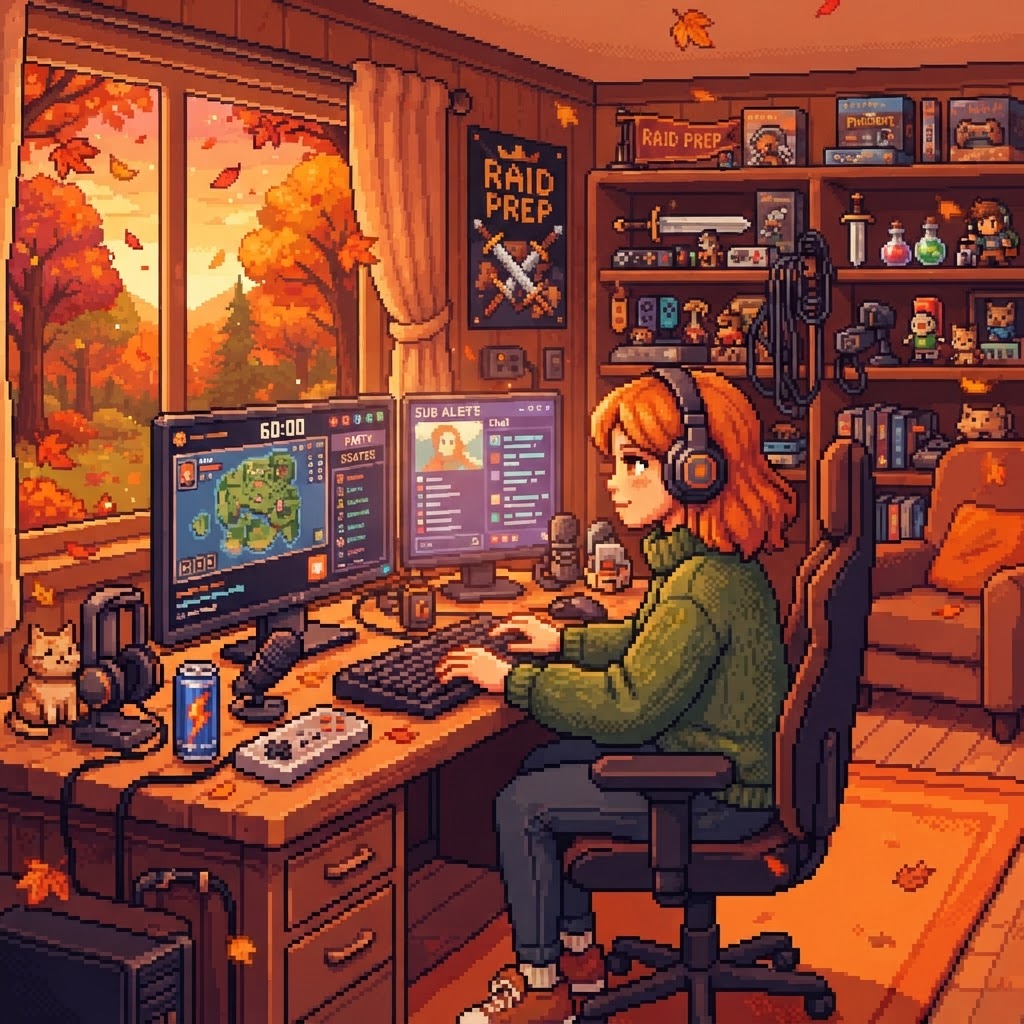
The 60 Minutes Before the Raid Goes Live
Wondering whether a streamer raid campaign is worth the setup? Take a candid look at the hour before go-live, when cables, nerves, and fellow creators turn a brand commitment into a shared gaming session.
Your stream is supposed to start in an hour. Your capture card has other plans.
The game is running, but the audio meter is stubbornly flat. Your chat has started asking what you’re playing, and somewhere in your notes is the campaign brief you meant to reread yesterday. This is the part of a sponsored stream people rarely see: not the polished welcome, but the ordinary scramble before it.
For the Fall in Love with Gaming raid campaign, the hour before go-live is less about delivering a perfect performance and more about getting a few creators ready to play together. Here’s what that can actually look like.
60 minutes out: Make the plan smaller
First, check the basics: the game launches, your mic works, your stream can see the game, and you know where the raid is meant to go. If the campaign has a required disclosure or a particular way to introduce the event, put that somewhere easy to glance at. Don’t try to memorize a paragraph. You’re a streamer, not a teleprompter.
A practical run-of-show might be three lines: play for a while, tell chat what the campaign is, then join the raid at the agreed time. That’s enough structure to keep everyone on the same page without turning a relaxed gaming session into a scripted broadcast.
If you’re doing this with other creators, this is also when you compare notes. One person might confirm the target channel, another might share the raid timing, and someone else may notice that the event link in the group chat is last month’s link. Little checks like these prevent bigger confusion later.
45 minutes out: The tech check, with witnesses
Now comes the familiar ritual: test the mic, listen back, adjust the game volume, and test again. Maybe your game audio is louder than you thought. Maybe your headset has quietly switched to the wrong input. It happens.
The difference this time is that you don’t have to troubleshoot in a vacuum. In a creator chat or pre-stream call, you can ask, “Can you hear the game over my voice?” and get an answer from someone who is also preparing to go live. If one person has solved the same audio issue before, they can share the fix. If nobody knows, you can laugh about it while trying the next setting.
Keep the checks simple. Confirm that the stream looks and sounds okay, that the campaign details you need are within reach, and that you know how to join the raid. You don’t need a studio-grade setup to take part. A clear voice, a stable connection, and a plan for the handoff matter more than a perfectly arranged desk.
30 minutes out: The nerves show up
This is often when the task starts feeling bigger than it is. You may wonder whether the brand message will sound awkward, whether your regulars will mind, or whether you’re “big enough” to join in.
Those are reasonable questions, especially if you usually stream casually. But a campaign raid isn’t a test of whether you can become a different kind of creator. It’s a chance to bring your usual community into a coordinated moment with other people who love games, too. You can explain the event in your own words, then get back to playing.
For example: “We’re joining a creator raid tonight, so we’ll send everyone over together when we wrap up. I’ll tell you where we’re headed before we go.” Clear, human, and not a sales pitch. Make any required sponsorship disclosure plainly, then let your personality do the rest.
15 minutes out: The checklist gets real
You’re close now. Take a breath and check the details that are easy to miss when chat is moving:
- Is the correct campaign information ready to share?
- Do you know which channel you’re raiding and when?
- Is your stream title accurate?
- Can you explain the handoff to your viewers in one sentence?
- Have you left a little room for something to go wrong?
That last one matters. A stream may start late. A co-creator might need help. Your game might decide it needs an update right now. The point isn’t to make the hour flawless. It’s to have enough of a plan that a small hiccup doesn’t derail the whole thing.
Go-live: It becomes a shared session
Once you’re live, the countdown in your head tends to fade. You settle into the game, answer chat, and let the campaign fit around the stream instead of swallowing it. Then the raid arrives. You tell your viewers where you’re going, trigger the handoff, and show up in another creator’s chat alongside people who were just hanging out with you.
That moment is the heart of the format: not a commercial break, but a group moving from one gaming space to another. You may meet someone new, recognize a name from the prep chat, or watch two communities find a shared joke. The brand commitment is there, but it doesn’t have to crowd out the reason anyone tuned in: to spend time with people and play.
Is an hour of prep worth it?
If a campaign asks you to do something that doesn’t fit your stream, it’s fair to pass. But when the expectations are clear and the format gives creators room to be themselves, the preparation can be surprisingly social. You get a practical checklist, a few extra people to troubleshoot with, and a raid that gives your usual session a destination.
You don’t need to be the most polished streamer in the group. You just need to be willing to show up as yourself, communicate clearly, and share the handoff with your community.
If you’re curious, come spend an hour with us this fall, cables, game audio, and all. Bring the setup you already have, bring your regulars, and let’s find out what happens when a raid feels less like a deliverable and more like a bunch of gamers heading to the next room together.
Ready to Join
the Raid?
Streamers earn points & rewards.
Brands get 3 months of real reach.