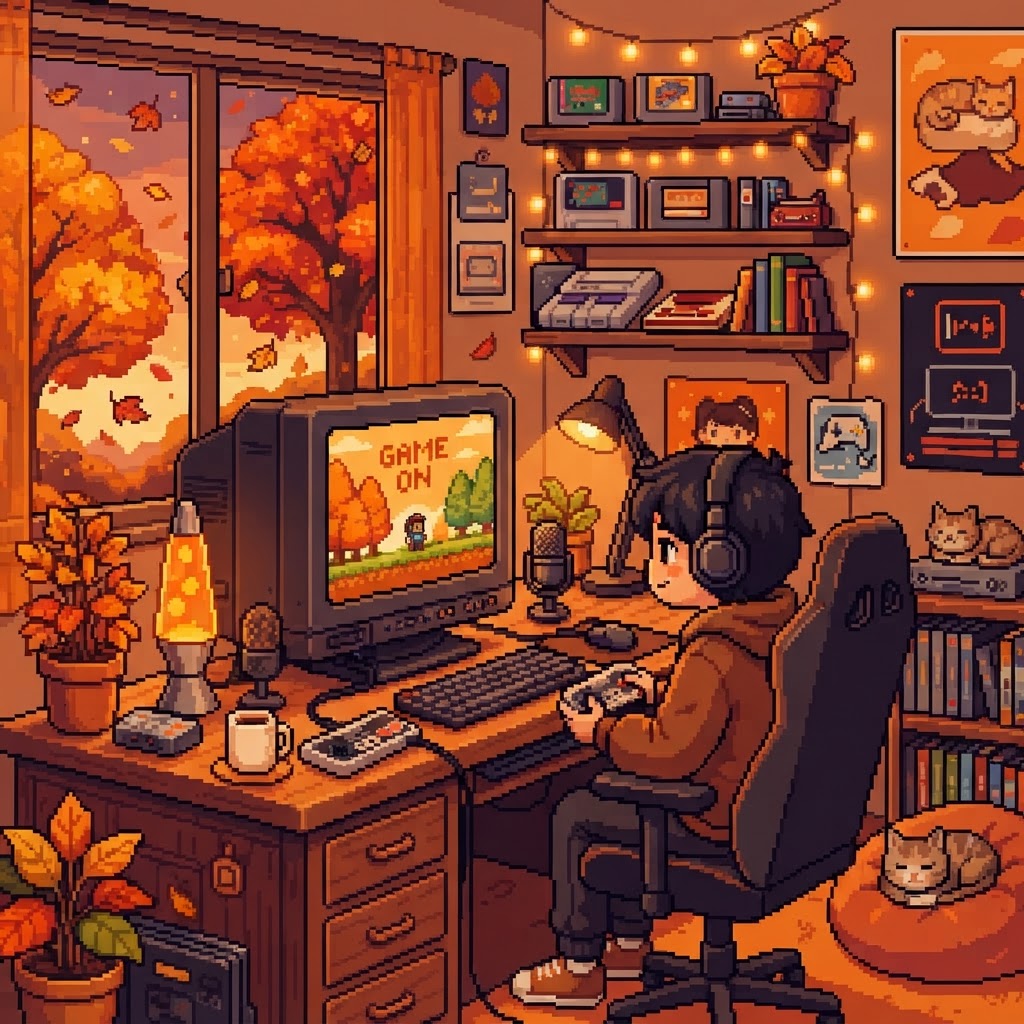
A Note to the Creator Who Fears the Corporate Tag
If a sponsor tag makes you worry your chat will feel different, that instinct deserves a real answer, not a sales pitch. Here’s what this autumn’s raid campaign is meant to protect, and how you can decide whether it fits your stream.
You know the moment. You’re looking at a partnership email while your stream is still open in another tab, chat moving at its usual speed, your community making the jokes only they make. Then you picture adding a sponsor tag and wonder if the room will change. Will people think you sold out? Will every laugh feel like a talking point? Will a fun night turn into an obligation you have to perform?
That worry is not silly, and you don’t need to talk yourself out of it to be considered a “professional” creator. Your stream is not just a place where people watch a game. It’s the rituals, running jokes, quiet check-ins, and oddly specific opinions about which inventory screen is worst. Of course you want to protect it.
I’m writing on behalf of the Fall in Love with Gaming autumn streamer raid campaign, running September through November 2026, but I don’t want to pretend a campaign name settles the question. What matters is how the collaboration feels in your channel, to you and to the people who show up there.
The tag is not the whole story
A brand partnership can be a transaction: a brief arrives, a creator repeats its lines, and everyone hopes the audience doesn’t notice the seams. That is exactly the version many streamers fear. You’ve probably seen a sponsorship land in a room like a dropped controller: the mood shifts, the chat goes quiet, and the streamer starts sounding less like themselves.
It doesn’t have to work that way. The better version is a creative project with clear boundaries. You bring your community knowledge, your humor, and your own way of playing. The campaign brings a shared reason to gather and support other creators through raids. The sponsor should fit into that plan, not become the reason your stream stops feeling like yours.
That means being honest about what is sponsored and what isn’t, and making room for you to speak in your own voice. It means a raid should still feel like you sending your viewers to someone you’d be glad they met, not like you’re moving a number from one box to another. If an idea doesn’t make sense for your channel, you should be able to say so.
Your community can tell when you’re being real
Maybe your stream is mostly cozy farming games, and your audience knows you will spend fifteen minutes organizing a chest instead of finishing a quest. Maybe it’s competitive shooters, where the post-match debrief is somehow more intense than the match. Those details are the point. A good collaboration starts with them instead of asking you to set them aside.
Imagine a raid night built around passing the baton to another streamer whose vibe genuinely complements yours. You tell chat where you’re headed, share why you’re excited for them to meet that creator, and carry over one harmless in-joke or question for the next channel. The handoff is part of the evening, not a commercial interruption. If it feels natural, your audience gets a new person to discover. If it feels forced, you’re the first person who will know.
You also get to be transparent with your audience. A simple “This is a sponsored campaign, and I’m taking part because the creator-to-creator raid idea feels right for this stream” is more respectful than pretending the partnership isn’t there. People may have questions. Let them ask. Trust is not built by making every choice invisible; it’s built by being able to explain the choice in your own words.
You do not owe anyone a yes
I want to say that plainly. You don’t owe a campaign your participation just because it supports creators, promises visibility, or arrives with an appealing seasonal theme. Read the details. Ask what is expected of you, how flexible the creative format is, and what support is available. Think about your schedule, your energy, and whether the idea would give your community something worthwhile.
If the answers are vague, or the terms would make you act out of character, pause. A partnership should not ask you to gamble the trust you’ve spent months or years earning. And if your answer is no, that can be the right call. Your relationship with your audience is worth more than a slot in anyone’s campaign calendar.
If you’re curious but cautious, start with the conversation, not a commitment. Tell us what would make a raid feel right for your channel. Ask what can be adapted. Bring the awkward question you’re worried is too blunt. It isn’t. Those questions are how a collaborative idea becomes one that respects the people actually making it work.
Let’s keep the stream yours
The corporate tag may be visible, but it doesn’t have to be the loudest thing in the room. Your personality, your chat, and the communities you choose to connect are still what give the stream its shape. Our hope for this autumn is not that you make your channel sound more like a campaign. It’s that the campaign gives you a reason to do more of what already makes your corner of gaming feel like home.
If you’re on the fence, come talk with us before you decide. Bring your skepticism, your boundaries, and your best example of a partnership that got it right or very wrong. We’ll listen, and you can choose from there, with no pressure to turn a conversation into a yes.
Ready to Join
the Raid?
Streamers earn points & rewards.
Brands get 3 months of real reach.