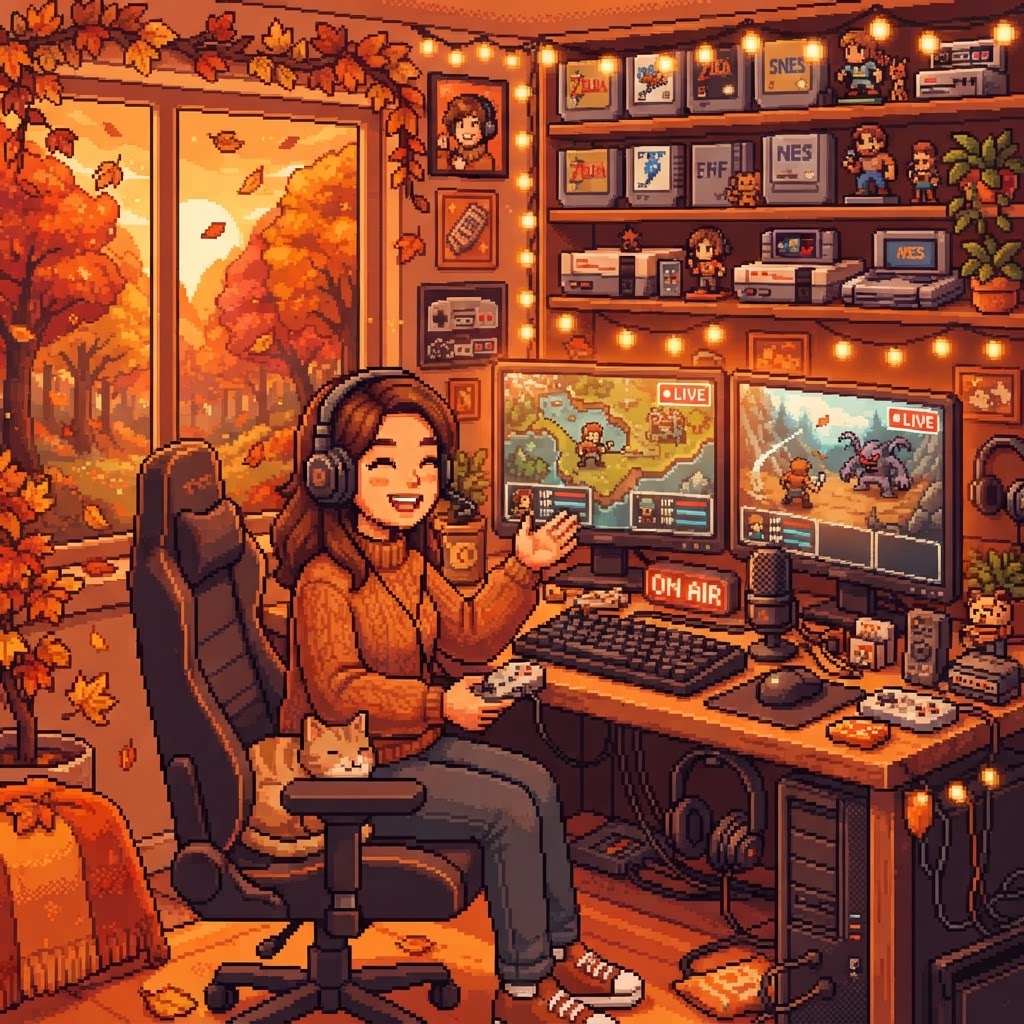
My Afternoon Embedded in a Live Campaign Stream
A marketing director steps inside a live gaming raid and discovers why being present, responsive, and human can outperform a polished media buy. Follow the moments that turn sponsorship visibility into genuine trust during the Fall in Love with Gaming campaign.
At 2:17 p.m., I was sitting in a streamer’s Discord voice channel, listening to 8,000 people argue about whether a missed boss mechanic was intentional.
I was not there to play. I was there as the marketing director responsible for our sponsorship of the Fall in Love with Gaming autumn streamer raid campaign, running from September through November 2026. My job was to watch, learn, and make sure the brand showed up properly.
Within ten minutes, “properly” stopped meaning anything on a media plan.
The streamer, Maya, had just handed her audience to another creator as part of the raid. A branded transition appeared on screen for six seconds, then the chat filled with messages from both communities. Some viewers welcomed the newcomers. Others explained the game’s current challenge. One person posted a joke about our snack product being the only thing capable of reviving Maya after that failed attempt.
Nobody had been instructed to say any of this. That was the point.
1:04 p.m. | The plan meets the room
Before the broadcast, I reviewed the familiar checklist: logo placement, approved talking points, campaign tags, stream schedule, moderation contacts, and reporting requirements. Those details matter. A sponsorship cannot rely on good intentions alone.
But a live stream is not a banner impression with a chat box attached. It is a room with a mood, a memory, and a regular cast of characters. People know who always arrives late. They know which moderator uses too many caps. They notice when a creator sounds tired.
The first lesson of the afternoon was simple: the community could tell when a brand was merely present and when it was paying attention.
Our team had prepared a short message for the creator to read. Maya glanced at it, kept the useful part, and made it sound like herself. That small decision mattered more than perfect wording. Her viewers trusted her voice, not ours.
1:38 p.m. | The handoff
The raid began after Maya finished a difficult match. On paper, this was a programmed audience transfer. In practice, it felt more like being invited into someone’s living room, then introduced to the friends in the next room.
The receiving streamer, Luis, thanked Maya’s audience by name. Maya’s moderators stayed for a few minutes to help answer questions. Luis’s chat responded with its own welcome ritual, including a copy-pasted phrase that made no sense to me until someone explained its origin in a tournament from two years earlier.
This is where the sponsorship became real. Our brand did not create that ritual, and we should not have tried to. We supported the conditions that allowed it to happen: creators with compatible audiences, a clear reason to move together, and enough flexibility for the exchange to feel natural.
A programmatic ad can place a message beside content. It cannot notice that a newcomer is confused, explain the joke, or make room for them in the conversation.
2:17 p.m. | The moment I stopped watching the dashboard
The campaign dashboard showed healthy numbers. Concurrent viewers were up, chat velocity was strong, and the raid had reached its target audience.
Then a viewer asked whether our brand was actually in the voice channel.
I had been listening quietly, so I typed a response through the campaign account: yes, I was there, and I was trying not to interrupt. The streamer read it aloud. Someone replied, “That’s either reassuring or terrifying.” The chat moved on, but the tone changed. We were no longer an abstract sponsor attached to a graphic. We were a person observing the same awkward jokes, technical hiccups, and clutch plays as everyone else.
That was the voyeuristic thrill of the afternoon. I could see our investment producing something no post-campaign report could fully capture: a group forming and reforming in real time, with the brand close enough to witness it but wise enough not to dominate it.
3:06 p.m. | When the stream goes off script
The connection dropped during a transition. For nearly ninety seconds, viewers saw a loading screen. A conventional campaign instinct might be to treat the interruption as a failure.
Instead, the chat turned it into a collaborative troubleshooting session. Viewers shared backup links, moderators posted updates, and Luis joked that the campaign had entered “hard mode.” When the stream returned, the audience was still there.
That recovery was more persuasive than a flawless ad placement could have been. People do not expect communities, creators, or brands to be perfect. They look for evidence that those participants can respond like humans when something goes wrong.
Our role was to support the creator and moderation team, not seize the moment with a polished message. We approved a quick, unscripted acknowledgment and moved on. The audience noticed the restraint.
4:12 p.m. | What I took back to the brand
By the end of the afternoon, I had a spreadsheet full of useful signals: peak concurrency, raid retention, chat sentiment, clicks, and new followers. I also had notes that will never fit neatly into a media report.
A viewer who arrived during the raid stayed long enough to ask about the next stream. A moderator thanked us for giving the creators room to be themselves. Maya said she appreciated that the brand team had watched the full broadcast instead of checking in only for the logo moments.
Those details are not soft extras. They are the operating evidence of trust.
For a marketing director evaluating gaming sponsorships, the question is not simply how many people will see your name. Ask whether your team is prepared to be present in the same space as the audience. Will you watch the whole stream? Can you let a creator adapt the message? Do you have people ready to respond when the plan changes, without turning every interaction into a sales opportunity?
A physical presence in a digital space changes the relationship. It makes the sponsor accountable to the community it hopes to reach. Automated programmatic buying can deliver scale and efficiency, but it cannot replace attention, context, or the quiet credibility of showing up.
The next time you evaluate a gaming partnership, join the stream before you sign off on the recap. Sit through the awkward pauses. Listen to the jokes you do not understand. Watch what happens when the audience welcomes someone new.
That is where the value becomes visible. And if you are willing to stay for the whole afternoon, you may find yourself participating in the community, not merely advertising to it.
Ready to Join
the Raid?
Streamers earn points & rewards.
Brands get 3 months of real reach.