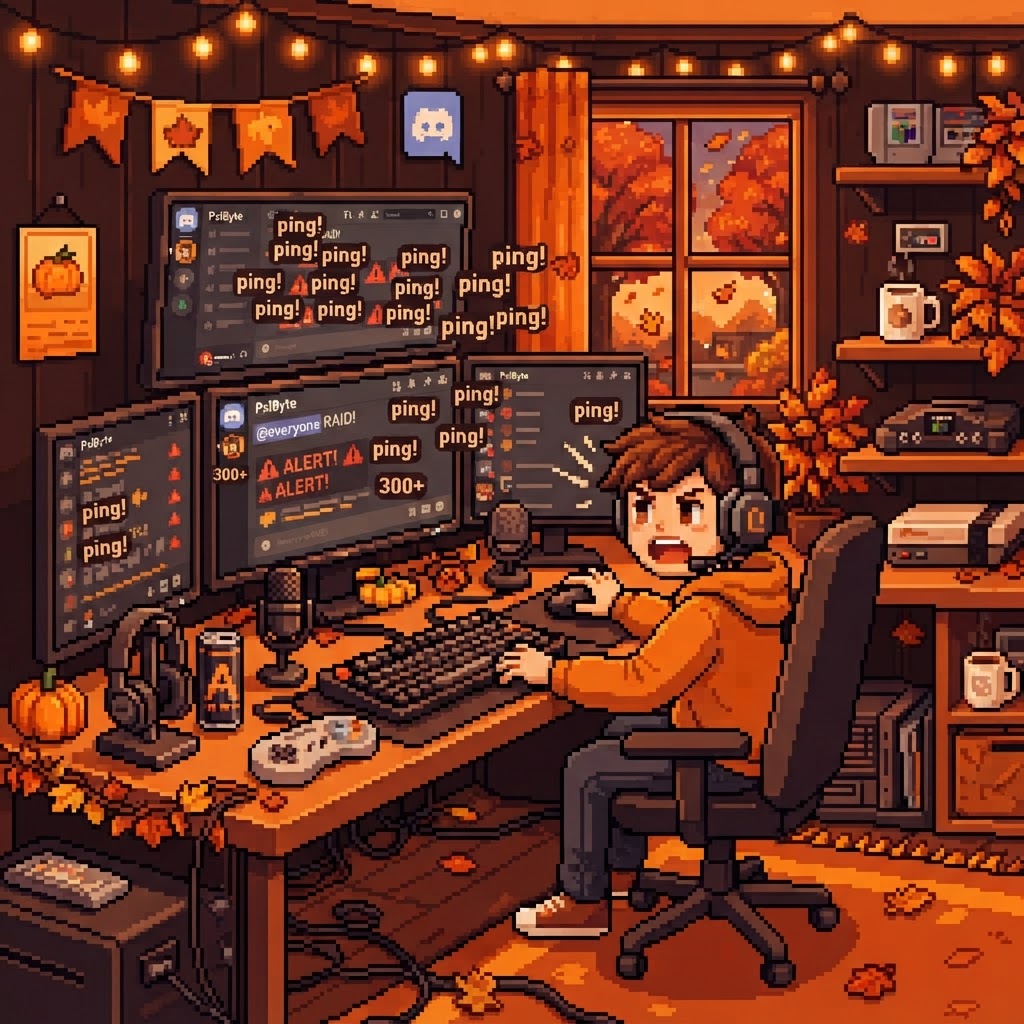
My Discord Pinged 300 Times: Anatomy of a Raid Campaign
Ever wondered what actually happens after a raid alert lands in your Discord? Follow one coordinated handoff from TikTok and Twitch to chat, and see why the best part is the creators meeting each other, not the dashboard numbers.
Your phone is face down beside your controller when Discord starts buzzing. One ping, then another. By the time you pick it up, the count has climbed past 300. Your first thought is probably that something broke. Your second is: what am I supposed to do with all these people?
That moment is the visible tip of a raid. Underneath it, a handful of creators, moderators, and viewers are moving between platforms together. The mechanics can look like a black box from the outside. In practice, it is less a secret growth trick than a series of clear handoffs, held together by people who want to show up for one another.
Before the ping: people, not a blast list
For the September-to-November 2026 Fall in Love with Gaming campaign, a raid might start with a creator on TikTok Live inviting viewers to join a partner streamer on Twitch. The communities do not need to be the same size, or even familiar with each other. What they do need is context: who is hosting, why this creator is a good next stop, and what viewers can expect when they arrive.
That context gets sorted before anyone hits “raid.” The creators agree on a time and a handoff plan. Moderators know which chat to watch. The host knows how to welcome incoming viewers without putting anyone on the spot. There may be a shared Discord channel for coordination, but it is not a remote control for the audience. It is the place where the people running the event check that the basics are in place.
A useful plan can be very small. For example: a TikTok creator wraps at 8:30 p.m., gives their viewers a short explanation, posts the destination link, and sends the Twitch host a final go-ahead. Two mods stand by in each chat. No complicated production meeting required.
The handoff: how one community crosses platforms
The creator’s closing words do more work than any alert. They explain where the group is headed and make the invitation feel optional. Viewers who follow the link or join the raid land in a new chat, with different platform tools, inside jokes, and norms. A good host bridges that gap: “Welcome, TikTok crew. We’re doing a cozy co-op run tonight, and you can just lurk if you like.”
On Twitch, the raid feature can carry viewers directly into the host’s stream. On TikTok, the creator may point people to a profile link, a scheduled Live, or the shared community space, depending on the setup. The exact route varies, and not every viewer will make the jump. That is normal. The goal is not to funnel every person into one destination. It is to make the next step easy for anyone who wants it.
Then come the Discord pings. Those 300 notifications might include people reacting to a coordination post, welcoming newcomers, sharing clips, or asking where the stream went. They are not automatically 300 viewers, and they are not a scorecard. They are a sign that a group has become active across several channels at once. Muting a busy channel is also perfectly respectable.
What the audience experiences
From the viewer’s side, the raid should feel less like being delivered to a storefront and more like arriving with a friend. Maybe you recognize a familiar emote in the new chat. Maybe the host asks what game the group just left, and the conversation turns into a quick comparison of builds. Small moments like that help two communities feel less like separate rooms with a link between them.
The social part is also where the event can go sideways. A sudden crowd can overwhelm a small creator. Viewers can miss the explanation, or arrive while the host is in the middle of a tense match. That is why pacing matters. A short welcome, a prepared mod, and a clear route home can make the difference between an exciting surprise and a chat that feels out of control. Nobody should be pressured to follow, subscribe, share personal details, or stay longer than they want.
For creators, there is another useful discovery: collaboration does not mean pretending your channels are interchangeable. TikTok and Twitch have different rhythms. Discord has a different job again. A raid connects those spaces for a moment, while each creator keeps their own voice and community.
The numbers are not the story
Campaign reporting may track things like raid participation, live attendance, or viewers who return later. Those details can help organizers understand whether the setup worked. But they cannot tell the whole story. A creator discovering a future co-op partner, a shy viewer finding a welcoming chat, or a moderator learning a smoother cross-platform routine may matter more than a temporary bump in reach.
That is the difference between coordinating a campaign and manufacturing a moment. Good coordination makes the moment possible, then leaves room for people to make it their own. The best outcome is not that every notification converts into a follow. It is that the next time these creators go live, someone remembers the welcome, drops by again, and brings a friend.
If you’re curious, start small
If you make gaming content on TikTok and have wondered whether a cross-platform raid is too complicated, try one modest handoff with a creator you genuinely enjoy. Agree on the time, destination, and welcome plan. Give viewers a clear explanation, make participation optional, and ask a moderator to help watch chat. Afterward, compare notes with the other creator, not just analytics: What felt fun? Where did people get confused? Would you do it again?
That is the spirit of Fall in Love with Gaming: less a perfectly synchronized marketing machine, more a bunch of creators opening the door for each other. If you want to explore a raid this autumn, reach out to a creator whose stream you already like, and ask what kind of welcome you would want if your communities swapped places.
Ready to Join
the Raid?
Streamers earn points & rewards.
Brands get 3 months of real reach.