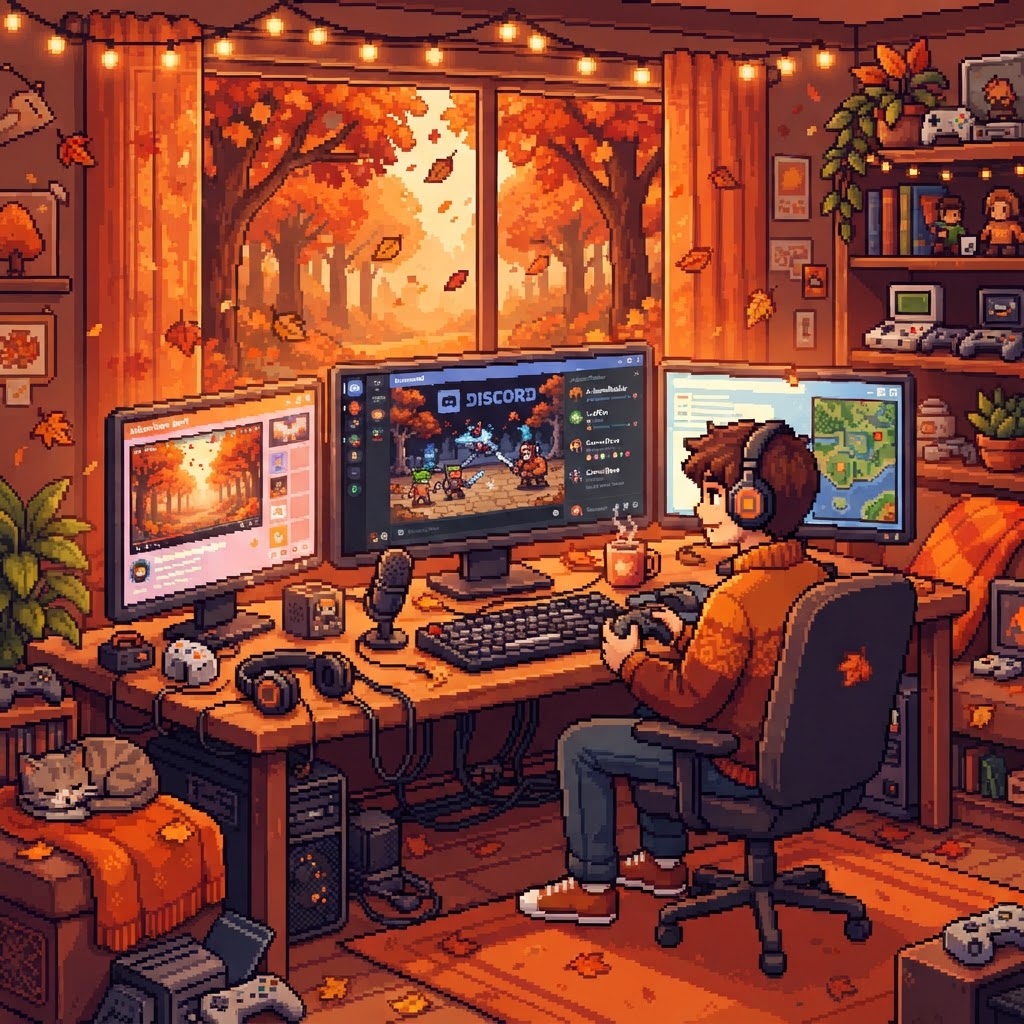
I Let You Peek Into My Discord During the Autumn Raid
Curious how a TikTok clip becomes part of a live streamer raid without turning into a scripted ad? Peek inside the shared Discord, where the schedule is practical, the creative choices stay yours, and the best moments happen between creators.
My phone is balanced against a mug, TikTok is open to the clip I want to post, and Discord is making the little ping it always makes when someone drops a message. In one channel, a creator is checking their stream time. In another, someone has just shared a screenshot of their cat sitting on a controller.
That mix is the real control room for a streamer raid: a bit of scheduling, a bit of tech support, and a lot of people being people.
If you make gaming videos on TikTok, cross-platform campaigns can sound like a leap into someone else’s world. You may be wondering whether you’ll have to change your voice, learn a pile of streaming jargon, or read a brand-approved script. Here’s a look at what actually happens when creators coordinate a raid during the September-to-November season.
First, what do we mean by a raid?
A raid is when a streamer wraps up their own broadcast and sends their viewers to another creator who is already live. It’s a simple handoff, but a good one feels less like passing an audience down a line and more like inviting friends into another room.
For a campaign, that handoff needs a little planning. Creators agree on a window, make sure the next streamer is ready, and share any essential context with viewers. The point isn’t to make every stream look or sound the same. It’s to help the audience find the next good thing to watch.
Inside the Discord: practical, not mysterious
The shared server is where the loose ends get tied up. Think of it as a friendly backstage hallway, not a command center. There might be a schedule channel, a place for links and graphics, and a chat where people ask quick questions. The useful information is easy to find, but the rest of the conversation is allowed to be conversation.
A concrete example: say your raid slot is Friday at 8:30 p.m. You confirm your time zone, test that the other streamer’s channel link works, and check who is going live next. If your stream runs long, you can message the group and adjust the handoff instead of pretending the schedule is carved in stone. That small check-in can prevent a whole chain of confused viewers and “Wait, where are we going?” messages.
There’s technical housekeeping, too. Creators may confirm that their raid feature is available, check audio levels, or make sure the receiving streamer knows what name will appear in the handoff. None of this needs to be complicated. A quick test and a clear message beat frantic troubleshooting while viewers are waiting.
The plan is shared. The voice is yours.
This is the part I want TikTok creators to hear: joining the ecosystem does not mean copying another creator’s personality. You bring the same instincts that make your short-form videos yours. Maybe you’re great at quick reactions, cozy game recommendations, challenge runs, or explaining one mechanic in a way that makes people say, “Oh, now I get it.” Those are strengths you can bring to a live moment, too.
You don’t need to turn a TikTok into a stiff announcement. You might post a clip saying, “I’m trying this game live Friday, then I’m sending you to a friend who’s doing a no-healing run.” That tells people what’s happening in your own language. The shared campaign details can help with timing and discovery, while the way you tell the story stays in your hands.
Any required campaign information should be clear and manageable. The goal is coordination, not a script for every sentence. If a guideline feels unclear, ask in the shared space before you post. A question in Discord is easier to solve than a guess you have to undo later.
The best collaboration happens off-camera
The schedule is useful, but it isn’t the whole reason to show up. The real value often appears in the ordinary moments: someone offers to test your stream audio, a creator recommends a game that fits your audience, or a quick chat turns into a plan to play together next month.
That matters especially if your community mostly knows you through a phone screen. A raid can be a low-pressure way to meet creators whose work you already enjoy, and to let your audience meet them, too. You’re not handing over your identity or promising to become best friends. You’re making a genuine introduction, then seeing where the conversation goes.
And sometimes the connection is tiny but still lovely. Someone remembers you mentioned a difficult boss, then asks how the next attempt went. Someone shares a clip from your stream because it made them laugh. These details don’t fit neatly into a campaign recap, but they’re the parts that make collaboration feel human.
A few things I’d do before my first raid
- Check the time and time zone. Put the slot somewhere you’ll actually see it, and confirm when the receiving creator will be live.
- Test your setup. Check your audio, stream link, and raid settings before the countdown starts.
- Tell viewers what’s happening. A short, natural explanation helps the handoff feel like an invitation, not a sudden redirect.
- Keep a little room to improvise. Streams are live. If timing shifts, communicate and adapt.
- Say hello afterward. Thank the next creator, share what worked, and keep the door open for another collaboration.
A campaign can provide the shared space and the schedule, but it can’t manufacture the good stuff. That comes from creators showing up curious, considerate, and still completely themselves. If you’ve been watching cross-platform collaborations from the sidelines, come say hi in the shared chat, ask the question you’ve been holding back, and see if there’s a raid slot that feels like your kind of fun.
Ready to Join
the Raid?
Streamers earn points & rewards.
Brands get 3 months of real reach.