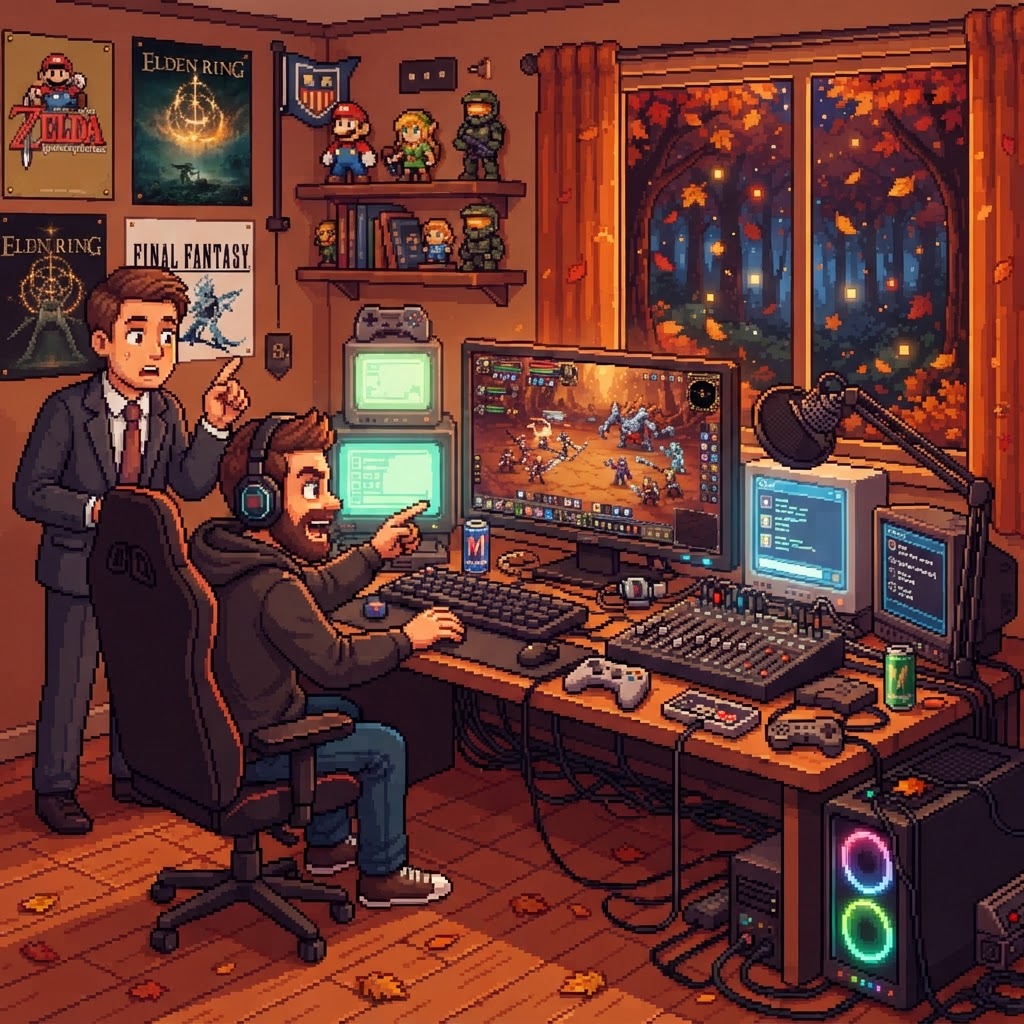
I Let a Brand Manager Into My Editing Suite Mid-Raid
What happens when a brand manager joins your raid instead of handing you a script? Here’s a candid, behind-the-scenes look at keeping a cross-platform gaming campaign on track without losing the chaos, jokes, and community moments that make a stream feel like yours.
My raid alert went off while I was still trimming a clip.
On one screen, the editing timeline had six audio tracks stacked like a Jenga tower. On another, chat was asking why my game character was facing a wall. And in my headphones, the brand manager who’d just joined the voice call said, “I think the raid is starting.”
They weren’t wrong. I had twenty seconds to save the edit, switch scenes, and welcome a wave of viewers from another streamer’s channel. The brand manager was still there, watching the same messy control room I was trying to keep under control.
That’s the part of a campaign brief that usually gets left out: the live event is not a polished video shoot. It’s a dozen things happening at once, and the best collaboration is the one that can keep up.
The plan was simple. The stream was not.
For the Fall in Love with Gaming autumn raid campaign, the idea was to connect creators through live raids from September through November 2026. A streamer sends their audience to another participating channel, the new host welcomes them, and the night keeps moving. The campaign deliverables gave us a shared frame: show the raid, make space for the brand message, and let viewers see creators building community together.
My own prep was less cinematic. I had a short talking point in a notes app, a branded scene ready in OBS, and a list of raid partners that I’d already messaged. I also had a cat who had knocked a drink onto my desk earlier that afternoon. The sticky spot was still there.
The brand manager joined because we’d agreed that they could observe the raid and help with coordination, not take over the broadcast. That distinction mattered. They could flag a missing link or remind me about a scheduled mention. They weren’t there to tell me what joke to make, what game to play next, or how to respond to chat.
Then the raid hit
The incoming channel had about 80 viewers. As soon as they arrived, my chat filled with introductions, emotes, and the usual friendly confusion about what we were playing. I welcomed the raiders, explained the stream in my own words, and gave them a moment to settle in before moving on.
That moment is easy to miss when you’re watching a highlight clip later. A raid is not a switch that instantly turns one audience into another. People arrive mid-conversation. They’re figuring out the vibe, checking whether their streamer is still around, and deciding if they want to stick around. A host needs to make room for them without making the regulars feel like the stream has become an ad break.
My planned brand mention was supposed to happen after the welcome. In reality, a game update popped up, my audio mixer decided to misbehave, and a viewer asked if the pumpkin on my overlay was supposed to be on fire. (It was not.) I handled the tech hiccup, answered chat, then delivered the campaign line once the stream had found its feet.
The manager didn’t interrupt. They dropped a note in our private chat: “Link is live, no rush.” That was exactly the kind of support I needed. Not a command, just a quiet nudge while I was juggling the show.
The brief is a guardrail, not a script
If you’re used to TikTok, where a strong opening and a quick payoff can carry a whole clip, a live raid can feel like a different sport. You can still bring that instinct with you. Think of the first few minutes as a hook: welcome the new viewers, tell them what’s happening, and give them a reason to stay. But don’t expect every beat to land on a timer.
The campaign’s shared points gave me useful boundaries. I knew what information needed to appear, where the link should be, and which moments we wanted to capture. Inside those boundaries, I could still talk like myself. I could react to a ridiculous in-game moment, riff with regulars, and let the new crowd shape the conversation.
That balance is what makes a cross-platform partnership feel human. A TikTok can be a tight, edited window into the stream. The live event is the whole room, including the awkward pause while you find the right scene, the unexpected joke from chat, and the little welcome that makes a newcomer feel noticed.
What the brand saw from the editing chair
The manager got a view of the actual work: the notes, the stream controls, the context switching, and the tiny decisions that never make it into the final recap. They also got to see that creator authenticity isn’t a magic ingredient you sprinkle on after the sponsor copy. It comes from giving the creator room to deliver the message in a way that belongs in their stream.
And I got something useful, too. Having a brand partner present made the coordination more immediate. If a link needed updating or a timing detail was unclear, we could sort it out without a chain of messages the next morning. We still had a clear role split: I hosted and made the creative calls, while the manager supported the campaign logistics.
By the end, the raid had turned into an actual conversation. A couple of newcomers stayed, my regulars had adopted the flaming pumpkin as a chat mascot, and I had enough footage for a short TikTok that showed both the polished moment and the chaos around it. The final clip looked clean. The process definitely did not.
Come see the messy part
If you’re a TikTok creator wondering whether a cross-platform campaign can still sound like you, look beyond the deliverables and ask how the live experience is built. Who handles timing? What happens if a scene changes? Can you adapt the talking point to your own voice? Is the brand there to participate and support, or to direct every beat?
Those questions tell you more than a mood board ever will. A good raid gives you a shared plan, a little room to improvise, and a partner who understands that a real stream has its own rhythm.
And if you’re joining one of our autumn raids, say hi when you land. Tell me what you came from, grab a seat in chat, and don’t be surprised if the pumpkin is still on fire.
Ready to Join
the Raid?
Streamers earn points & rewards.
Brands get 3 months of real reach.