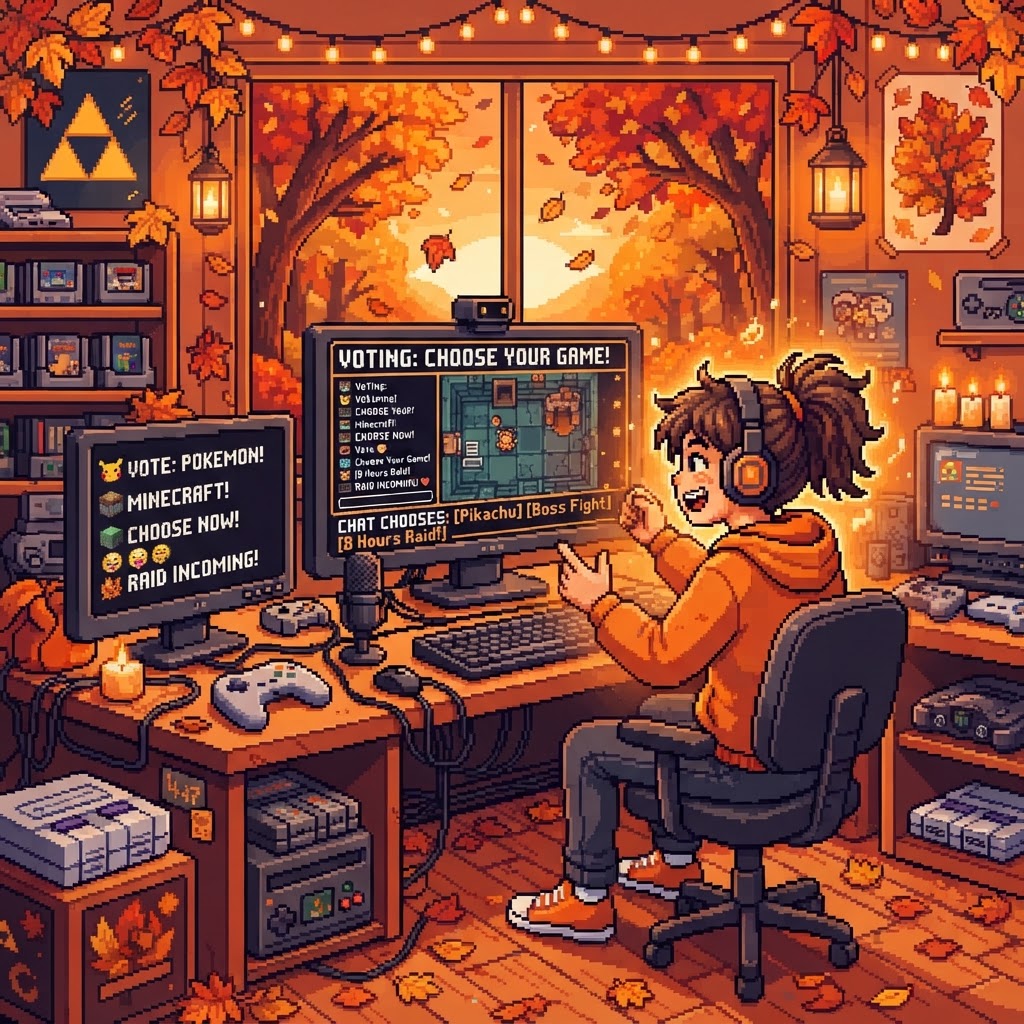
I Let My Chat Pick My Games for 8 Hours During the Raid
What happens when you trade a carefully planned stream schedule for eight hours of chat-picked games? This day-in-the-life story shows how a little shared control can turn a sponsored raid into the kind of community memory people bring up long after the stream ends.
At 9:12 a.m., I had a spreadsheet open with four games, a backup plan, and a neat little block of time for every segment. At 9:13, I posted one message in chat: “You’re driving today. What are we playing first?”
That was the plan for my Fall in Love with Gaming raid stream: spend eight hours with my community, let them choose the games, and bring the stream along as it raided through the campaign. I still had a few practical guardrails, like games I could access and a stream that stayed welcoming. But the order, the surprises, and most of the day belonged to chat.
9:00 a.m. | Set the boundaries, not the playlist
Before going live, I checked the campaign details, tested my scenes, and made sure I knew how to find the next creator in the raid chain. Then I wrote three simple rules on a notepad: everyone gets a chance to suggest a game, we vote before switching, and we keep the picks streamable and kind to the people playing them.
I shared the campaign context without turning it into a speech. We were joining an autumn streamer raid, and I wanted the day to feel like our stream, not a checklist with a game attached. That meant being clear about the partnership, then getting on with the fun.
10:00 a.m. | The first vote is already a story
I expected chat to pick something familiar. Instead, the first vote landed on a cozy game I had downloaded months earlier and never touched. One viewer had recommended it in chat before; another had posted a screenshot of their farm in our Discord. Suddenly, the choice was less “What game should we play?” and more “Show us the place you’ve been telling us about.”
We started with a quick poll, gave people a couple of minutes to vote, and named the game with the most votes. While it loaded, chat explained what I should do first. I planted the wrong thing, wandered into a fence, and heard about it for the next half hour. The game was almost beside the point. People were watching each other show up, recognize an old suggestion, and add their own little chapter to it.
Noon | A raid makes the room bigger
When it was time to raid, I gave everyone a short heads-up, thanked them for spending their morning with me, and passed the group on to the next participating creator. A raid can be a quick handoff, but it can also feel like bringing friends to meet friends. I introduced the next streamer, shared what we’d been playing, and let chat carry the energy into a new room.
After the handoff, I returned to my own stream and opened another vote. This time, chat picked a fast multiplayer game. The shift in pace was useful: I needed a snack, viewers who had been quietly watching started joining the conversation, and the people who came in from the raid had a reason to stay. The schedule had no perfect rhythm, but the stream did. It followed the people in it.
2:00 p.m. | The pick I wouldn’t have made
The most memorable choice came from a viewer who usually lurked. They suggested a puzzle game, then added, “I’ve been trying to get my sister into it. Can you show the first level?” We played through the opening puzzle together while chat offered competing theories. Someone spotted the solution before I did, and I spent a solid minute insisting the wrong button had to be involved.
That moment could never have come from my original spreadsheet. It came from leaving enough room for someone to share a small part of their life. I kept the game on the stream’s list, but I also kept the viewer’s recommendation in mind for another day. That felt more valuable than squeezing in one more title just to hit a number.
4:00 p.m. | Let the plan bend, not disappear
Handing over the playlist doesn’t mean ignoring the work behind a sponsored stream. I still checked the campaign’s requirements, kept the partnership disclosure visible, and made sure the raid details were accurate. I didn’t ask chat to carry the sponsor message for me, and I didn’t pretend every game choice was a campaign deliverable.
The distinction helped. I was responsible for the campaign logistics; chat was responsible for making the day feel like ours. Those jobs can coexist. In fact, a clear plan for the essentials gave me more freedom to relax about everything else.
6:00 p.m. | Eight hours later, the best part was the recap
By the final stretch, the game list was longer than I’d planned, my tea was cold, and chat had developed an unofficial ranking system for my worst decisions. We ended by naming the day’s favorite moments. The farm disaster got a mention, naturally. So did the puzzle theory, the raid introductions, and the surprise pick from a viewer who had never spoken before.
I started that morning thinking I was giving up control of my schedule. What I really gave up was the need to make every minute look polished in advance. In its place, we made a stream that could only have happened with that particular group of people on that particular day.
If you’re joining a campaign this autumn, try leaving one real decision to your community. Set boundaries that protect the stream, share the partnership honestly, and let viewers shape something they’ll recognize as theirs. Then, after the stream ends, ask what they want to do together next. That’s where the memory keeps going.
Ready to Join
the Raid?
Streamers earn points & rewards.
Brands get 3 months of real reach.