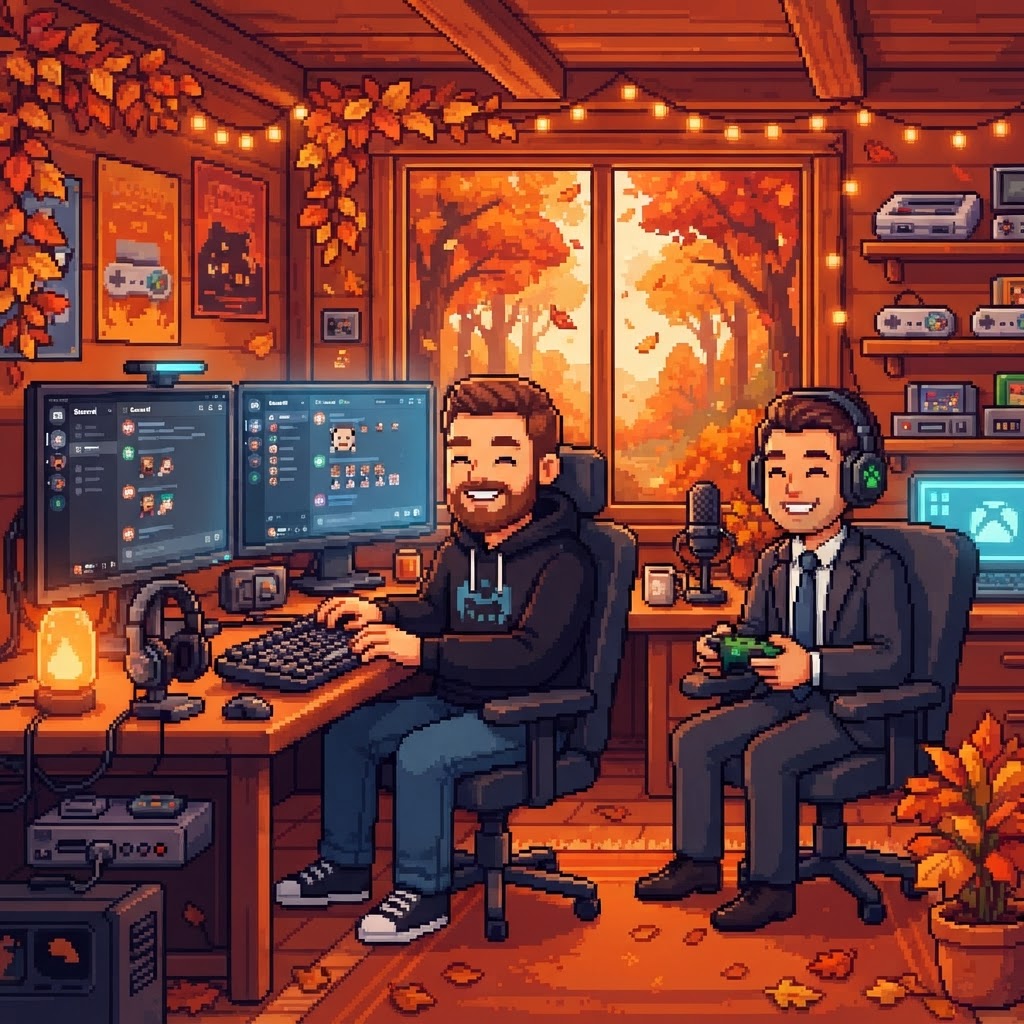
I Took a CMO Into My Discord for 24 Hours
A candid 24-hour field guide for brand managers sponsoring a streamer for the first time, following the nerves, surprises, and small human moments that make community-led campaigns work.
At 8:07 a.m., Maya had three tabs open, two coffees beside her keyboard, and one question she had not put in the campaign brief: “What if I interrupt the community?”
She was a brand manager, not a streamer. Her experience was built around media plans, approved copy, audience segments, and reports that arrived neatly after the fact. Now, for the Fall in Love with Gaming campaign, she had agreed to spend 24 hours inside a streamer’s Discord, watching how a sponsorship actually lived once it left the presentation deck.
Her first instruction was simple: do not perform. Join, listen, and ask before posting.
That sounded easy until she opened the server.
8:15 a.m. The lobby is already alive
The Discord was not a polished brand channel. It was a moving neighborhood.
Someone had posted a screenshot from last night’s game. Two members were debating the best loadout. A moderator was reminding everyone about stream start time. In a channel called pets-and-plants, a community member had shared a photo of a cat sitting on a keyboard.
Maya’s first instinct was to look for the campaign asset. Her second was to ask where the brand logo belonged. Instead, the streamer, Juno, sent her a private message: “Welcome. Hang around for a bit before we announce anything.”
That was the first surprise. The community did not need to be interrupted to prove it was valuable. It was valuable because it was already happening.
By 9:30, Maya had learned that one regular always greeted new members with a terrible pun, that moderators used a purple heart to flag a genuinely helpful answer, and that the community had an unofficial rule against spoiling a game’s story, even in general chat.
None of those details appeared in the sponsorship proposal. All of them mattered.
11:00 a.m. The first unscripted moment
The planned activity was a “comfort game” recommendation thread. The idea was straightforward: members could share a game they played when they needed to unwind, with a small prize drawing supported by the sponsor.
Maya expected a tidy stream of responses. Instead, the first reply came from a member who said they had not played anything in weeks because they were caring for a sick relative. They missed the community, though, so they had been checking in from their phone.
The conversation changed immediately. Members recommended short games, sent kind messages, and offered to keep them company in voice chat without expecting them to play. Juno paused the prize discussion and thanked the member for showing up at all.
Maya watched the thread move from promotion to care in under five minutes.
This is the part that can make community sponsorship feel scary. You cannot script every response, and you cannot guarantee that a brand message will remain the center of attention. But you can choose to support the space instead of forcing the space to support you.
The sponsor’s name still appeared in the thread. It simply appeared as an enabler of something people already wanted to do.
2:00 p.m. The brand brief meets reality
Maya joined a planning call with Juno and the moderators. Her carefully worded activation concept included three approved talking points and a fixed posting schedule.
The moderators asked practical questions instead:
- Would the giveaway require members to share personal information publicly?
- Could people participate without watching the full stream?
- What would happen if chat turned critical of the sponsor?
- Could the copy sound like something Juno would actually say?
Maya realized she had been measuring control when she should have been measuring trust.
They revised the plan. The giveaway entry became a simple reaction in Discord. The sponsor mention moved to a natural pause during the stream. Juno rewrote the talking points in her own voice, including one honest line about why she liked the product and one thing she wished were different.
That second detail made Maya nervous. It also made the endorsement believable.
6:45 p.m. The stream starts
At peak time, 1,842 viewers were watching. The number mattered, but not in the way Maya expected.
The chat was full of familiar shorthand, callbacks, and people arriving late to ask what they had missed. Juno acknowledged regulars by name, welcomed first-time viewers, and spent nearly four minutes helping someone troubleshoot an audio setting before moving into the sponsored segment.
Then the campaign moment happened. No dramatic reveal. No hard pivot. Juno mentioned the activity, explained how to join, and connected it to the community’s comfort-game thread. A viewer asked whether the sponsor had tested the game being discussed. Juno answered honestly: not yet, but she planned to.
The chat did not collapse into advertising. It kept moving.
Maya noticed something else. The most enthusiastic responses were not polished compliments. They were messages like “That is actually useful,” “I needed this recommendation,” and “Thanks for making this easy.”
Those are not always the words that make it into a post-campaign deck. They should.
11:30 p.m. The messy part is the point
A link briefly stopped working. One prize detail had been misunderstood. A viewer complained that the activity was too commercial.
The moderators fixed the link, clarified the rules, and left the criticism visible. Juno responded without getting defensive. Maya drafted a formal reply, deleted it, and wrote something simpler: “Fair call. We are adjusting the format so it stays useful to the community.”
That sentence felt more valuable than any approved slogan.
Traditional media can make uncertainty feel like failure. In a live community, uncertainty is often just the moment when people are figuring something out together. The responsibility is not to eliminate every rough edge. It is to handle rough edges with respect.
7:50 a.m. The morning after
Twenty-four hours later, Maya had a list of results: participation, watch time, clicks, sentiment, and content responses. She also had a different kind of evidence.
She knew which questions members asked when they were confused. She knew what language sounded forced. She knew that a moderator’s quiet intervention could protect the entire experience. Most importantly, she knew the community was not a media placement with a chat window attached.
It was a place with memory.
For a first-time sponsor, that realization can be a relief. You do not need to arrive with a perfect performance. You need to arrive prepared to listen, give the creator room to be themselves, and let the community’s needs shape the activation.
That is what made this autumn’s Fall in Love with Gaming work for Maya. Not because every moment was smooth, but because the unscripted moments gave the sponsorship a pulse.
If you are considering your first streamer partnership, spend a day where the community actually lives. Join the Discord, watch the stream, ask the awkward questions, and stay long enough to see what happens after the branded moment ends. You may leave with fewer guarantees, but you will have something more useful: a clear sense of how to show up without getting in the way.
Ready to Join
the Raid?
Streamers earn points & rewards.
Brands get 3 months of real reach.