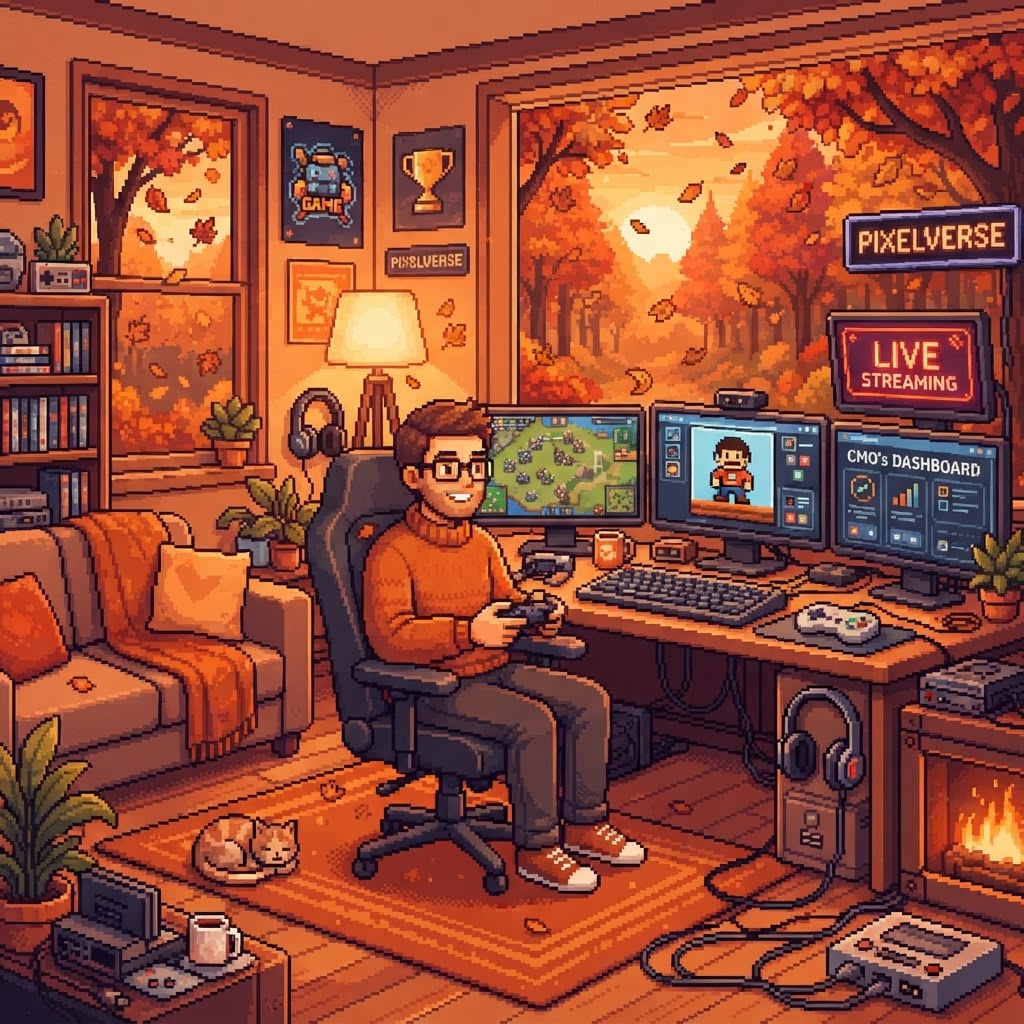
A CMO's Guide to the Digital Living Room
A streamer raid isn’t a slot for a scripted ad. It’s a coordinated handoff between creators, community, and brand, where the most meaningful moments often happen live and unscripted. Here’s what marketing teams should know before they step into the digital living room.
You’ve approved the budget, picked the creators, and signed off on the brand guidelines. Then the campaign goes live, and the most important moment happens in a chat you’re not controlling: one streamer wraps up, sends their viewers to another channel, and a new community decides whether to stay.
That handoff is a raid. It can look casual from the outside, but a good one takes real coordination. For our September–November 2026 Autumn Raid, that work starts well before anyone clicks “Raid.” The goal isn’t to make a live stream feel like a polished ad. It’s to make brand participation fit naturally into a moment creators and viewers already understand.
Before the raid, listen
The first planning question isn’t, “Where does the logo go?” It’s, “How does this creator actually stream?”
We learn the rhythm of each channel: what the streamer likes to play, how they welcome new viewers, what their chat responds to, and where a brand mention would feel comfortable. A creator who enjoys storytelling may build a personal anecdote into a conversation. A fast-moving, joke-heavy chat might prefer a short, clear prompt that doesn’t interrupt the game. Those differences matter more than forcing every creator into the same script.
The brand still has a role. We agree on the message, any product details that must be accurate, and the lines nobody should cross. But the creator chooses the words and timing that make sense for their community. That balance is deliberate: clear guardrails, with room for a human voice.
The logistics behind the live moment
A raid is a sequence, not a single shout-out. Teams confirm creator availability, align the stream schedule, and decide who is handing off to whom. They share practical notes: the destination channel, the planned timing, the campaign link or offer, and what to do if the stream runs long or the next creator needs to adjust.
For example, imagine a streamer finishing a cozy game late in the evening. Their viewers are already chatting about what they want to watch next. The creator explains where they’re heading, thanks the community for coming along, and raids a second streamer who is just getting started. That streamer welcomes the incoming audience, gives the chat a moment to settle, then brings up the campaign in a way that fits the conversation already underway.
Behind that seemingly easy transition is a person keeping an eye on timing and communications, plus a plan for what happens if something changes. Live content rarely follows a perfect schedule. The point of coordination isn’t to eliminate spontaneity. It’s to give creators enough support to handle it without making the experience feel managed from a distance.
Brand presence belongs in the flow
In a living room, people don’t pause a conversation so someone can deliver a commercial. Streaming audiences are no different. They may be watching gameplay, talking with the creator, welcoming newcomers, and deciding whether to stick around, all at once. A brand interruption can make the room feel less like a community and more like inventory.
So we look for openings that make sense: a creator’s genuine reaction, a chat question, a natural break between matches, or the welcome that follows a raid. The brand’s presence can be a useful prompt or a shared experience, not just a logo on screen. If there’s a giveaway, a product demonstration, or a call to explore something, viewers should understand what it is and why it’s being mentioned. They should also be free to ignore it and keep enjoying the stream.
That’s not a softer standard for measurement. It’s a more honest one. We can track referral activity, participation, and the path from a creator’s channel to a destination. But a click alone won’t tell us whether the mention felt credible, whether the new audience stayed, or whether the creator would choose to work with the brand again. Those signals deserve attention alongside reach and conversion.
What the brand team can do well
If you’re evaluating a streamer partnership, ask to see the operating plan, not only the media plan. Who talks to creators? Who coordinates the handoff? What freedom do creators have? How are changes handled during a live broadcast? And how will the team learn from the campaign without treating every chat reaction as a guaranteed outcome?
A strong partner should be able to explain the logistics in plain language. They should welcome questions, be transparent about what they can measure, and avoid promising that a creator’s audience will behave like a predictable ad segment. Their job is to protect the campaign’s goals while respecting the people who make the channel worth watching.
The best proof is how it feels
A raid is valuable partly because it’s unscripted. A viewer can arrive mid-game, catch a running joke, ask a question, or discover a creator they decide to follow. A brand can be part of that experience, but it can’t manufacture the trust that makes the room feel welcoming. That comes from the streamer and the community, supported by thoughtful planning behind the scenes.
If you’re considering a gaming partnership this fall, come see the work up close. Bring your questions, sit in on a planning conversation, or watch a raid unfold with us. We’ll show you what’s coordinated, what stays in the creator’s hands, and where a brand can contribute without taking over the room.
Ready to Join
the Raid?
Streamers earn points & rewards.
Brands get 3 months of real reach.