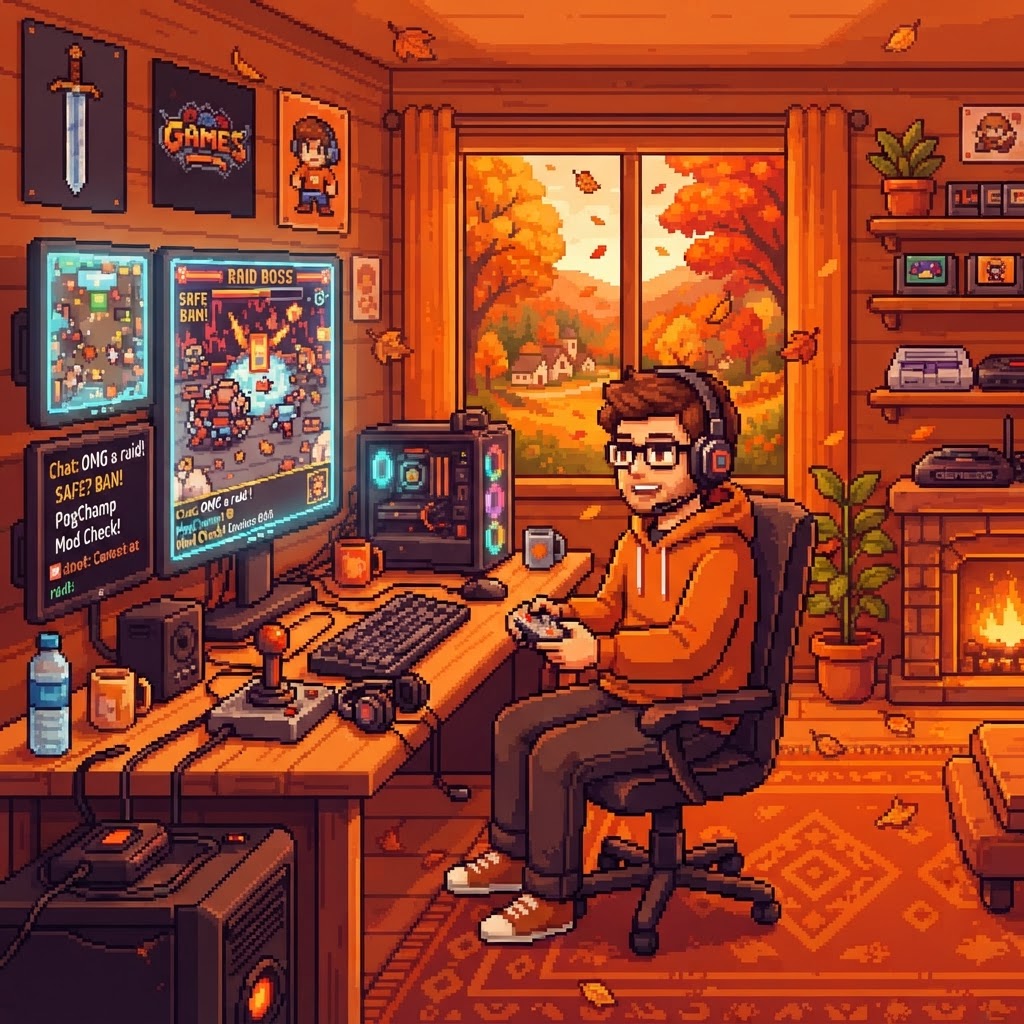
Will a Raid Ruin Your Brand Safety? A CMO’s Honest Q&A
Concerned that live gaming sponsorships could expose your brand to unpredictable moments? This candid CMO Q&A explains how thoughtful raid design, creator fit, and real-time guardrails can turn unscripted interaction into credible community trust.
“What if a streamer says something that puts our brand in a difficult position?”
That is usually the first question from a marketing director considering live gaming. It is also the wrong place to stop the conversation.
The better question is: what systems, partners, and expectations make live participation safer and more credible than a polished placement audiences already know is an ad?
For the Sept–Nov 2026 Fall in Love with Gaming streamer raid campaign, that distinction matters. A raid is not a creator handing your brand a microphone and hoping for the best. Done well, it is a planned handoff between communities, built around creator fit, clear boundaries, active moderation, and a reason for viewers to welcome the interaction.
Here is the candid Q&A I would use with any risk-conscious marketing team.
“Isn’t unscripted content inherently unsafe?”
No. Unmanaged content is unsafe. Unscripted content is simply less predictable.
That difference is important. A traditional placement can be scripted, edited, and approved, yet still appear beside content that feels wrong for your audience. A live raid creates a different kind of control: you choose the creator, define the activation, establish escalation procedures, and monitor the experience as it happens.
You are not trying to control every sentence. You are creating the conditions for a good interaction.
That is often more authentic, and authenticity is a safety asset. Viewers can tell when a creator is reading copy that does not belong in their voice. They are more receptive when the partnership respects the community’s normal behavior.
“What happens if the chat becomes toxic?”
This is a legitimate concern, not something to wave away with “the community will handle it.”
A responsible raid plan includes chat moderation before the first viewer arrives. That means identifying trusted moderators, agreeing on prohibited behavior, using platform tools, preparing response language, and deciding who can pause or end the activation. It also means selecting creators whose communities already have a track record of constructive participation.
The campaign should have a written escalation path for issues such as harassment, hate speech, dangerous behavior, or impersonation. Your team should know who is monitoring, what gets documented, and how quickly decisions are made.
The goal is not to pretend that every live chat is perfectly polite. The goal is to make sure one bad comment does not become a brand crisis because nobody knew what to do next.
“How can we protect the brand without making the stream feel scripted?”
Set boundaries around topics and behavior, not around every word.
A useful creator brief might cover brand claims, required disclosures, visual guidelines, prohibited themes, giveaway rules, and what to do if a viewer asks a sensitive question. It should not demand a rigid monologue that makes the creator sound unlike themselves.
Think of it like a live event briefing. The host knows the schedule, the safety rules, and the purpose of the event. They still speak naturally.
A consumer brand might ask a streamer to welcome a raid, explain a seasonal community challenge, and invite viewers to participate. It can prohibit unsupported product claims and political commentary during the activation without dictating the streamer’s personality.
That balance protects credibility on both sides.
“Will the audience see this as an interruption?”
They might, if the raid arrives without context or gives them nothing to do.
A strong raid feels like a recommendation from one community to another. The incoming creator explains why the handoff is happening, the receiving streamer acknowledges the visitors, and the audience gets an immediate shared activity. That could be a short challenge, a community vote, a cooperative game moment, or a themed discussion tied to the autumn campaign.
The first 60 seconds matter. If viewers understand the reason for the visit, recognize the personalities involved, and have an easy way to participate, the interaction feels social rather than intrusive.
That is where a brand can contribute without taking over. Offer the occasion, the creative prompt, or the reward structure. Let the creators make the moment theirs.
“What does brand safety look like in measurable terms?”
It should be more than a vague feeling that the stream “went well.”
Before launch, agree on practical measures: creator suitability, moderation coverage, disclosure compliance, incident response time, sentiment, chat participation, raid retention, and brand-lift signals where available. Review both positive and negative moments after each activation.
For example, if a raid brings 1,500 viewers into a channel and 62 percent remain after the first five minutes, that tells you something about the relevance of the handoff. If moderation removes 18 messages but the conversation remains constructive, that tells you your safeguards worked. Neither number tells the whole story, but together they create a more useful picture than impressions alone.
Document learnings, then adjust the next raid. Live marketing should be managed as an operating process, not judged as a one-time gamble.
“Why partner with this campaign instead of running our own activation?”
Because the right campaign gives you a framework for trust without asking you to build every piece from scratch.
Fall in Love with Gaming brings a seasonal narrative, participating creators, and a shared reason for communities to connect between September and November 2026. Your role is not to manufacture belonging. It is to support an experience that already has a human center.
That can make the difference between sponsorship and participation. The brand becomes the partner helping communities meet, play, and discover something together, rather than the advertiser interrupting a stream with a message.
“So, are you saying there is no risk?”
Absolutely not. Live content carries real risk. The honest case is that thoughtful planning can make that risk visible, manageable, and worthwhile.
The bigger risk may be treating gaming audiences as if polished control is the same as trust. People do not need brands to be perfect. They need brands to be prepared, respectful, and accountable when something unexpected happens.
If your team is ready to move from risk-averse brand manager to community-first partner, start with one well-matched creator, one clearly scoped raid, and one shared moderation plan. Bring your toughest questions to the campaign team, and build the safeguards into the idea from the beginning. That is how an unscripted moment becomes a trusted one.
Ready to Join
the Raid?
Streamers earn points & rewards.
Brands get 3 months of real reach.