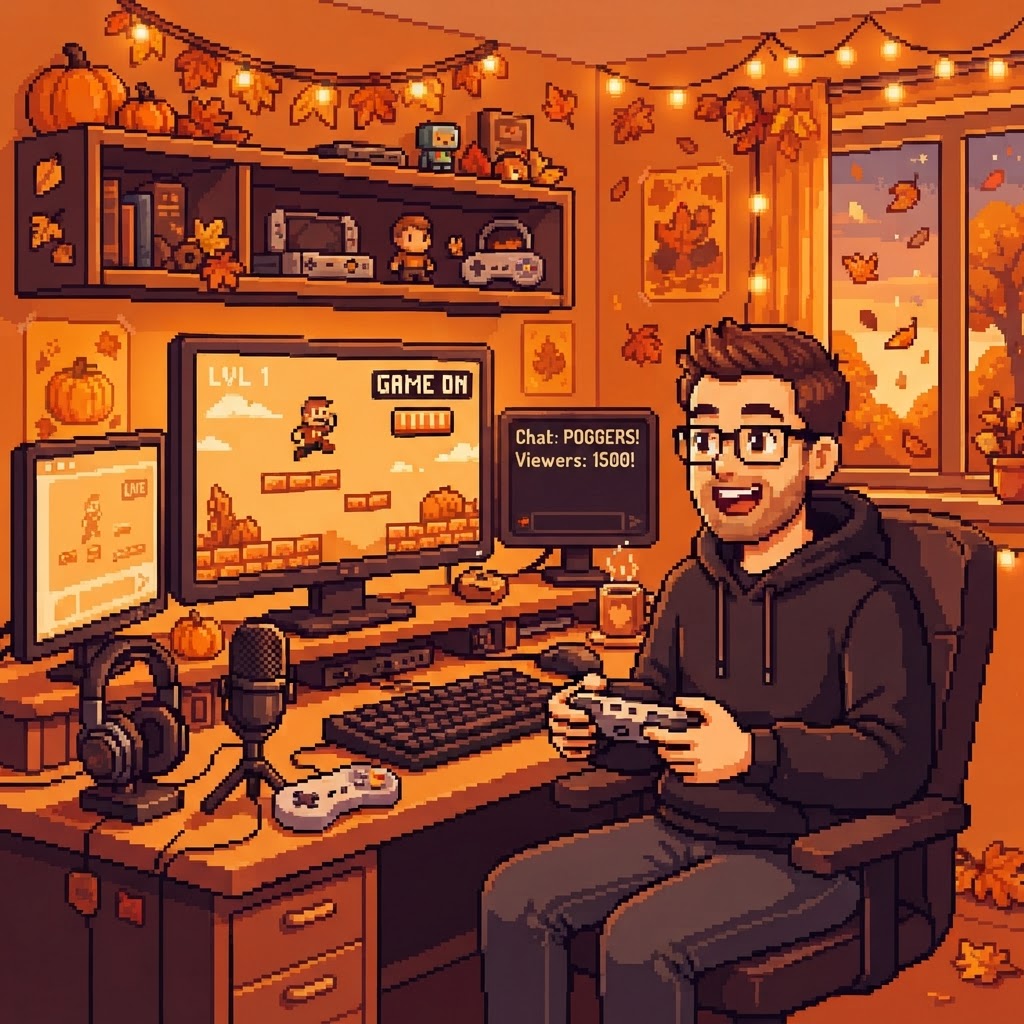
I Doubled My Average Viewers With Zero Extra Prep
A casual streamer tested whether joining a coordinated raid campaign would create more work or more momentum. The result was a 112% lift in concurrent viewers without adding a single extra prep task.
I used to hear “campaign” and assume “more work.” More graphics, more scheduled posts, more planning, and another obligation competing with the few hours I actually had to stream.
That was exactly why I tested the Fall in Love with Gaming raid campaign differently. I did not redesign my channel, add streams, or prepare a special event. I simply joined the scheduled raid flow, stayed live for my normal session, and passed viewers to another participating creator at the end.
The result was a 112% increase in average concurrent viewers.
The baseline was intentionally ordinary
I am not a full-time creator. My usual routine is two evening streams a week, generally three hours each. I play whatever I am currently enjoying, with minimal planning beyond choosing a game and posting a quick reminder in Discord.
During the four weeks before joining the raid, my numbers looked like this:
- Average concurrent viewers: 34
- Average live viewers at the 30-minute mark: 31
- Average stream length: 3 hours, 8 minutes
- New followers per stream: 4
- Chat messages per hour: 86
Those numbers were stable, not disastrous. They were also not moving. I could have responded by streaming more often, producing short-form clips, or building a more elaborate content calendar. All of those approaches might work, but they would also require time and energy I did not have.
So I kept the experiment narrow: participate in the raid campaign without increasing my workload.
What I actually changed
The answer is almost boring, which is the point.
I opted into the September through November 2026 campaign schedule, added the campaign information to my existing stream description, and coordinated a raid with a creator whose audience had some overlap with mine. We agreed on a simple handoff: I would stream my normal game, mention the raid near the end, and send viewers over when I finished.
That was it. No new overlays. No custom trailer. No marathon stream. No additional editing session.
The only extra preparation took about 12 minutes. I checked the raid time, exchanged messages with the other streamer, and wrote one sentence for my closing script. Compared with preparing a highlight video or planning a themed broadcast, the workload was negligible.
The numbers after four weeks
Across four participating streams, my average results were:
- Average concurrent viewers: 72
- Average live viewers at the 30-minute mark: 66
- Average stream length: 3 hours, 11 minutes
- New followers per stream: 9
- Chat messages per hour: 173
Moving from 34 to 72 average concurrent viewers is a 112% increase. The stream length barely changed, which matters because the gain did not come from broadcasting for twice as long.
The biggest difference was not a sudden flood of viewers at the end. My opening 30 minutes improved, too. People who had discovered me through another participating streamer arrived earlier, and existing viewers were more likely to stay because the stream felt active from the beginning.
One night made the shift especially clear. I was playing a co-op roguelike to an audience of 29 people when a raid arrived from a creator I had not previously collaborated with. Within five minutes, the channel reached 81 viewers. Twenty-three of those viewers returned for my next stream, according to my follow and returning-viewer data.
That is the force multiplier: the effort that created the audience was distributed across several creators, rather than resting entirely on me.
Why this felt different from grinding for growth
Individual content grinding usually asks a casual streamer to solve every part of the growth problem alone. You need an idea, production time, promotion, discovery, and enough consistency for the content to compound.
A coordinated raid changes the equation. You still need to be present and welcoming, but the discovery engine is shared. Another creator’s community supplies initial momentum, your stream gives those viewers a reason to stay, and your raid passes that energy forward.
That does not make the results automatic. A raid will not fix a confusing stream title, an inactive chat, or a channel that gives new visitors no reason to return. It does mean you are not starting from zero every time you go live.
For me, the practical benefit was reduced pressure. I did not have to manufacture a major event to make the stream feel special. The event was the connection between communities.
The burnout question
The fear I hear most often from casual creators is not “Will this work?” It is “What will this cost me?”
That is the right question. A growth tactic that produces more viewers but makes you resent streaming is not sustainable.
This campaign passed my test because it fit around my existing routine. I did not add another broadcast, commit to daily posts, or promise content I could not deliver. I used the stream I was already planning and added one collaborative handoff.
There was also a social benefit. Raiding gave me a reason to build relationships with creators at a similar stage, rather than treating networking as another vague task on my list. We watched each other’s streams, shared what was working, and became more comfortable recommending one another.
A low-effort way to test it yourself
Start with three normal streams, then compare them with three campaign-participating streams. Track average concurrent viewers, first-30-minute viewers, new followers, chat activity, and returning viewers. Keep your game, schedule, and stream length as similar as possible.
Before each raid, agree on three things: the handoff time, the type of audience you are trying to connect, and how you will welcome newcomers. Afterward, look beyond the peak number. A raid is more valuable when viewers return, participate in chat, or discover another creator in the network.
My result was not a magic trick, and 112% will not be everyone’s number. The important finding was simpler: collective momentum gave my ordinary streams a bigger surface area without demanding a second job.
If you stream casually and have been avoiding campaigns because you cannot take on more prep, try one raid during a stream you were already going to run. Bring your usual personality, make newcomers feel at home, and see whether shared momentum can do some of the heavy lifting.
Ready to Join
the Raid?
Streamers earn points & rewards.
Brands get 3 months of real reach.