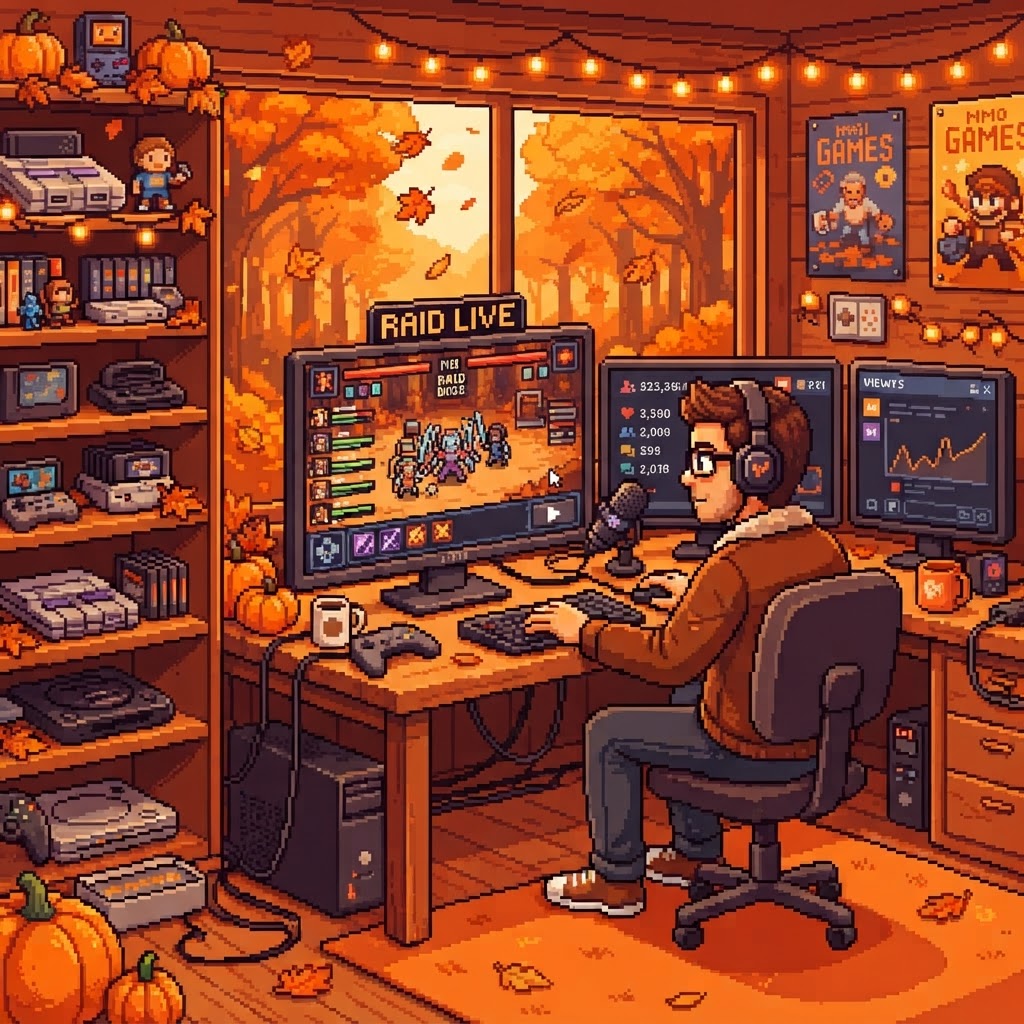
I Followed a Brand Manager Through Their First Live Raid
A brand manager with zero livestream sponsorship experience walks through a live raid night, from nervous prep to watching 1,200 new visitors flood a chat, learning what actually moves audiences, and why human stories beat static ads.
7:30 AM: coffee, calendar, worry
I had never sponsored a streamer before. My inbox was filled with polished proposals, CPMs, and a creative brief that felt far more like a billboard than a conversation. I woke up with the same question other brand managers ask: how does this translate into anything human? That was the exact fear I followed for a day during the Fall in Love with Gaming campaign.
10:00 AM: prep, not perfection
We treated this like a rehearsal for a small play, because that is basically what a live raid feels like. The streamer we sponsored, MaraPlays, scheduled a 30-minute co-stream and raid for 8:00 PM PT. Her normal concurrent viewers averaged 900, she had 4,200 followers, and she is known for quick, kind banter in chat. Our creative goal was simple: introduce people to the brand through story, not a hard sell.
My checklist that morning was brutally practical: confirm overlay copy, approve the scripted tagline for the host, queue the giveaway prize, and make sure the landing page loaded in under two seconds on mobile. I asked three questions no one on the creative brief had asked: who will tell our story live, what will be left unscripted, and what does success look like beyond impressions. Those questions changed everything.
4:00 PM: anxiety, rehearsed
I watched a 10-minute dry run with the streamer, and I felt my skepticism shift. We agreed the host would open with a 60-second story about why they liked our product, then invite chat to a game-related giveaway tied to our microsite. The brand mention would be an honest anecdote, not a product sheet. I still worried: what if the chat turns, what if the story flops, what if it feels too corporate?
By focusing on one concrete metric, I calmed down: time-on-landing. If people clicked over, and spent more than 90 seconds exploring, we could measure engagement that mattered.
8:00 PM: live, heart racing
The stream started as any other. The streamer riffed with regulars, teased the raid, and then counted down. At the moment of the raid, something magical happened. The host transitioned from playing to telling: a 45-second story about their first in-game victory, and how our product helped them stay in the game longer. No slogans, only a personal line: "I actually used this during a 2 a.m. grind, and it kept me focused." That line earned a cluster of empathetic emotes, and an immediate ask from chat — "Where do I get one?"
Within the first 10 minutes of the raid we received 1,200 unique visitors to our microsite, and a steady stream of chat questions. Our landing page converted at 5.7% during the event, compared with the 0.9% average from our display ads. Those numbers made our CFO sit up, but the real win was what the numbers did not show: the tone shift. People were asking how the product fit into their play, how it felt, and whether it was worth it for a new player. That is a conversation a banner ad can never start.
8:20 PM: community, not interruption
During the raid the streamer read three viewer comments out loud, then riffed for two minutes on a joke that started in chat. The brand was mentioned twice more, always from the host’s perspective, and a mod pinned the giveaway link. The chat's response was immediate: people shared their own micro-stories, and a handful of players offered tips for new users. This turned our one-way sponsorship into a multi-directional exchange.
I took mental notes: authenticity, timing, and simple mechanics. The giveaway required an email and a one-question survey about how viewers intended to use the product. That question produced qualitative feedback I could not have purchased for the same budget.
9:00 PM: afterglow, real data
After the raid we had 1,200 new visitors, 68 sign-ups, and 41 survey responses full of candid language. One respondent wrote, "Saw Mara use it while clutched a raid, seemed legit." Another asked for a lower-price sampler. These were user voices, not focus group redlines. We also saw a 320% uplift in time-on-site during the raid window versus usual traffic spikes.
We debriefed with the streamer in a 20-minute call. She told us what worked from her side, what felt scripted, and what the chat organically wanted to hear more about. Her advice was simple: let the host be human, let the chat lead a little, and make the path from stream to product seamless.
What I learned, and what you can copy tomorrow
- Let the host tell one honest, personal story. A 45 to 60-second anecdote works better than bullet points.
- Keep the mechanics simple: a pinned link, a short form, and a giveaway that aligns with gameplay.
- Measure engagement that matters: time-on-landing, sign-ups, and qualitative responses from a one-question survey.
- Treat the raid like theater: rehearse, but leave room for improvisation.
This campaign transformed a static sponsorship into a dynamic, human-led storytelling event. If you are a brand manager who has never sponsored a streamer before, try this for one night: pick a streamer whose community vibe matches your brand personality, agree on an honest story they can share, and track time-on-landing instead of clicks alone.
If you want, reply here and I will share the exact checklist we used and the copy the streamer read live. I was once where you are, and I am happy to walk you through the first raid.
Ready to Join
the Raid?
Streamers earn points & rewards.
Brands get 3 months of real reach.