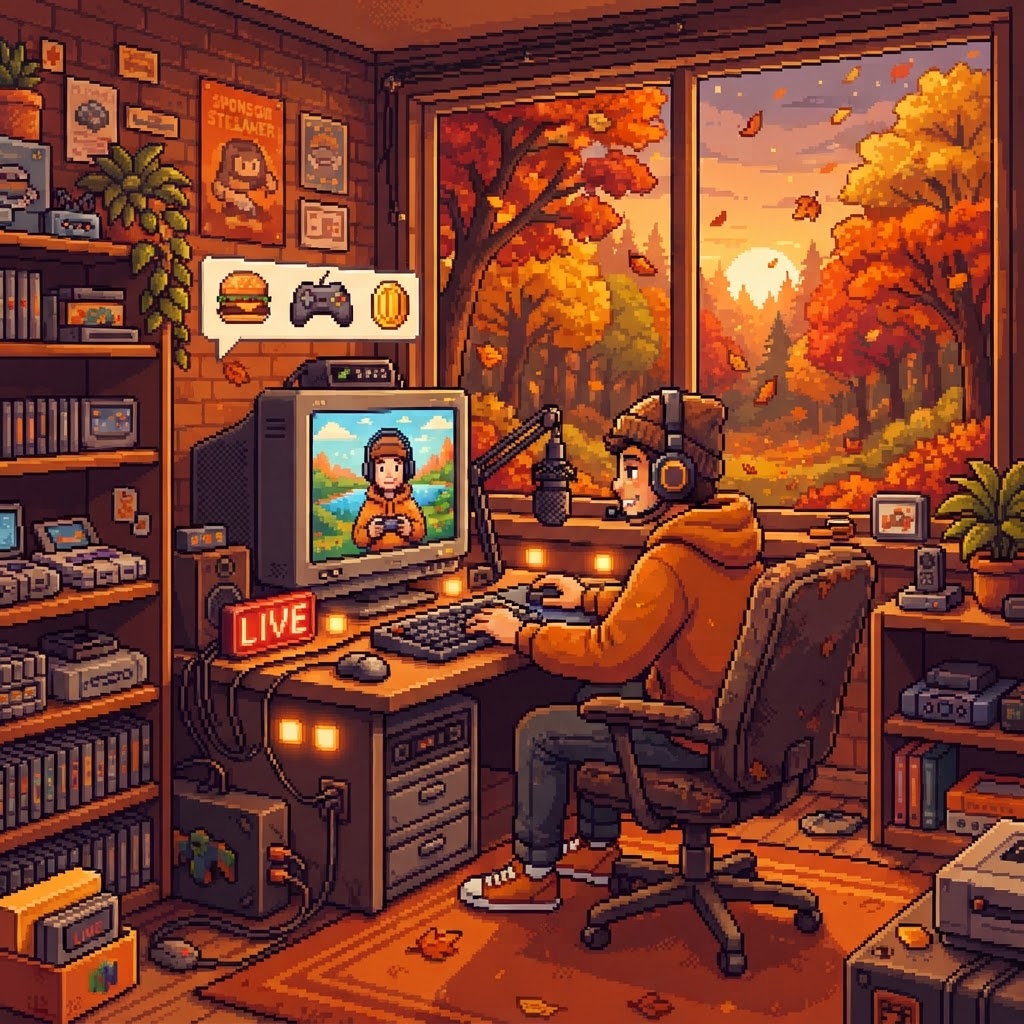
Five Myths About Selling Out to a Brand
Worried that a sponsored stream will make your community feel like a sales funnel? This myth-busting guide shows how Fall in Love with Gaming can support your creative voice, strengthen viewer connection, and fund the work behind the channel.
You know the fear: accept a brand partnership, and suddenly every regular wonders whether the jokes, recommendations, and late-night chats were genuine. “Selling out” can feel like the one mistake you cannot undo.
That anxiety is understandable. Your community is not a demographic, and your stream is not an ad slot. It is a shared space built one conversation, clutch play, and familiar username at a time.
But partnering with a brand does not automatically erase that work. The difference is in how you participate, what you protect, and whether the campaign gives your community something worth showing up for. Here are five myths worth challenging before you decide what brand work means for your channel.
Myth 1: Any sponsorship makes your content inauthentic
Authenticity is not the absence of money. It is the presence of honesty.
Your viewers already understand that streaming takes time, equipment, moderation, editing, planning, and energy. A partnership can help support those things without turning your personality into a script. The real problem is not sponsorship itself. It is pretending a sponsored message is an unsolicited personal discovery, or promoting something you would never ordinarily consider relevant.
A better approach is straightforward: disclose the relationship, explain why the collaboration fits your channel, and keep your normal voice. If you are usually thoughtful about games, be thoughtful. If your community loves chaos, let the activation have some chaos. Trust grows when viewers can see the reasoning behind your participation.
Myth 2: The brand controls everything once you say yes
A professional collaboration should include boundaries before the first stream goes live.
You can ask practical questions: What is required? What is optional? Which talking points are fixed, and where can you improvise? Can you choose the game, format, schedule, or community activity? What happens if a concept stops feeling right?
The Fall in Love with Gaming campaign is designed to bridge creative autonomy and sustainable growth, not force every streamer into the same template. That means treating the campaign as a framework rather than a replacement for your format. A cozy variety streamer, a competitive FPS creator, and a tabletop-focused channel should not sound interchangeable, and your audience can tell when they do.
Before committing, write down the parts of your stream that are non-negotiable. Your moderation standards, your relationship with your viewers, and your tone belong on that list.
Myth 3: Your audience only sees the paycheck
Viewers are often more perceptive than creators give them credit for. They notice when a sponsored segment is rushed, awkward, or disconnected. They also notice when a collaboration creates a memorable night.
Imagine a November stream built around a community challenge. You invite viewers to bring their favorite comfort game, run a themed tournament, or share the gaming ritual that gets them through a rough week. The brand supports prizes, production costs, or a charity element, while you host the conversation in your own style. The partnership is visible, but so is the reason it exists: bringing people together.
That kind of experience can become part of your channel’s story. A paycheck ends when the invoice clears. A well-designed community moment can give viewers an inside joke, a tradition, or a reason to return next week.
Myth 4: Saying yes means saying yes to every future opportunity
One campaign is not a permanent identity.
You can participate in a September activation and decide that a different format suits you in October. You can learn that your audience prefers a live challenge to a pre-recorded integration. You can discover that one category fits your values, while another does not. Good partnerships leave room for that learning.
Treat each collaboration as a testable creative project. Set a goal beyond revenue, such as introducing viewers to a new community activity, funding upgraded audio, or creating two clips that your audience genuinely wants to share. Review what happened afterward. Did chat stay engaged? Did new viewers understand the context? Did you enjoy making it?
Those answers help you build a partnership strategy instead of chasing every offer that arrives in your inbox.
Myth 5: Protecting authenticity means refusing brand work entirely
This is the myth that can cost you the most.
Refusing every partnership may feel like the safest way to protect your community, but it can also leave you carrying the full cost of growth alone. Better lighting, reliable internet, moderation support, accessibility tools, and time away from a day job all affect the quality of the space you are trying to maintain.
The goal is not to choose between community and sustainability. It is to make sustainability serve the community.
For the autumn campaign, that might mean choosing a collaboration that lets you fund a regular community night, improve captions, support moderators, or create a stream schedule you can actually keep. Those are not betrayals of your audience. They are investments in the place you built together.
The question to ask instead
Rather than asking, “Will this make me look like I sold out?” ask, “Can I make this collaboration feel like us?”
If the answer is no, walk away. If the answer is maybe, negotiate the format. If the answer is yes, be clear with your viewers, bring your own ideas, and make the campaign earn its place in your channel.
Fall in Love with Gaming runs from September through November 2026, giving you time to shape participation around your community instead of forcing a one-off sales moment. Talk with your viewers before you commit. Ask what they would enjoy, what would feel out of place, and what kind of event they would remember.
Your community does not need you to reject every brand. It needs you to stay recognizably yourself. If you have an idea for a collaboration that could bring your people closer, start the conversation, and invite them into the process.
Ready to Join
the Raid?
Streamers earn points & rewards.
Brands get 3 months of real reach.