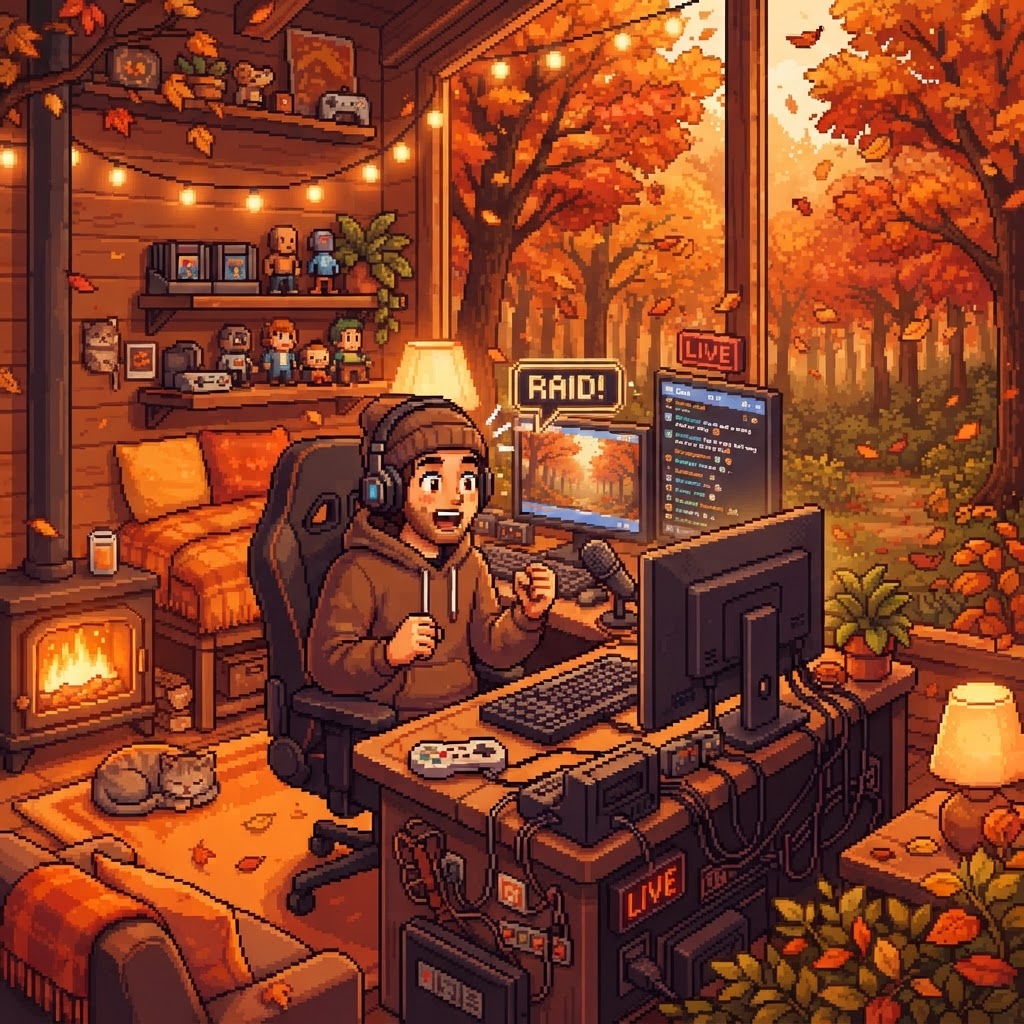
I Hid My Channel Metrics Until the Raid Found Me
I spent years hiding a small subscriber count, convinced it made me unworthy of a brand partnership. Then a fall raid campaign showed me that the conversations, trust, and returning viewers behind the number can matter far more than the number itself.
I had the partnership email open for eleven minutes before I could make myself reply.
The request was simple: send over my channel metrics so the team could understand who they might be working with during the September to November 2026 Fall in Love with Gaming raid campaign.
My cursor hovered over the attachment button. Inside the spreadsheet were the numbers I had been carefully avoiding: 2,184 subscribers, an average of 430 views on recent videos, and a click-through rate that looked respectable to me but probably tiny beside the creators I assumed brands wanted.
I closed the email.
Then I opened it again, changed one sentence, and closed it again.
The number I thought told the whole story
I had built my channel slowly, usually after work, often recording after midnight because that was the only quiet time in my apartment. My audience was not enormous. There were no viral clips bringing in thousands of strangers every week. Most of my growth came from people who found one strategy video, left a question, and returned for the next stream.
That should have felt meaningful. Instead, I treated it like evidence against me.
Whenever a potential partnership asked for subscriber counts, I imagined the person on the other end opening the file, seeing 2,184, and thinking, “That is not enough.” I worried they would compare me with a creator who had 100,000 subscribers and decide I was playing at being a professional.
The embarrassing part was that I knew better in theory. I had spent years telling other creators that audience quality mattered. I had explained retention, repeat viewers, chat activity, and community trust to friends who were starting channels.
But when the spreadsheet was mine, vanity metrics suddenly felt like a verdict.
What happened when the raid arrived
The opportunity came through a note about the autumn campaign, which centered on streamers introducing viewers to one another through coordinated raids. The idea was not simply to put a logo on a video. It was to create a chain of welcoming moments, with communities discovering new games and new people together.
That sounded like the kind of work my channel actually did well. My Friday co-op streams rarely had more than 70 people watching live, but the same names appeared week after week. One viewer, Maya, had started coming for roguelike recommendations. A month later, she was helping new people understand our chat rules and inviting them into community game nights.
I had never put that in a media kit because it did not fit neatly into a headline number.
The campaign team asked about it anyway.
They wanted to know what a raid felt like in my community, how I welcomed first-time viewers, and what happened after the stream ended. They asked whether my audience participated in recommendations, whether viewers came back for other creators, and whether I had ideas for making a handoff feel natural instead of transactional.
For the first time, I was not being asked to defend my size. I was being asked to describe my people.
The relief of being seen clearly
I sent the spreadsheet, along with a short note explaining the context behind the numbers. I included that 68 percent of my live chat messages during a recent four-hour stream came from returning viewers. I mentioned that our raid target was a variety streamer who had never appeared in my community before, and that I planned to prepare my audience beforehand so the welcome would not feel like an interruption.
I expected a polite rejection.
Instead, the reply focused on the plan. They asked how we could give viewers a reason to stay connected after the raid. They liked the idea of a shared challenge, where both communities would recommend one game from their favorite autumn backlog. They were interested in the small details: who would explain the context, how we would moderate the transition, and how we could make quieter viewers feel included.
That conversation changed the way I understood value.
The subscriber count was still true. So were the views. I did not need to pretend my channel was larger than it was, and I did not need to apologize for being small. The metrics provided useful context, but they did not capture the trust built in a familiar chat, the courage it takes for a shy viewer to speak, or the warmth of someone being remembered when they return.
What I would tell creators preparing now
If you are hoping for your first brand partnership, send the numbers honestly. Then add the evidence that gives those numbers a pulse.
Describe your community rituals. Share a screenshot of a thoughtful comment, with permission. Explain your average live attendance, but also explain how many viewers return, participate, or follow a recommendation. Include a specific story about someone discovering a game, finding a creator, or feeling welcome because of something your channel made possible.
Brands do need data. The right ones also understand that data is a map, not the destination.
For this season, I am measuring success differently. I will still track views, clicks, and new subscribers. I will also notice whether the raided community feels comfortable enough to stay, whether my viewers make a genuine connection, and whether someone leaves with a new game or creator to love.
That is not lowering the bar. It is choosing a better one.
So, if you have been hiding your dashboard because the numbers feel too modest, I understand. Open it anyway, but do not send it alone. Tell the story behind the count. Tell a potential partner what your viewers do for one another, and what you do to protect that trust.
Maybe your first opportunity will not come from looking bigger than you are. Maybe it will come from finally letting someone see what your numbers were never able to say.
Ready to Join
the Raid?
Streamers earn points & rewards.
Brands get 3 months of real reach.