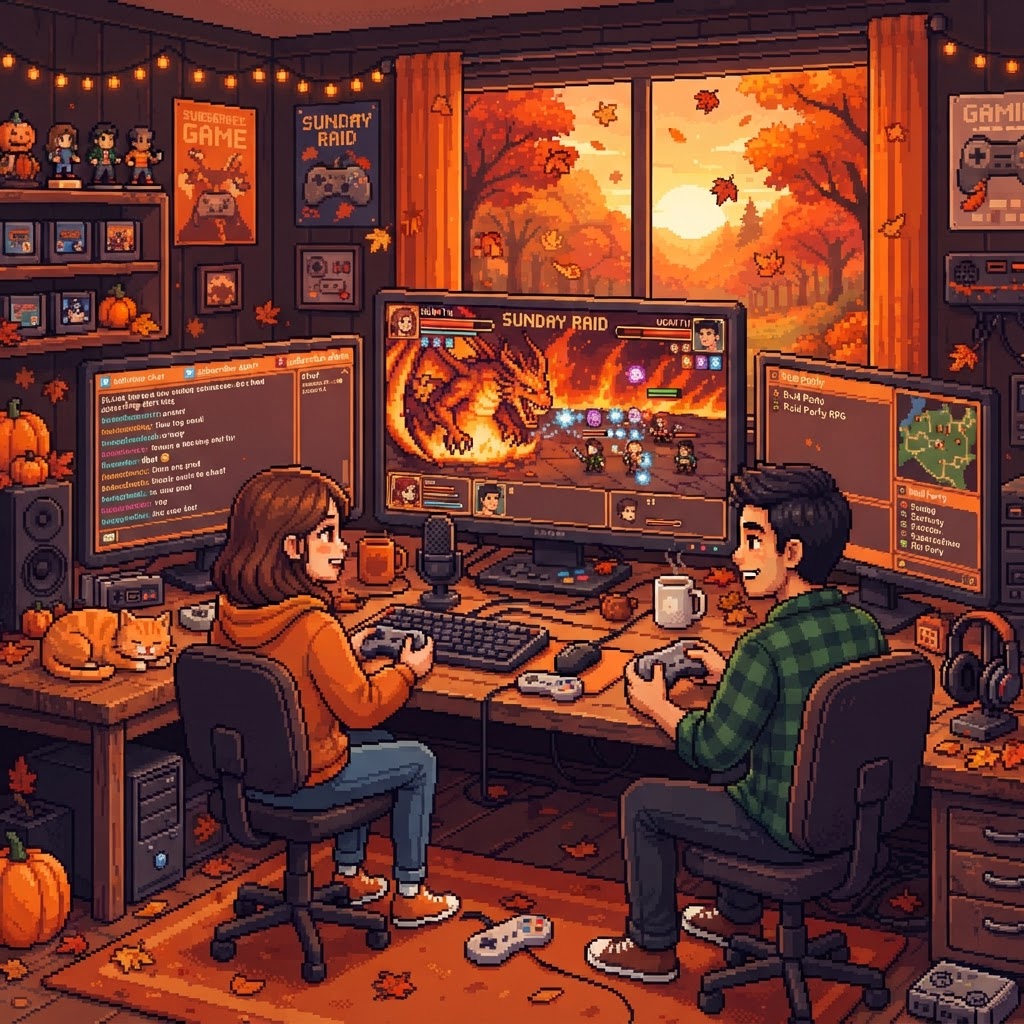
I Let a Brand Manager Co-Pilot My Sunday Raid Stream
A consumer-brand marketing director joins a Sunday raid and discovers what sponsorship looks like when the audience can answer back in real time. One candid stream shows why a human guest can earn more trust than another polished ad placement.
The first question from chat landed before I’d finished adjusting my headset: “Wait, are you the person who approved the brief?”
I looked at the streamer for help. They grinned and said, “That’s Maya, our brand manager. You can ask her.”
I had spent the week reviewing campaign plans, creator notes, and a very sensible list of talking points. Now I was live on a Sunday afternoon, sitting beside a creator while their community decided whether I sounded like a human being or a walking sponsorship deck.
That was the plan for my day in the Fall in Love with Gaming raid campaign: not to buy attention from the edges of a stream, but to show up as a guest, listen, and let the community respond honestly.
10:30 a.m., the pre-stream nerves
The setup was ordinary in the best way. Two chairs, two microphones, a game already queued, and a moderator checking that everyone knew the boundaries. We’d agreed on the practical stuff beforehand: I could talk about the product, I wouldn’t interrupt the creator’s flow, and nobody was expected to pretend they liked something they didn’t.
The last part was the one that made me nervous.
At work, feedback usually arrives after a meeting, in a recap, or tucked into a report. On stream, it arrives while you’re still talking. The audience can ignore you, question you, or clip the moment you say something awkward. There’s no polished edit waiting to rescue the conversation.
I’d been told to bring a short explanation of why our brand was involved. I had notes. I also knew I’d have to put them down eventually.
11:00 a.m., going live
The creator introduced me, then moved straight into the game. No elaborate sponsor segment, no forced applause, no sudden shift into corporate voice. I was simply there, learning the controls and trying not to steer us both into trouble.
Within minutes, chat had moved past “Who are you?” to the question that mattered: “Why did your brand want to do this?”
I answered as plainly as I could. We wanted to be part of a community conversation, not interrupt it. We were testing whether a brand could contribute by showing up with a real person, giving the creator room, and being willing to hear the response.
Someone replied, “Okay, but what do you actually play?”
That was easier. I told them what I play on weekends, admitted I’m bad at remembering crafting recipes, and got an immediate recommendation for a game I hadn’t tried. It wasn’t a perfect campaign line. It was a real exchange, and the room warmed up around it.
11:20 a.m., the moment the brief met the audience
The creator asked me about one of our products. I started with the answer I’d rehearsed, then caught myself stacking on too many details. Chat noticed.
“Sounds like a product page,” someone wrote.
I laughed, because they were right. I stopped, took a breath, and answered the question again in normal language. What it does, who it might help, and one thing it doesn’t do. The creator followed up with a practical question about using it during a busy week, and we talked through that instead of reciting features.
That small correction taught me more than a tidy sentiment score would have. The audience wasn’t hostile to the brand. They were asking us to earn our place in the conversation. When I dropped the script and answered directly, they stayed with us.
This is the part that can feel risky from a marketing desk. You can’t guarantee every response will be positive, and you can’t control the exact words people use. But control was never the same thing as connection. Our job was to choose a creator who felt right, set honest boundaries, and make space for the interaction to be real.
12:00 p.m., the raid begins
After the stream, we joined the raid, carrying the community into another creator’s live channel. The handoff was quick. The streamer gave context, chat arrived in a wave, and I got to watch the campaign work as a shared experience rather than a logo placement.
The second creator welcomed everyone, then asked what we’d been playing. Chat answered before I could. A few people mentioned the product conversation, but most were talking about the game, the creator, and what they wanted to see next. That felt right. The brand had entered their Sunday, but it wasn’t the whole Sunday.
One viewer asked whether I’d come back for another stream. I said yes, if the creator wanted me there and the community was up for it. That’s not a grand promise. It’s a human one, and a better starting point than assuming a single appearance has earned lasting affection.
1:00 p.m., after the stream
The debrief was quieter than the broadcast. We reviewed the moments that felt natural, the point where I sounded too rehearsed, and the questions I should have listened to more carefully. We also looked beyond raw reach. Did viewers stay for the conversation? Did they ask genuine questions? Did the creator feel supported rather than crowded out? Did the audience get something worthwhile from our presence?
Those are not reasons to abandon measurement. They’re reasons to measure what the activity is meant to create. A stream is not a conventional ad slot, and treating it like one can miss the value: attention freely given, trust built through a credible creator, and a brand representative willing to be accountable in public.
For a marketing director weighing a gaming sponsorship, the lesson isn’t that every executive needs to grab a headset. It’s that sponsorship gets more interesting when the people behind the brand are willing to meet the audience without hiding behind the campaign language. Start with a creator whose community you respect. Agree on clear guardrails. Show up prepared, but leave room to listen.
I went into that Sunday worried chat would expose everything I didn’t know about gaming. They did, a little. They also taught me where our message sounded stiff, recommended something new to play, and made the room feel less like a sponsor activation and more like a visit.
If you’re considering this kind of partnership, come watch a stream with us, bring your honest questions, and see what happens when the brand manager joins the conversation instead of speaking over it.
Ready to Join
the Raid?
Streamers earn points & rewards.
Brands get 3 months of real reach.