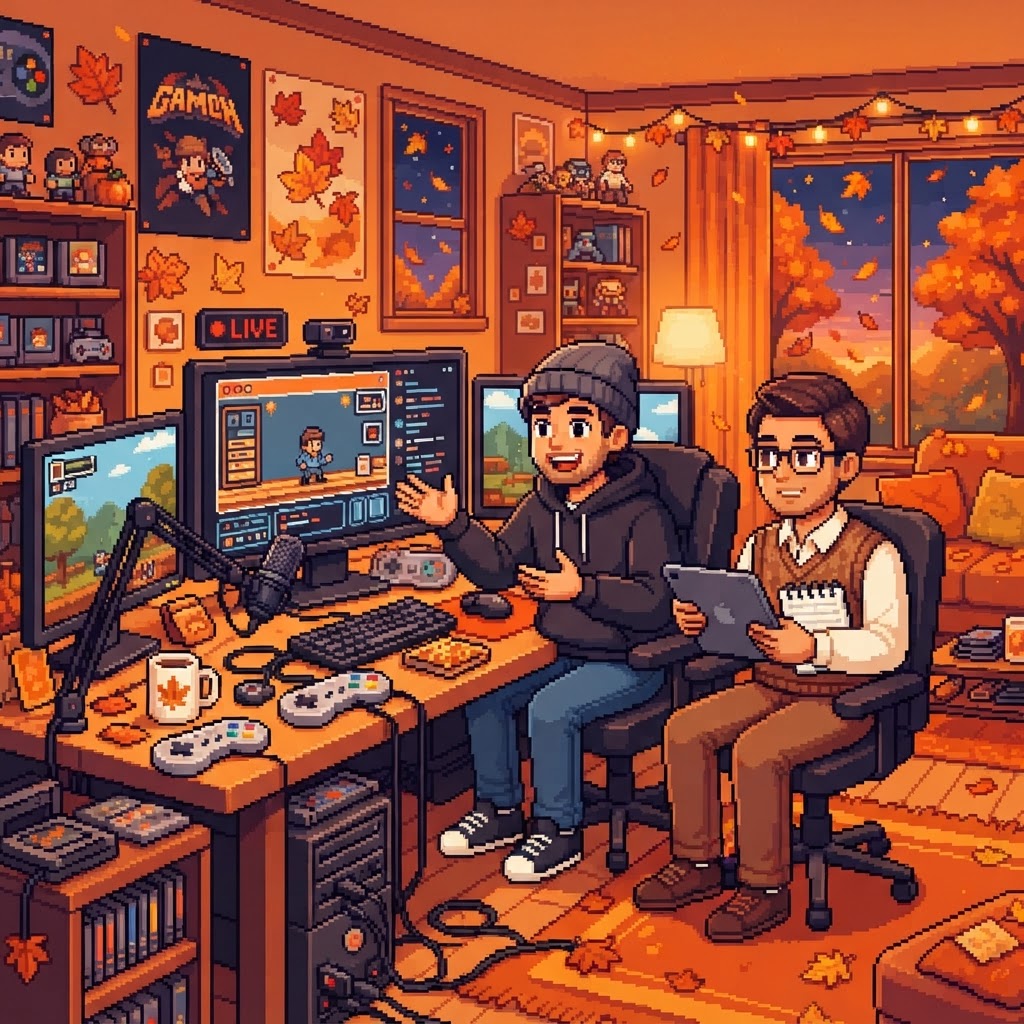
I Let a Brand Manager Step Into My Stream’s Backstage
A candid, hour-by-hour look at what a streamer partnership actually asks of a brand manager, from the first creator check-in to the final raid. See how the Fall in Love with Gaming campaign turns a media plan into a live, measurable community experience.
At 8:12 a.m., you open the campaign brief and find a question you don’t usually get from a media plan: “What would make this feel worth sharing with your community?” You know how to assess reach, placements, and spend. You’re less sure what happens when your brand enters a streamer’s chat in real time.
So let’s spend a day backstage with a creator taking part in Fall in Love with Gaming, the autumn streamer raid campaign running from September through November 2026. You won’t need to learn every gaming reference or become an on-camera personality. You do need to understand the people, the plan, and where your brand can fit without interrupting the fun.
9:00 a.m. The plan gets personal
The creator starts the day by reviewing the stream brief and checking in with the campaign team. This is not a script with every sentence prewritten. It’s a shared outline: what the campaign is about, what needs to be said, and what the creator’s audience can expect.
For a brand manager, that distinction matters. You’re agreeing on guardrails, not taking over the creator’s voice. You might confirm the approved name for a product, clarify a disclosure, or flag a claim that needs different wording. The creator contributes the format and language that make sense to their community.
A good brief leaves room for that expertise. It should make the required points easy to find, keep restrictions clear, and give the creator space to decide how to deliver them.
11:30 a.m. A small detail makes a big difference
The creator tests their setup: microphone, camera, game capture, lighting, and stream connection. They check the scene layout and make sure any campaign graphics are legible without covering the game. If something looks off, they can fix it now rather than explaining it to a live audience later.
This is a useful window for your team, too. Ask where a sponsored message will appear, how it will be disclosed, and what happens if a technical issue interrupts the stream. Those aren’t fussy questions. They help everyone feel prepared, including the viewers who deserve a clear, comfortable experience.
1:00 p.m. The community is already part of the work
Between setup and airtime, the creator checks in with moderators and may post a schedule reminder. Their moderators help keep chat welcoming and manageable, especially when unfamiliar viewers arrive. That behind-the-scenes support is part of what makes a live activation feel human rather than chaotic.
Your role is not to write the community’s reactions or manufacture excitement. It’s to make sure the campaign gives people something genuine to respond to. Perhaps the stream includes a seasonal challenge, a conversation starter, or a moment to celebrate a viewer’s clever play. The creator chooses what fits their channel; the brand helps make the moment possible.
4:55 p.m. Five minutes to go
The creator checks the run of show, water bottle, and final notes. The brand team confirms who is watching for any questions that need a factual answer. If a viewer asks something outside the agreed scope, the creator can acknowledge it without guessing, then route it to the right person afterward.
That’s one of the practical advantages of planning for a live environment: you don’t have to pretend every interaction can be controlled. You do need a clear escalation path, a named contact, and permission for the creator to say, “I don’t know, but I’ll check.” Honest boundaries build more trust than a forced answer.
5:00 p.m. The stream goes live
The creator welcomes viewers, settles into the game, and makes the partnership disclosure at the agreed point. Then the stream finds its rhythm. People greet one another, react to plays, and ask questions. The creator responds in their own voice, while moderators help the conversation stay on track.
The campaign message lands as part of that experience, not as a pause button on it. A viewer might ask how the campaign works. Someone else might be more interested in the match. Both responses are normal. The useful signal isn’t whether every person becomes a customer in the moment. It’s whether the brand has entered a relevant space respectfully, and whether people had a real chance to engage.
During Fall in Love with Gaming, streamer raids can extend that feeling from one community to another. At the end of a stream, the creator directs viewers to another participating streamer. The handoff introduces a new host and fresh conversation. It is a social connection with a live audience, not simply another placement in a schedule.
6:30 p.m. The numbers meet the nuance
After the stream, the team captures the agreed reporting: for example, peak and average concurrent viewers, chat activity, clicks where relevant, and any campaign-specific outcomes. The exact measures should be decided before launch, so no one is trying to define success after seeing the results.
But the debrief includes more than a dashboard. What did viewers ask? Which part felt natural? Did the timing work? Did the handoff bring people into the next stream, and did the creator feel supported? Pairing those observations with performance data gives you a fuller picture than impressions alone.
The next morning: a clearer kind of partnership
By the time the creator’s day wraps, you’ve seen the work that a media plan can hide: preparation, judgment, moderation, technical checks, and care for an existing community. Sponsoring a streamer still requires objectives, approvals, and measurement. It just asks you to balance them with trust and room for a real person to do their job.
If you’ve been curious about creator partnerships but unsure how to step in, start with a conversation, not a script. Tell a streamer what your brand needs to achieve, ask what their audience would find worthwhile, and build the format together. That’s a much less intimidating first step than trying to control every second of a live stream, and it’s where a better partnership can begin.
Ready to Join
the Raid?
Streamers earn points & rewards.
Brands get 3 months of real reach.