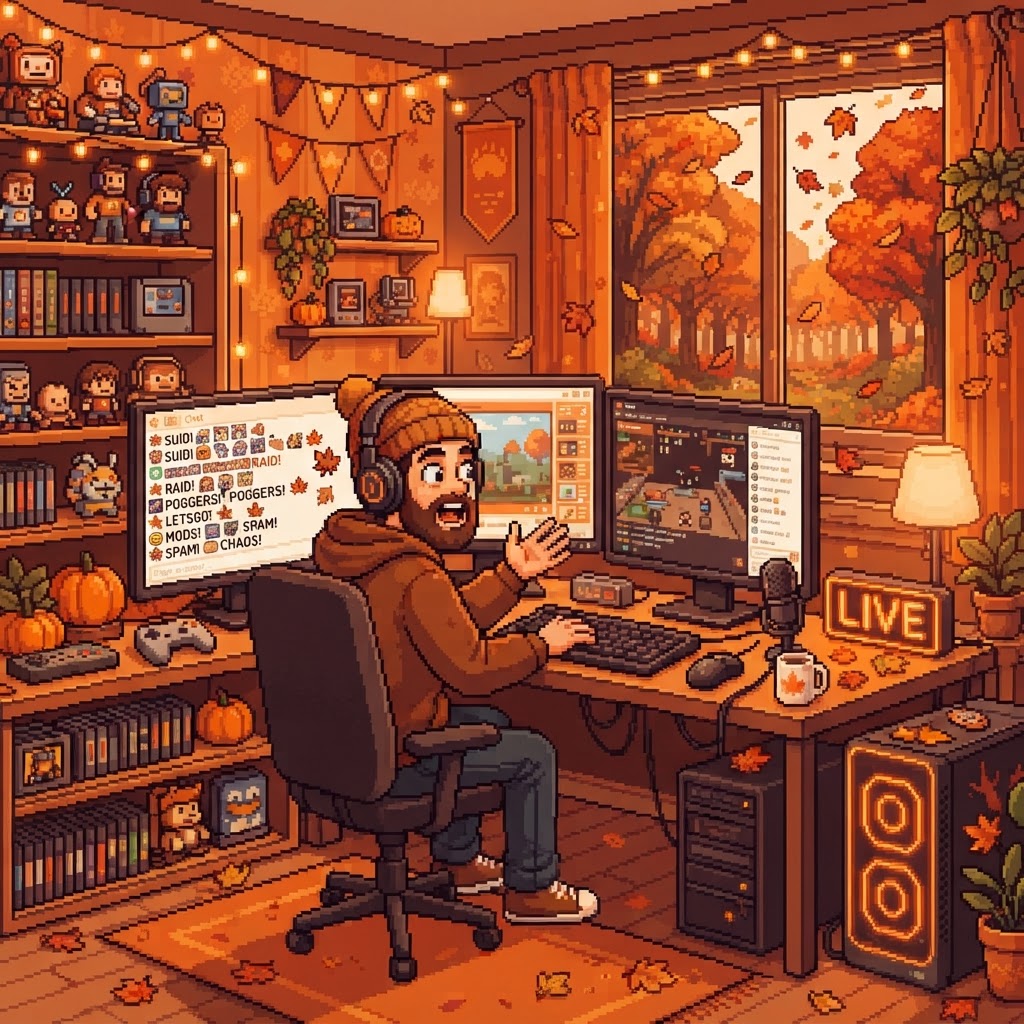
I Let My Chat Edit My Stream While the Raid Was Live
What happens when a TikTok gaming creator hands the stream controls to chat during a live raid? Here is the messy, funny, surprisingly intimate behind-the-scenes playbook for turning a coordinated cross-platform moment into community-led content.
I usually know exactly what my audience is going to see. The game is queued, the overlays are checked, the clips are ready, and my TikTok viewers have a pretty good idea of what kind of chaos I will allow on any given night.
Then the raid went live, and I handed them the controls.
Not literally every control. I kept the moderation tools, the stream key, and the ability to shut things down if something crossed a line. But for one high-stakes moment during the Fall in Love with Gaming campaign, my chat decided what appeared on screen, which challenge I attempted next, and how we welcomed the incoming community.
It was terrifying for about thirty seconds. Then it became the most connected I had felt on stream in months.
The setup happened before the raid
The part viewers rarely see is the coordination. A campaign raid is not just someone dropping into another creator’s stream and shouting, “We’re here.” It starts with a shared window, a destination, agreed messaging, and enough preparation to make the chaos safe and fun.
For this raid, I planned a cross-platform flow around my usual TikTok gaming audience. TikTok was where many people discovered the stream, but the live experience happened on my streaming channel, where chat could move quickly and participate in real time.
I prepared three things:
- A pinned message explaining the raid and where we were headed.
- A short list of community rules, including no spam, harassment, or spoilers.
- A control menu that let chat vote on the next game challenge, overlay, sound effect, or welcome message.
The menu mattered. “Let chat control the stream” sounds exciting, but without boundaries, it mostly creates confusion. I gave the community meaningful choices, not unlimited access to the machinery.
The moment control changed hands
We were playing a ranked match when the countdown appeared. Three minutes until the raid. My original plan was simple: finish the game, thank everyone, then send the audience over with a short message.
Chat had other plans.
They voted to switch to a heart-themed overlay, change my challenge from “win the next round” to “use the least-picked loadout,” and put a viewer-made welcome message on screen. The winning message was: “You found us at the worst possible time, so naturally, stay.”
It was not polished. It was better than polished.
At 8:47 p.m., with 214 viewers in my chat, the raid countdown hit zero. I read the welcome message, triggered the overlay, and sent everyone to the partner stream. For the next few minutes, my chat was not just watching me perform. They were shaping the handoff together.
Somebody redeemed the wrong sound effect. Somebody else pasted the correct raid phrase three times in a row. I forgot to mute my game audio before speaking, which meant the first welcome landed under a loud victory jingle.
That is the kind of moment I might normally edit out of a TikTok. Live, it became the shared joke everyone remembered.
Why it felt different from a solo trend
TikTok trends are brilliant at creating momentum. A sound, format, or challenge can give a creator an instant creative framework. But the relationship is often between the creator and the feed. You make something, publish it, and hope the right people arrive.
A raid changes the shape of that relationship. The audience is not only receiving content. They are carrying energy from one community to another.
That made the experience feel oddly intimate. We had a job to do together, and the job required trust. My viewers had to represent the tone of our community in someone else’s space. I had to trust them not to turn “control” into disruption. The receiving streamer had to trust us to arrive with enthusiasm without overwhelming the room.
The vulnerability came from being seen while I was not fully in charge. A bad poll result could make the stream awkward. A mistimed sound could interrupt the handoff. A viewer could misunderstand the assignment. None of those possibilities existed in a pre-recorded clip, where I could cut, caption, and polish the moment afterward.
That risk was exactly why it mattered.
What I would do differently next time
First, I would explain the raid mechanics earlier. A pinned message went up five minutes before the countdown, but some viewers missed it. Next time, I will mention the plan at least twenty minutes ahead and repeat it verbally.
Second, I would create fewer options. Four voting categories were too many while the game was moving. Two or three clear choices would make participation faster and reduce the chance of chat splitting its attention.
Third, I would assign a chat producer. I could play, host, and react, but I could not monitor every vote, watch the countdown, welcome new viewers, and catch technical mistakes at once. A trusted moderator or collaborator would make the experience smoother without taking the community-led spirit away.
Finally, I would leave room for the mess. The temptation is to over-engineer a campaign until every second looks professional. The best part of this raid was the imperfect handoff, the accidental sound effect, and the message that sounded like something my actual viewers would say.
Try the handoff, not just the hashtag
If you are a TikTok gaming creator curious about cross-platform campaigns, start small. Invite your viewers to choose one visible part of a live moment, then give them a clear purpose. Let them select the challenge, write the welcome, or decide which community cause gets the spotlight.
Keep your safety boundaries firm, communicate the plan, and accept that the result will not look exactly like your original storyboard.
That is the point. A raid is not just a traffic exchange. It is a brief act of collective hosting. When you let your community help carry the stream, they stop feeling like spectators and start feeling like co-creators.
If you try this during the September to November 2026 campaign, tell your viewers what you are nervous to hand over, then hand over that piece carefully. I would love to see what your chat does with the moment you usually keep for yourself.
Ready to Join
the Raid?
Streamers earn points & rewards.
Brands get 3 months of real reach.