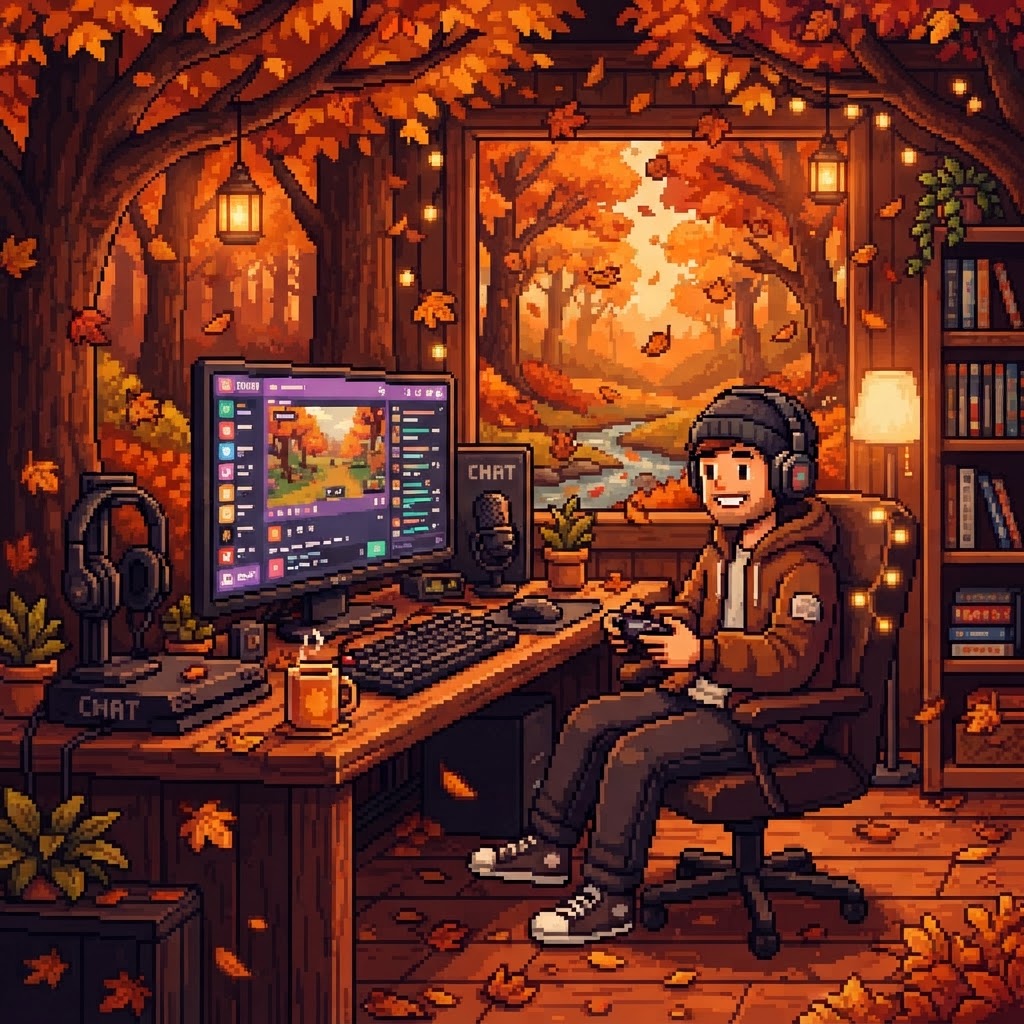
I Let My Quarterly KPIs Sleep While the Chat Took Over
A candid account of what happened when a marketing director stopped optimizing dashboards and joined the live conversation. For consumer brands weighing gaming sponsorships, it makes the case for participation, trust, and measurable human connection over passive reach alone.
At 8:47 p.m. on a Thursday, I was supposed to be reviewing quarterly performance dashboards.
The campaign report was open on one monitor, Slack was blinking on another, and I had three tabs tracking reach, completion rate, cost per thousand impressions, and every other metric I had insisted we include in the planning deck. The numbers were respectable. They were also doing absolutely nothing for me.
Then the streamer we had partnered with invited our brand account into the raid.
I nearly ignored it. We had already delivered the media. The sponsored segment had run. The dashboard had its data. Surely, I thought, the useful work was finished.
Instead, I clicked accept.
The moment the spreadsheet stopped being the story
Within seconds, our account was sitting in a new channel with hundreds of viewers arriving together. The streamer welcomed them, thanked the community for showing up, and then turned to us with a simple question: “What are you playing this fall?”
Not, “What is your favorite audience segment?”
Not, “Which creative asset performed best?”
What are you playing?
The chat moved too quickly at first to follow. People named cozy farming games, competitive shooters, old handheld favorites, and games they played with siblings. One viewer said they had not played anything in months because work had taken over. Another replied with a recommendation and offered to join them that weekend.
Our brand account answered a few questions. Then we made the mistake every corporate account makes when it is trying too hard: we wrote something polished.
The chat ignored it.
A few minutes later, someone asked whether our team actually played games or simply sponsored people who did. I could have posted the approved response about community investment and shared passions. Instead, I admitted that I had spent most of the week refreshing performance dashboards and had not played anything since Sunday.
That got a reaction.
Someone told me to log off and play. Someone else recommended a game I had never heard of. The streamer laughed and said, “There you go. We got the marketing director into the chat, and now we have to get her into the game.”
The room changed. So did I.
Participation is a different kind of media
The Fall in Love with Gaming campaign was designed around autumn streamer raids from September through November 2026. On paper, it was easy to describe: creator partnerships, live broadcasts, community moments, and brand visibility during a seasonal period when people were looking for ways to spend time together.
But the raid showed me the difference between appearing near a community and participating in one.
An impression is useful. It tells you that a message was delivered. A view-through rate can tell you whether people stayed long enough to watch. Those measures matter, especially when you are accountable for a consumer brand’s budget.
They just cannot tell you what it feels like when a viewer asks a real question, challenges your assumptions, and decides whether your answer sounds like a person or a press release.
During that stream, we saw something no dashboard could fully capture. The community did not want another interruption between matches. They wanted evidence that we understood why they were there. They wanted us to listen, contribute, and occasionally be willing to look a little foolish.
That is not a softer version of performance. It is a different form of performance.
The value was in the unpredictable parts
The most effective moments were not the ones we had scripted. They were the small exchanges that could never have been approved in advance.
A viewer shared a photo of the game setup they had built in a cramped apartment. Another talked about learning to play with their younger brother. The streamer asked us to settle a debate about whether pumpkin-spice snacks belonged in a late-night gaming session. We answered badly, got teased for it, and stayed in the conversation.
The next morning, I found that viewers had clipped the exchange and posted it in the community’s Discord. The clip had fewer views than our main sponsored segment, but the comments were more meaningful. People were discussing the brand in the context of something they cared about, not merely acknowledging that an ad had appeared.
One person wrote, “I did not expect them to actually hang around.”
That sentence stayed with me.
For a consumer brand evaluating gaming sponsorships, “actually hang around” may sound difficult to quantify. It is. That does not make it unimportant. Trust is often built through repeated, low-stakes proof: answering the question, joining the raid, remembering the joke, showing up when there is no obvious conversion event.
What I would tell another marketing director
Bring the dashboard, but do not let it be the only place you look for value.
Set clear objectives. Track reach, frequency, view quality, sentiment, participation, and downstream action. Make sure the creator relationship is authentic, the community expectations are respected, and the brand has a useful reason to be present.
Then give the plan enough room to breathe.
A live community is not a banner placement with a chat window attached. The best moments may arrive sideways. They may come from a question your legal team never anticipated, a recommendation from a viewer, or an honest admission from someone on your team. That unpredictability is not a flaw to eliminate. It is part of what makes the channel work.
I still review KPIs. I still care about efficient media and accountable investment. I just no longer mistake clean reporting for complete understanding.
That night, I closed the quarterly dashboard and played the game the chat recommended. I was terrible at it. I had a great time.
If you are considering a gaming sponsorship this autumn, do not only ask how many people will see your brand. Ask whether your team is prepared to join the conversation, listen without a script, and stay long enough to become part of the evening. That is where I found the value, and I would be glad to compare notes with anyone willing to step into the chat.
Ready to Join
the Raid?
Streamers earn points & rewards.
Brands get 3 months of real reach.