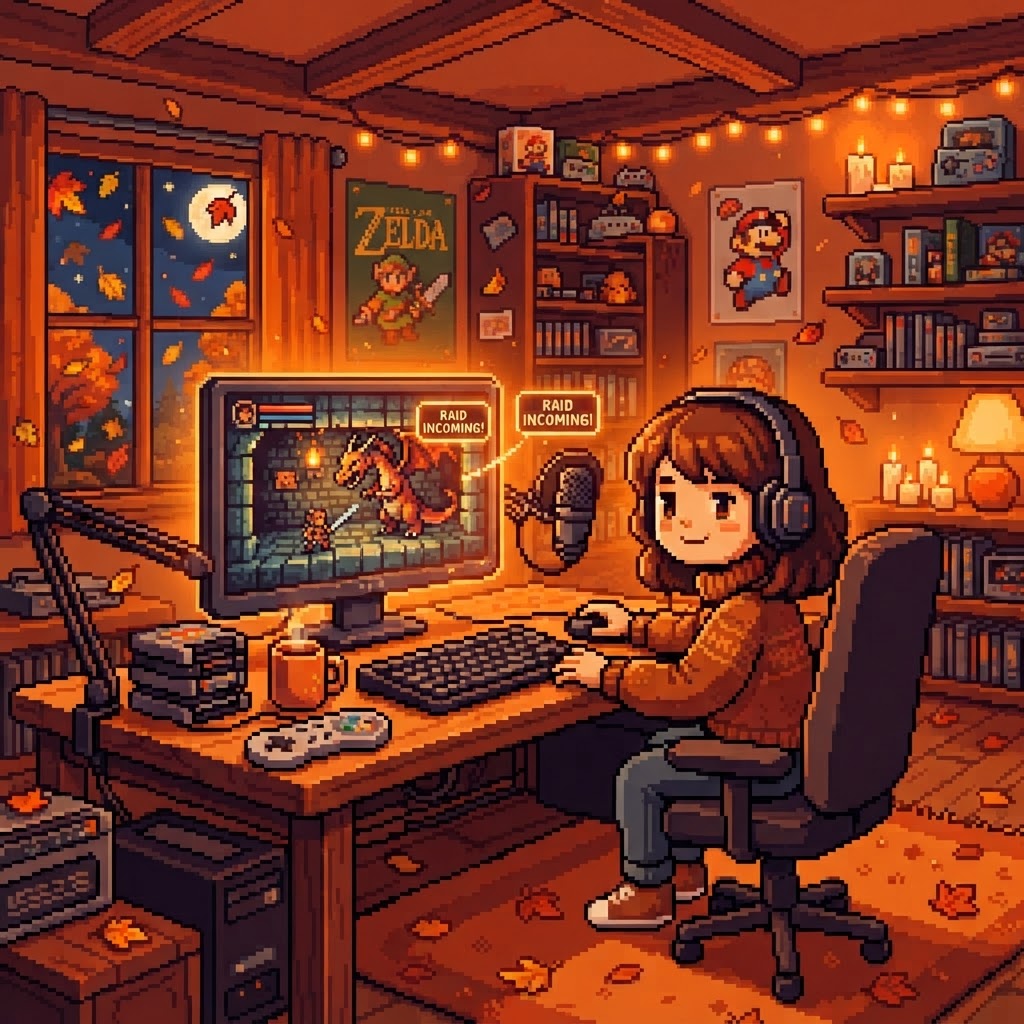
I Stopped Watching My View Count When the Raid Started
I went into a community raid chasing better numbers and came away remembering why I started streaming. This first-person story is for creators who want campaigns to feel like shared play, not another dashboard to satisfy.
At 8:47 p.m. on a Thursday, I refreshed my analytics for the fourth time in ten minutes.
The stream had been live for nearly two hours. My average view count was down, chat was moving slowly, and the little green line beside my follower total looked more like a stalled heartbeat than progress. I had told myself I was checking the numbers so I could learn from them. Really, I was checking to see whether anyone still cared.
Then the raid notification appeared.
I knew the event was coming. I had agreed to take part in the Fall in Love with Gaming autumn streamer raid campaign, running from September through November 2026. I had read the guidelines, added the schedule to my calendar, and promised myself I would show up with good energy.
What I had not planned for was how badly I needed someone else to interrupt the numbers game.
The Part of Streaming I Had Started Hiding
For months, streaming had felt like a second job with a public performance review every night. I compared my peak viewers with last month's peak viewers. I calculated which game produced the best follows per hour. I watched other creators climb, then tried to reverse-engineer their titles, thumbnails, schedules, and personalities.
Some of that work was useful. Much of it made me miserable.
I began choosing games because they performed well instead of because I wanted to play them. I shortened conversations with regulars when I thought the audience might be losing interest. I even caught myself ending a funny story early to thank a new follower, as if every human moment had to justify its place on a spreadsheet.
The strange thing was that the spreadsheet kept growing while the fun kept shrinking.
That night, I was playing a co-op survival game with three friends. We had spent twenty minutes trying to build a staircase, only to discover that we had been using the wrong material. It was exactly the sort of small, ridiculous failure that used to make streaming feel easy. Instead of laughing, I was watching the viewer count dip by six.
Then another streamer sent over a raid.
When the Room Got Bigger
The first thing I noticed was not the number of new viewers. It was the sound of chat changing.
New names appeared beside familiar ones. People introduced themselves. Someone asked what we were building. One of the incoming viewers joked that our staircase looked unsafe, which was accurate and immediately became the running joke of the night.
My friends started explaining the game to the new arrivals. The raiding streamer stayed for a while and told their community why they had chosen us. Nobody made a speech about growth. Nobody promised that this would be the beginning of a new era. They simply brought people into a room where we were already laughing.
For the first time in weeks, I forgot to check the dashboard.
That sounds small, but it felt enormous. I was not performing connection as a tactic. I was experiencing it. A viewer named Mina mentioned that she had been having a rough day, then said the failed staircase had made her laugh for the first time since breakfast. One of my regulars welcomed her and offered to help with a build after the stream.
There was no clean conversion metric for that moment. No graph could show what happened when a stranger arrived feeling low and left feeling slightly less alone. It was not scalable, optimizable, or easy to report. It was also the most valuable thing that happened on my channel that month.
Why the Raid Felt Different
A raid can be treated like a funnel. Someone sends viewers, viewers become followers, followers become subscribers, and the campaign report gets a satisfying final column.
Those outcomes can matter. Creators need income, reach, and evidence that their work is sustainable. I am not pretending metrics are evil, or that bills can be paid with good vibes.
But a community raid becomes something better when the numbers are a byproduct rather than the point.
That is what made this autumn campaign work for me. It created a reason to cross the invisible boundaries between channels, but it did not require us to turn those relationships into transactions. The shared moment came first. The possible growth came second.
I saw that again during the next raid, when a creator with a very different audience joined us for a spooky game night. We were all startled by the same cheap jump scare. For thirty seconds, nobody was thinking about categories, retention, or discoverability. We were just yelling at the screen together.
That is the kind of collaboration I had been missing. Not a content exchange, not a promotional obligation, but an invitation to let more people witness something genuine.
What I Took Back to My Channel
I still look at my analytics. I still want my stream to grow, and I still make practical decisions about schedules and games. The difference is that the numbers no longer get the final word.
After the raid, I changed one habit. I began writing down one human moment from each stream before checking the performance data. Sometimes it was a new viewer joining the conversation. Sometimes it was a regular sharing good news. Once, it was simply the entire chat agreeing that my character's hat was unforgivable.
That small practice reminded me what the figures leave out.
If you are considering joining the campaign between September and November, bring your goals with you. Wanting more reach does not make your community less authentic. Just do not let reach become the only reason you open your channel.
Choose a creator whose audience might genuinely enjoy your space. Stay long enough to participate, not just deliver people. Introduce viewers as guests, not leads. Let the awkward jokes, failed missions, and unexpected conversations happen.
You may gain followers. You may gain subscribers. You may even see a better number on the dashboard.
But I hope you gain the thing I found that night: the feeling that streaming is not a contest you have to survive alone. Invite someone into your next raid, show up with your real laugh, and give the room a chance to become a community.
Ready to Join
the Raid?
Streamers earn points & rewards.
Brands get 3 months of real reach.