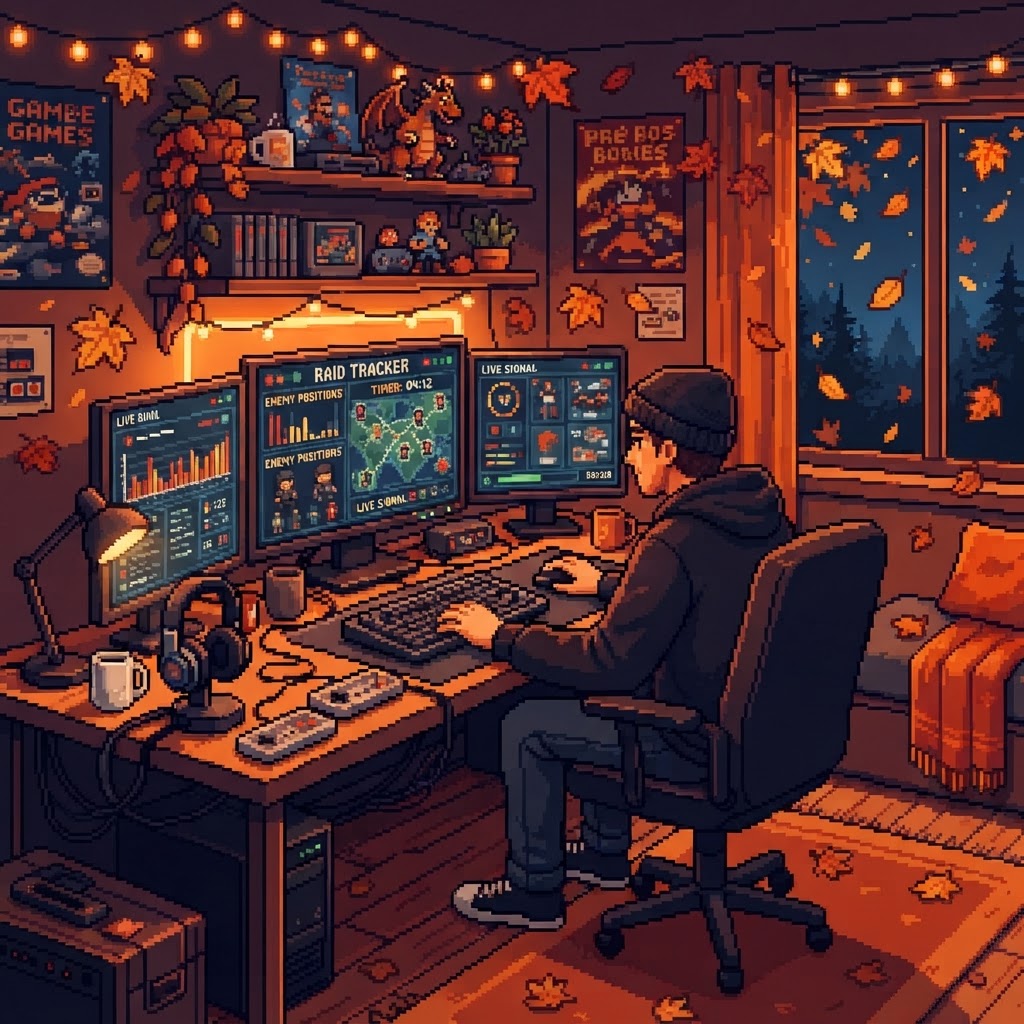
I Tracked the Live Signals During Our Last Big Raid
A streamer who joined the autumn raid campaign pulls back the curtain: real-time logs, overlays, chat surges, and the little engineering choices that turn a raid into a shared, human moment — not a forced ad read.
The raid button clicked at 9:13 p.m., and my 20-person chill stream became a city block. In 45 seconds, 1,200 people were redirected, my viewer count jumped from 18 to 1,218, and chat went from slow banter to a thunderclap of 3,500 messages per minute. I didn’t watch dashboards just to gawk, I watched them because they tell the real story of what happens when your channel is plugged into a bigger event.
The moment the click leaves your screen
When a streamer hits Raid, nothing mystical happens, just a tightly choreographed handoff. The originating client makes an authenticated API call to the platform. That call triggers a series of push notifications and a Pub/Sub broadcast to the raided channel. From there, viewers who choose to follow are redirected by the platform, while webhooks fan out to third-party tools, overlays, and the campaign coordination server.
The trick is timing. During our last big raid, we saw the webhook fan-out spike to 4x normal for about 30 seconds. Overlays requested assets from the CDN and returned them in under 200 milliseconds on average, which matters: the animation that says Incoming Raid should pop the second people arrive, not five seconds later, or the moment fragments.
What your chat actually experiences
Your chat does three things in the first 60 seconds: welcomes, asks where the raid came from, and floods emotes. If you have a bot that blindly sends a welcome line for every single new follower, you will drown in noise, and your moderators will either time out the bot, or burn out. We learned to compress.
During that same raid, my bot received 650 follow events in the first two minutes. Instead of spamming 650 messages, the bot grouped newcomers into one rolling summary: “Welcome 120 raiders from @OriginStream, say hi if you came with the raid!” That single line cut potential spam by 98 percent, and it created a focal point to spark human conversation.
Moderation systems get hit too. Automated filters, human mods, and slow-mode are not enemies of fun, they are traffic controllers. We set chat to 15-second slow-mode for the first minute, activated a keyword blocklist, and relied on an AI classifier to flag a handful of messages for review. The result: the energy stayed high, and the channel didn’t turn into unmoderated chaos.
How the campaign infrastructure helps, not adds work
Campaigns often get a bad rap because creators assume it means more paperwork. The actual mechanics we used make joining lighter, not heavier. Here is what ran in the background for that raid:
- A central campaign server accepted the webhook, issued a short-lived JWT for overlay authentication, and pushed an event to a serverless function that logged participation into a database. Those serverless functions scale automatically, so the spike didn’t require us to babysit servers.
- Creative assets were pre-warmed in the CDN, so the overlay visuals arrived in under 200 ms, not a second later, which kept the perceived latency low.
- Participation links used UTM parameters and a shortlink redirect, so click and attribution data flowed back in minutes, letting us reward viewers who stuck around.
All of this required an initial setup: drop a small overlay snippet in your dashboard, authorize one webhook, and enable the bot permissions you’re comfortable with. It is more like plugging a cable in than writing a 12-step manual.
Technical compromises that keep the human moment intact
We intentionally avoided aggressive auto-posting. Rate limits exist for a reason, and respecting them preserves the feeling of authenticity. Instead of blasting messages, the system surfaces a single, customizable announcement, lets your bot roll aggregated welcomes, and hands the rest to your live moderators.
We also rely on quick telemetry. A tiny, client-side beacon sends anonymized engagement events when viewers interact with an overlay button. Those events let us know whether the welcome overlay is working, without spamming your console with logs.
Why this is a community event, not a forced sponsorship
A raid is literally your community, and now another community, colliding in real time. The engineering exists to make that collision smooth, to catch the energy and fold it into your chat, not to micromanage it. During the raid I described, the best moments happened when regulars and newcomers discovered a shared joke, or when a moderator patiently explained a channel rule. The campaign infrastructure was invisible for anything that mattered to people: it let them meet, cheer, and stay.
If you stream casually and worry about this being a chore, think of it as plugging your room into a block party. The technical bits handle the heavy lifting. Your job is the same as always: be you, hang out, and enjoy the ride.
If you want to see the logs, overlays, and bot settings in a short walkthrough, I will sit with you for 15 minutes and share the exact config I use. Reply here, or message me in the creator dashboard, and we will schedule a quick walkthrough before the next run this autumn.
Ready to Join
the Raid?
Streamers earn points & rewards.
Brands get 3 months of real reach.