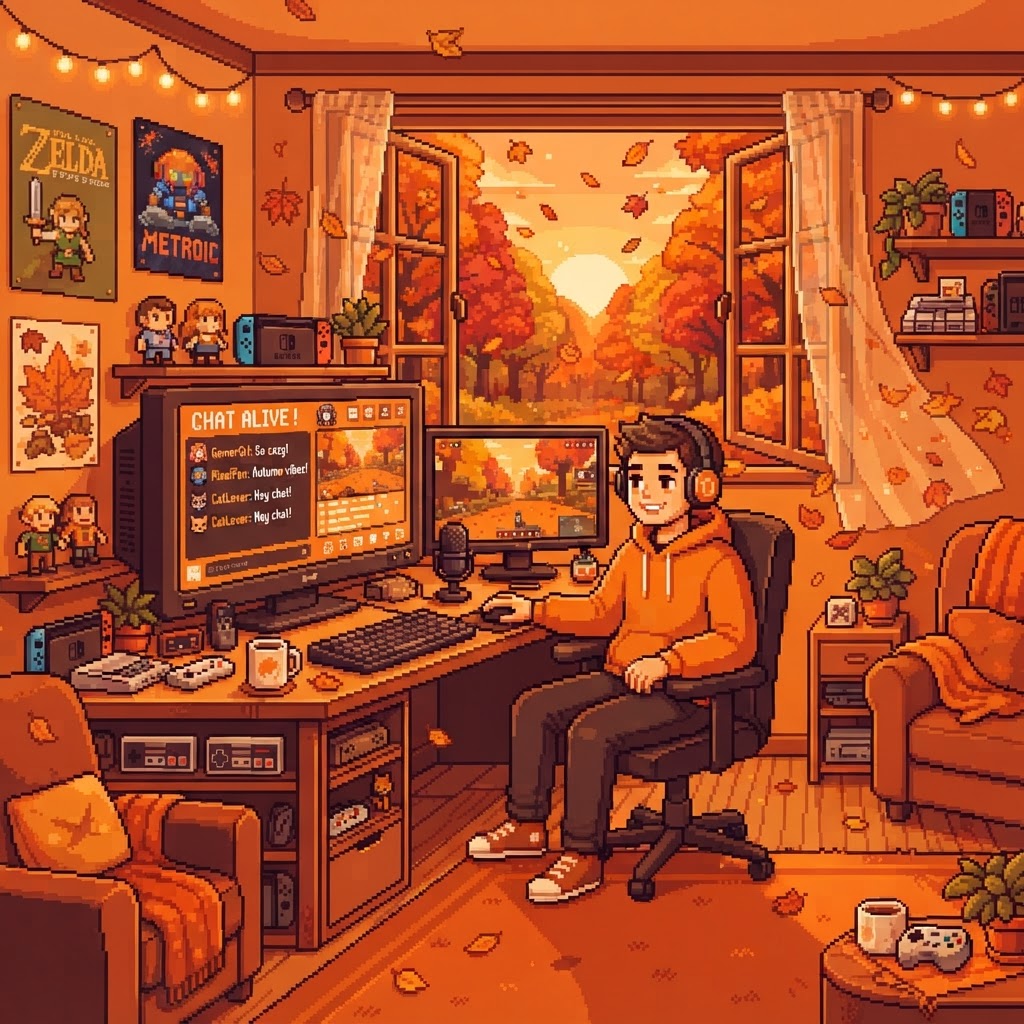
I Used to Stream Alone Until the Chat Became a Living Room
I thought streaming alone meant being independent, until chasing numbers turned every session into a lonely transaction. This first-person story shows how a community-led raid event can turn a quiet channel into a living room, where growth feels shared instead of sold.
The first sign that I was burning out was not the missed sponsorship deadline or the stream where I forgot to eat. It was the silence after I ended broadcast.
I would stare at the analytics page with my headset still on, refreshing the same numbers as if one more view might explain why I felt so tired. Average viewers. Follows. Click-through rate. Retention. I treated each stream like a tiny business whose only employee was me, and whose only customer was an algorithm.
Some nights, I played for four hours and said fewer than four sentences to another person.
That is the part people do not always see when they talk about being a solo streamer. Being independent sounds exciting. In practice, it can mean writing your own titles, clipping your own highlights, moderating your own chat, negotiating your own deals, and pretending you are not checking who stayed until the end. Even the fun starts to feel like inventory.
The stream that felt like a spreadsheet
My lowest point came during a sponsored stream last autumn. I had a clean overlay, a carefully timed talking-points document, and a goal to maintain an average of 30 viewers. At one point, I noticed I had spent ten minutes explaining a feature no one had asked about while watching the viewer count drop from 28 to 21.
I kept going because the deliverables were technically being met.
When the stream ended, I had completed the campaign, but I could not remember enjoying the game. The payment helped, of course. I am not going to pretend it did not. Still, money could not answer the question that had started showing up in the back of my mind: if streaming is supposed to be about people, why did I feel so alone doing it?
A week later, a smaller creator I knew invited me into a raid. I expected a quick handoff, the usual polite thank-you, and maybe a handful of new followers. Instead, her community arrived with inside jokes, questions about my loadout, and a debate about which fictional character would survive a zombie apocalypse.
Nothing about it was optimized. It was just warm.
I found myself staying live an extra hour because the chat had stopped feeling like a comment feed. It felt like a room I had been invited into.
Trading reach for relationships
That night changed how I thought about growth. I had been chasing the idea that a successful stream was one where more people entered. My community showed me that success could also mean people recognized one another when they arrived.
Raids became less like handoffs and more like introductions. I started joining other creators for co-op sessions, sharing clips without keeping score, and checking in when someone had a rough week. My channel did grow, but the meaningful difference was not just the number of followers. It was seeing familiar names greet each other before I even said hello.
The work did not disappear. Community still takes effort. You have to show up, listen, make room, and accept that not every collaboration will produce a measurable return. That effort simply felt different from feeding a content machine. I was no longer asking, “What can this stream get me?” I was asking, “Who can feel less alone because we did this together?”
That is why the Fall in Love with Gaming campaign, running from September through November 2026, caught my attention. The appeal is not another polished sponsorship brief promising exposure. It is the chance to build momentum through shared discovery, raids, and genuine creator-to-creator support.
What belonging looks like on a campaign calendar
For me, a collaborative campaign works when the schedule leaves room for personality. Maybe one streamer brings a speedrunner into a cozy game. Maybe a raid introduces two communities that would never have found each other through search. Maybe viewers return because they want to see the friendship develop, not because they were pushed through a funnel.
That kind of growth is less predictable than a spreadsheet. It is also more durable.
During one community event, I watched a viewer who had never typed in my chat become the person welcoming newcomers by the end of the evening. A month later, they were still there, recommending games, sharing fan art, and helping a first-time chatter feel comfortable. No metric captured that moment particularly well. It was still one of the clearest signs that the stream was working.
A campaign built around connection gives creators permission to value moments like that. It can still support goals, deliverables, and compensation, but it does not reduce the audience to impressions or the creator to a distribution channel. The human part is not decoration. It is the point.
I do not want to stream alone anymore
I still watch my analytics. I still care about improving titles, thumbnails, pacing, and reach. I am a streamer, not a mystic. But I no longer want every decision to be governed by a number that cannot tell me whether anyone had a good time.
If you have been feeling the same fatigue, consider what would happen if your next campaign were not something you carried by yourself. Find creators whose communities feel welcoming. Make the raid an actual introduction. Let viewers see the people behind the channels. Leave enough space for an unexpected conversation, a ridiculous game choice, or a new regular to find their place.
From September to November 2026, I will be looking for those rooms, and helping build them. If you are tired of being treated like a line item and ready to make something that feels like a shared evening with friends, come join the conversation, bring your community, and raid someone new. There is room in the living room.
Ready to Join
the Raid?
Streamers earn points & rewards.
Brands get 3 months of real reach.