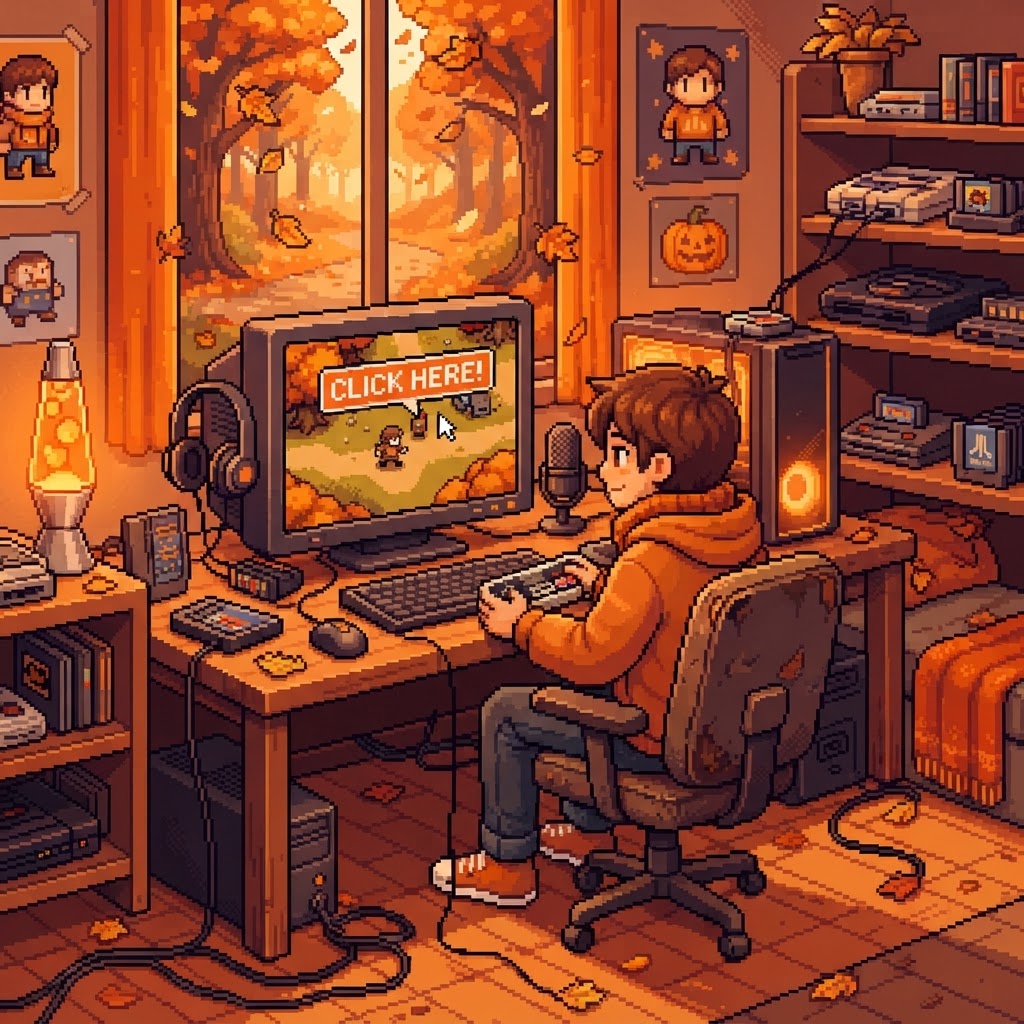
Kill Your Banner Ads Before They Kill Your Relevance
Your next media plan cannot rely on impressions people have learned to ignore. This manifesto makes the case for live gaming communities, and the Fall in Love with Gaming raid campaign, as a more human way to earn attention before your brand becomes background noise.
You know the report: impressions are up, completion rates are acceptable, and yet the brand feels strangely absent from culture. The dashboard says people saw the ad. Your instincts say they saw right through it.
That gap is where relevance goes to die.
A static banner does not lose because it is badly designed. It loses because the audience has already solved the problem it presents. Scroll past it. Close it. Tune it out. The format asks for attention while offering no reason to care.
For a marketing director, that is not a creative inconvenience. It is a budget problem, a brand problem, and eventually a survival problem.
The ghost impression economy
We have become very good at buying evidence that nobody felt anything.
A banner loads. A pixel fires. A platform reports a view. Somewhere, a chart turns green. But the person on the other side may be watching a livestream, chatting with friends, managing a raid, or deciding whether to trust your brand. Your ad is present, technically. It is absent, emotionally.
That is a ghost impression: measurable exposure without meaningful contact.
The more audiences learn to filter interruption, the more brands compensate by buying volume. More placements, more frequency, more retargeting. This is how relevance gets confused with persistence. If someone sees your logo seven times and remembers only the irritation, you have not built familiarity. You have trained avoidance.
The hard question is not, “How many people did we reach?” It is, “What were they doing when we arrived, and did we improve the moment?”
Community is not a media placement
Gaming answers that question differently because gaming is not merely content consumption. It is participation.
A live stream has a pulse. Viewers react in real time, recognize returning personalities, share inside jokes, and make meaning together. A raid is even more powerful. One creator sends their community to another creator’s live channel, carrying trust, curiosity, and social energy with them.
That handoff is not an ad slot. It is an invitation.
When a brand supports the moment thoughtfully, it enters an existing relationship instead of interrupting it. The audience is not being told to pause the thing they came for. They are being welcomed into something unfolding now.
This distinction matters. Consumers do not need more brands pretending to be gamers. They need brands that understand the value of showing up with humility, usefulness, and a willingness to let the community remain the main character.
The survival move
The “Fall in Love with Gaming” campaign is built around that principle. Across September through November 2026, streamer raids create a live route between communities, creators, and brands that want to participate in culture rather than decorate it.
Picture a viewer arriving from one stream to another on a Friday night. They are not opening a browser to research your category. They are there because someone they trust said, in effect, “Come with me.” The next channel is live, the chat is moving, and your brand has a chance to make that transition feel more rewarding, not more commercial.
That might mean a useful reward, a community challenge, an unexpected creator collaboration, or a moment that gives people a reason to talk after the stream ends. The execution can change. The operating principle cannot: earn the welcome.
This is where brand safety and brand bravery meet. You do not surrender your standards by entering live culture. You set clear guardrails, choose creators carefully, and design for respect. But you also accept that authenticity cannot be fully scripted. If every second is polished into a product claim, the audience will feel the distance immediately.
Stop renting attention
Traditional digital advertising treats attention as inventory. Gaming communities treat attention as a relationship that can be extended, shared, and withdrawn.
That is why the old question, “Where can we place the message?” is no longer enough. Ask instead:
- Who already has the trust we need?
- What does this community value when nobody is selling to it?
- How can our presence make the live moment better?
- What would people willingly tell a friend about afterward?
A useful test is brutally simple: remove the logo from the idea. If the experience collapses, you bought visibility. If it still sounds like something people would choose to join, you may have built relevance.
Your next move should feel human
Do not approve another media plan that celebrates cheap reach while ignoring expensive indifference. Bring your brand into the room where attention is alive, social, and earned.
Start by watching the communities you hope to join. Listen to creators before briefing them. Give them room to sound like themselves. Build a plan that rewards participation, measures quality of engagement, and treats the audience as people, not impressions.
Then join the raid.
If your brand is tired of being technically visible and culturally invisible, come find a place in the live moment this autumn. Bring your curiosity, your standards, and the courage to be useful. The community will decide whether you belong, and that honest answer is worth more than another million ghost impressions.
Ready to Join
the Raid?
Streamers earn points & rewards.
Brands get 3 months of real reach.