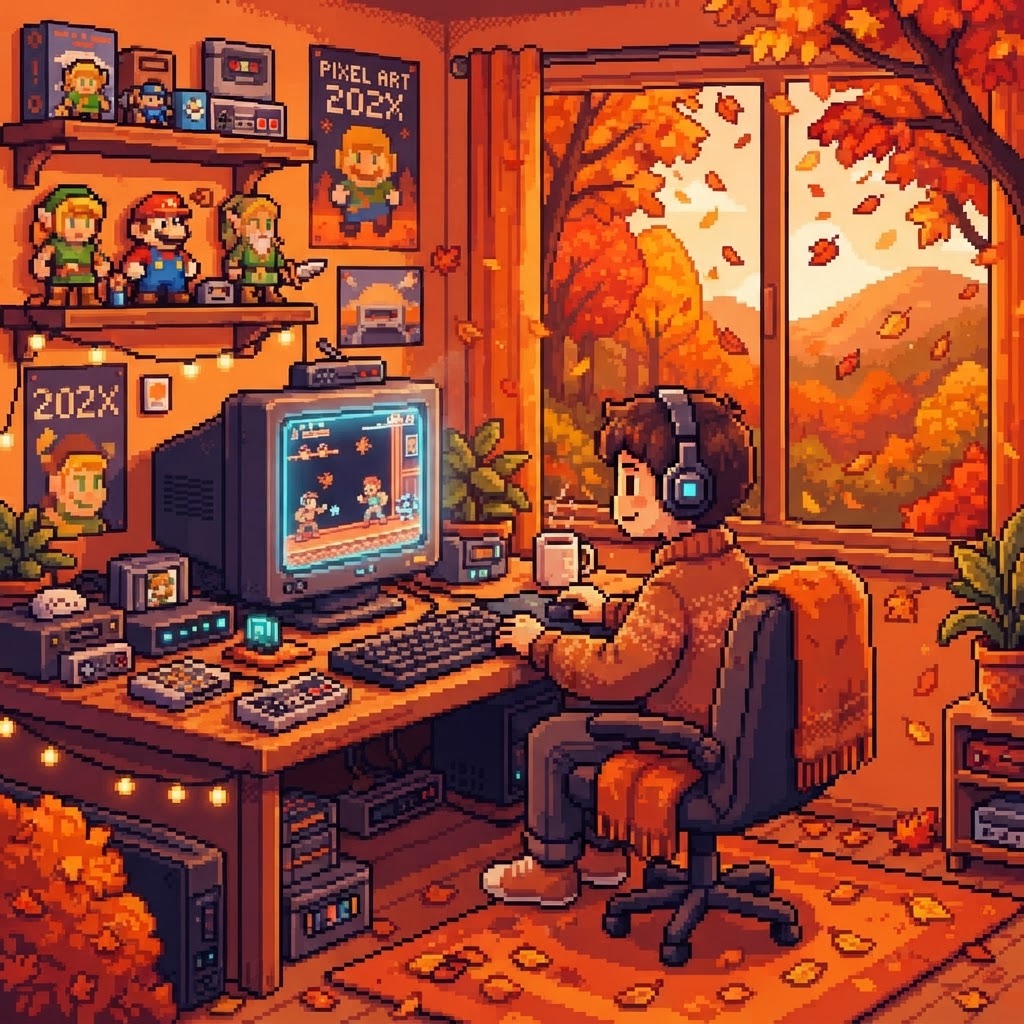
My Camera Roll During the Fall in Love With Gaming Raid
A candid, photo-by-photo look at how one TikTok gaming creator folded a cross-platform raid into an ordinary stream day, from tangled cables and missed cues to the moment a new community started feeling like home.
At 8:17 a.m., my phone was already full of screenshots, half-finished captions, and one blurry photo of my cat sitting on the capture card box. That is not how I imagined documenting a cross-platform campaign, but it turned out to be the most accurate starting point.
For the Fall in Love with Gaming raid campaign, running from September through November 2026, I wanted to show what participation actually looked like from my side of the screen. Not the polished announcement graphic. The real workflow: the late setup, the awkward handoff, the chat messages I nearly missed, and the little signs that a raid was becoming more than a sponsored moment.
8:17 a.m. | The glamorous planning stage
The first photo is a desk covered in ordinary problems. My controller is charging from a cable that only works if it bends at exactly the right angle. There is an open notebook beside my keyboard, with “raid?” written three times in different colors. My coffee is cold.
Before the campaign, I assumed the difficult part would be creating content that worked on both TikTok and the streaming platform where I went live. The actual challenge was making the raid feel natural without turning my stream into an advertisement with a game attached.
I made a simple plan instead of a complicated one:
- Go live on my usual schedule.
- Mention the raid clearly, without interrupting the stream every five minutes.
- Bring my community into the decision about where we went next.
- Post short clips on TikTok that showed the people and the moment, not just the logo.
That last point mattered most. A cross-platform campaign only works if viewers understand why they should follow the energy somewhere else.
11:42 a.m. | The first unfiltered check-in
The next photo is a front-facing camera shot I almost deleted. I am wearing yesterday’s hoodie, one side of my hair is doing something unreasonable, and the room behind me needs to be cleaned. I recorded a quick TikTok explaining that the evening stream would end with a community raid.
I kept the imperfections because they made the invitation sound like me. I said, “We are going to see who is still live, choose together, and bring some friendly chaos.” That was the whole pitch.
A creator does not need to sound like a campaign manager to make a collaboration work. Your audience already knows your rhythms, your inside jokes, and the way you react when your game crashes. That familiarity is the value you bring. Protect it.
4:56 p.m. | The setup nobody posts
The third image is a mess of practical details: audio levels on one monitor, a TikTok draft on my phone, a snack wrapper near the mouse, and a sticky note reminding me to check permissions before the raid.
I ran a private test because my previous “quick” setup had ended with viewers hearing my desktop notifications for twenty minutes. This time, I checked the microphone, stream key, scene transitions, raid settings, and the link in my profile. Then I checked them again.
That preparation took about 35 minutes. It was not exciting, but it prevented the kind of technical scramble that makes a community feel like an afterthought.
7:03 p.m. | When the plan met the stream
The stream started normally. We played, complained about matchmaking, and debated whether my questionable in-game decision was bold or simply bad. For the first hour, the campaign barely came up.
That was intentional. The collaboration fit into the stream instead of replacing it.
When it was time to choose a channel, I showed three options and let chat vote. The winning creator was someone several viewers already followed, while others were discovering them for the first time. We had 184 people watching at the decision point, and the chat moved quickly enough that I had to pause before reading the final vote aloud.
Then came the part I had worried about: the handoff. Would everyone leave? Would the next creator feel like a stranger? Would the moment seem forced?
It was a little awkward at first. I stumbled over the introduction, misread the channel name, and had to restart the sentence. Chat laughed. The other streamer laughed too. That helped more than a perfect transition would have.
7:18 p.m. | The screenshot I kept
The photo I kept is not a viewer count. It is a screenshot of both chats reacting to the same joke after the raid landed. Someone from my community typed, “We brought the loud ones.” A viewer from the other channel replied, “Good, we needed them.”
That was the shift.
A raid can look like traffic in an analytics report, but it feels different when people start trading references, welcoming one another, and asking when everyone will play together again. The brand collaboration gave us a reason to cross paths. The communities decided whether the connection would last.
That is why meaningful collaboration feels more like community expansion than a corporate transaction. The value is not only exposure. It is the chance to create a shared room that did not exist before.
11:36 p.m. | The recap, still in my hoodie
The final photo is me recording a recap after the stream. The lighting is bad. My voice is tired. I am still wearing the same hoodie, and there is a half-eaten sandwich just outside the frame.
I talked about what worked, what did not, and which creator we should raid next. I posted the clip the following morning with the raw screenshot, rather than turning the night into a perfectly edited highlight reel.
If you are a TikTok gaming creator considering a cross-platform campaign, my advice is simple: build the collaboration around your existing habits, not around an imaginary version of your workflow. Leave room for the messy setup, the missed cue, and the audience member who makes the moment better than your script.
Take the photos you would normally hide. Share the process. Let viewers help choose where the night goes. If you join us this autumn, bring your real community, your real voice, and maybe a backup charging cable. I would love to see where your raid leads.
Ready to Join
the Raid?
Streamers earn points & rewards.
Brands get 3 months of real reach.