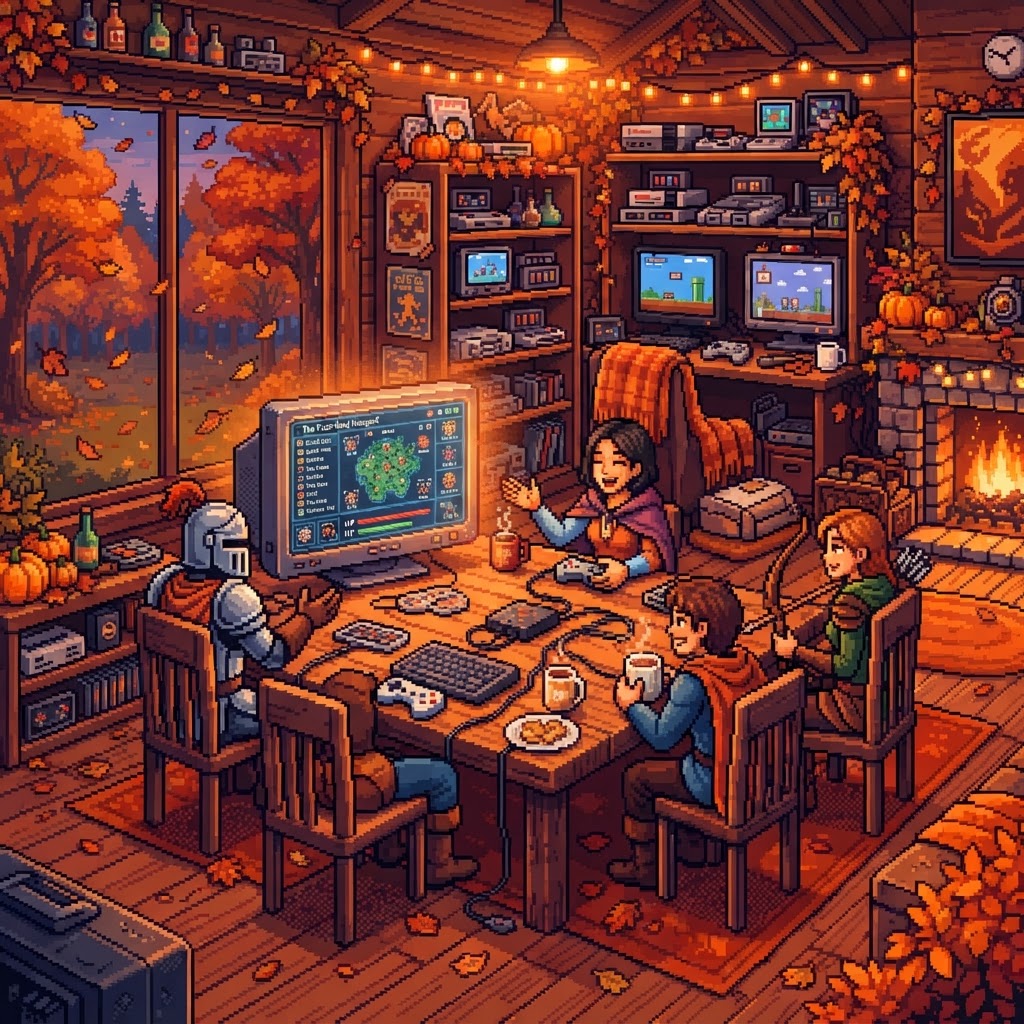
The Post-Raid Hangout: Where the Strategy Actually Happens
The raid may bring new viewers, but the best part can start after the stream ends: a low-pressure voice chat with creators who care about the people behind the numbers. Here’s what that behind-the-scenes connection can look like, and why it matters if you’re looking for peers, not just a payout.
Your stream ends, the raid alert fades, and the viewer count starts doing what viewer counts do. Maybe a few new people stick around. Maybe the chat is already swapping game recommendations. Either way, the broadcast is over, but the night doesn’t have to be.
For a lot of creators, the most memorable part of a raid isn’t the moment one channel sends viewers to another. It’s the voice chat afterward, when everyone drops the performance voice and starts talking like people who have just spent an evening doing something they love.
That’s the piece of the Fall in Love with Gaming autumn campaign, running September through November 2026, that doesn’t always show up in a campaign brief. The raid is the visible event. The hangout is where relationships begin.
The raid is a handoff, not a transaction
Here’s the simple version: creators take part in a coordinated raid, sending their communities toward another streamer at the end of a broadcast. That gives viewers a chance to discover someone new, and it gives the receiving creator a lively welcome rather than a cold start.
But a raid is not a promise that viewers will stay, follow, or become regulars. People get to choose what they do next. That’s not a flaw in the format. It’s the point. A good raid opens a door, then leaves the audience free to decide whether the room feels right.
When the stream wraps, participating creators can continue the evening in a voice chat. There, the conversation can move beyond the mechanics: What did your community enjoy? How do you handle a quiet chat? What are you playing next week? And, sooner or later, someone asks whether anyone else has ever had their audio settings mysteriously reset five minutes before going live.
That last question is where the campaign starts to feel less like a marketing objective and more like a social club. You don’t need to turn every conversation into a collaboration plan. You can simply enjoy being around people who understand the strange, funny, sometimes exhausting rhythm of streaming.
What the post-raid room can actually feel like
Picture a Thursday night in October. Three creators have just finished their streams. One is still wearing headphones and has a mug of tea within reach. Another is looking for a new co-op game. A third has a small but fiercely chatty community and wants to know how the others make newcomers feel welcome.
Nobody opens with a pitch deck. They compare notes, trade recommendations, and laugh about the raid message that someone accidentally pasted twice. One creator shares a moderation tip that helped keep a busy chat friendly. Another says they’re nervous about trying a different format. Someone else offers to drop by their next stream, not because a spreadsheet says they should, but because they’re curious.
That kind of connection is hard to schedule into a deliverables column. It also doesn’t need to be forced. The campaign creates a shared moment and a reason to meet. The trust, inside jokes, and future plans are yours to build at your own pace.
Some nights, the voice chat might be five minutes of friendly hellos. Other nights, it may stretch into a long conversation about community boundaries, burnout, or which game has the best soundtrack. Both count. There’s no minimum friendship quota, and nobody needs to turn a nice conversation into a content strategy before they’ve even said goodbye.
Why community-minded creators belong here
If you’ve ever joined a campaign and wondered whether anyone saw you as more than a channel link and a set of metrics, you’re not alone. Numbers can help organizers understand reach. They can’t tell the whole story of what makes a community feel like home.
A raid can help people find each other, but genuine connection grows through attention: remembering a name, asking about someone’s project, showing up when you said you would. The post-stream hangout gives creators room to do those things without chat moving at full speed or a countdown clock ticking in the background.
You don’t have to arrive with a polished pitch, a huge audience, or a plan to collaborate with everyone you meet. Bring your actual interests. Talk about what you’re playing. Ask someone how they built a welcoming corner of the internet. If the conversation clicks, keep it going. If it doesn’t, you can still leave with a new recommendation and a better sense of who else is out there.
That is what makes this approach different from treating a raid as a quick exchange of attention. The aim is not to squeeze a guaranteed outcome from every handoff. It’s to give community-focused creators a shared space where discovery can turn into familiarity, and familiarity can turn into friendship when it feels natural.
The part worth logging off for
Campaign activity has a beginning and an end. The connections you make around it don’t have to follow that schedule. Maybe you’ll find a regular co-op partner. Maybe someone will become the first person you message when you’re stuck on a stream idea. Maybe you’ll simply recognize a familiar name in another creator’s chat and feel a little less like you’re doing this alone.
Those are small things, but they matter. Streaming can be wonderfully social on-screen and surprisingly solitary behind the scenes. A relaxed conversation with people who understand both sides can make the work feel lighter, even if nobody gains a single new follower that night.
So if you join a raid this autumn, stay for a few minutes after the stream. Say hello in the voice chat, or ask what everyone’s playing lately. You don’t have to network. You just have to show up as yourself. The best part may be the person you meet after the alert disappears.
Ready to Join
the Raid?
Streamers earn points & rewards.
Brands get 3 months of real reach.