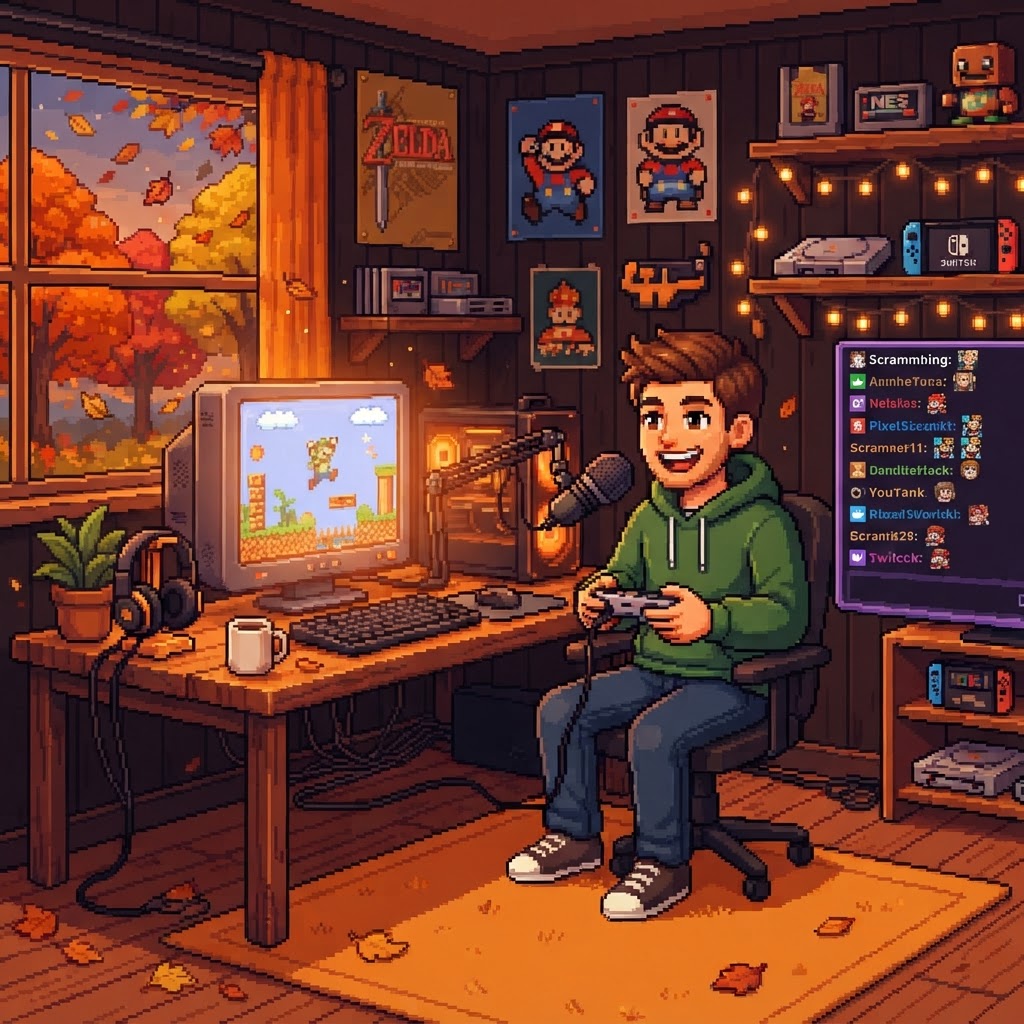
I Was Terrified of Twitch Chat Until I Said Yes
A brand manager shares a candid story about the first nerve-wracking hours in Twitch chat, and how a low-risk streamer raid program helped them test authentic engagement, learn fast, and win real fans without breaking the budget.
The first time I opened a Twitch chat, my chest tightened. The messages scrolled in a blur, dozens per second, full of inside jokes, emojis, and shorthand I did not understand. I felt exposed in a way no focus group or campaign deck had prepared me for. I was a marketing manager with budgets, KPIs, and a healthy skepticism about livestream audiences. I had never sponsored a streamer, and the idea of my brand being whispered, trolled, or simply ignored in real time felt terrifying.
The night that changed my view
It started as a proof of concept. We had a small activation budget, a product sample box, and a desire to reach a younger audience without committing to a multimillion-dollar influencer deal. I joined a raid that promised a controlled, brand-friendly environment, and within five minutes the channel went from about 150 concurrent viewers to 1,200. The chat exploded, but not with the chaos I had feared. People asked genuine questions about the product, someone joked about my brand name, a handful of regulars translated what was happening for newcomers, and a moderator kept tone in check.
At minute 20, a viewer posted a clip of the streamer using our sample, and it generated a spike in chat engagement, then a linked comment about where to buy. By the end of the stream, we had a few hundred unique visitors to our landing page, and five sales attributed directly to the event. On paper that was a small win, but for me it was a tectonic shift. That night I stopped seeing a faceless, scary audience. I saw people who cared, who could be reached if you showed up respectfully.
Why the fear felt so big, and how it shrank
I was worried about authenticity, brand safety, and wasted spend. I worried that a live audience could not be controlled, and that every misstep would be amplified. Those fears are not irrational. Live formats are raw, and they reward real responses. What I learned is that you do not have to be perfect to be welcome. You have to be human, transparent, and prepared.
Here are the concrete things that made that low-risk jump possible for us:
- We started with a small test budget tied to a single KPI: visits to a landing page. This limited downside, and made performance measurable.
- The streamer had a consistent moderation team, clear community rules, and a history of working with brands in ways that felt organic.
- We provided a simple creative kit: a quick product script, two approved overlay images, and a short sample giveaway mechanic. The streamer handled the rest, and that felt more authentic than a scripted ad.
- We tracked outcomes in real time, so we could turn off, scale, or tweak within the stream if needed. That real-time control reduced anxiety.
A bridge for non-endemic brands
You do not need to be a gaming company to find a fit in this space. The global games market exceeded $200 billion in recent years, which means the audience is diverse, and includes your customers. For non-endemic brands, the smart approach is not to force gaming tropes, but to meet people where they are: in community spaces that value shared experiences, authentic conversation, and playful discovery.
Campaigns designed as low-risk learning opportunities are particularly well suited to first-time sponsors. They offer built-in guardrails, short-duration tests, and pre-vetted creators. That environment allowed us to experiment with tone, to measure what resonated, and to iterate without the pressure of a long-term commitment.
What I learned, in plain terms
- Live chat does not equal chaos. It equals conversation, and conversations can be guided.
- Authenticity is operational. Give creators the freedom to adapt your message, but provide guardrails, assets, and objectives.
- Start small, measure clearly, and treat the first run as research, not a final verdict.
- Community moderators are your allies. They help maintain tone, and they can amplify what works.
A real scenario you could try next week
If you are a brand manager reading this, here is a simple plan you can copy from my playbook: choose a micro-streamer with 500 to 2,000 average viewers, offer a 24-hour product sampling giveaway that requires chat engagement to enter, provide a one-minute demo script and two overlay graphics, and measure landing page visits and signups during a 48-hour window after the stream. The goal is insight, not viral scale.
When our team ran that exact scenario, we spent less than one percent of what a national spot would cost, and we learned three creative angles that we later used across other channels. The ROI was not only sales, it was knowledge about tone, a list of fans who opted in, and a repeatable process.
Come try a stream with me
If the idea of live chat still makes you nervous, that is normal. That was me. If you want, come sit with me in a stream next week. I will walk you through what the chat looks like, explain moderator roles, and show you how a small, controlled raid can feel more like a friendly focus group than a public trial. Say yes to one small experiment, and you may find a new channel of genuine human connection for your brand.
Ready to Join
the Raid?
Streamers earn points & rewards.
Brands get 3 months of real reach.