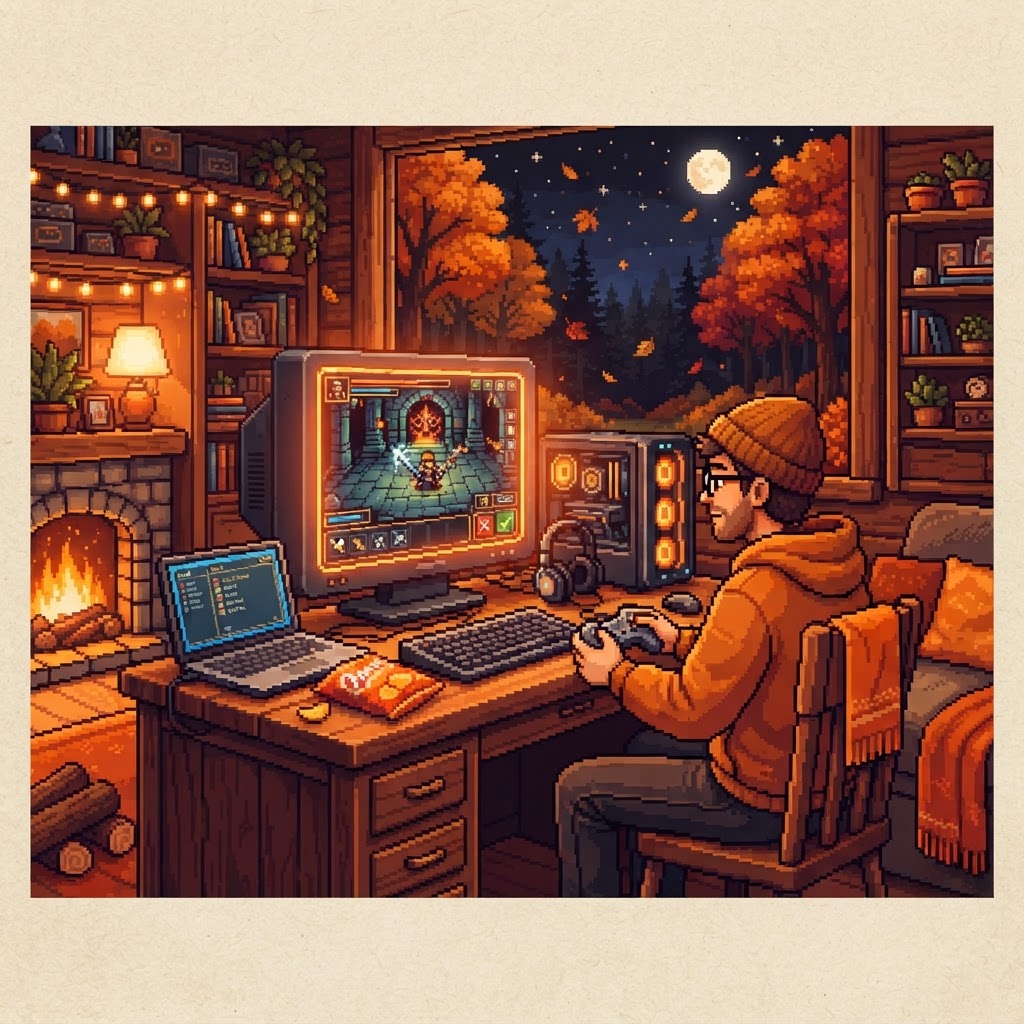
I Traded My Quarterly Report for a Sunday Night Raid
A skeptical marketing leader abandons a quarterly reporting dashboard for a live Sunday night raid and discovers why authentic participation, not passive ad placement, creates the kind of gaming loyalty brands cannot buy.
At 8:47 p.m. on a Sunday, I was staring at a red trend line.
It represented the quarter’s underperforming campaign, sliced six ways by audience, placement, device, and conversion path. I had a deck due Monday morning, three tabs open in my analytics platform, and the familiar conviction that if I found the right segment, the numbers would explain themselves.
Then a friend sent me an invite to a live raid.
Not a branded stream. Not a pre-roll opportunity. A real raid, organized by a streamer and their community, with players moving from one channel to another to support a creator together. The message was short: “We’re going now. You in?”
I almost ignored it. I had spent years advising brands to wait for the data, optimize the buy, and protect the brand from anything unpredictable. A Sunday night raid seemed like the opposite of a disciplined marketing decision.
I clicked the link anyway.
The moment the dashboard stopped being enough
Within seconds, I was in a chat moving faster than I could read. People were greeting one another, sharing inside jokes, welcoming first-time viewers, and coordinating the raid. The streamer was visibly nervous about the size of the audience. Their voice cracked when the viewer count climbed.
Then the raid landed.
The new channel erupted with animated alerts and overlapping messages. Nobody was waiting for a polished brand statement. Nobody cared about a perfectly timed impression. They were there to make another person feel seen.
I typed a greeting, deleted it, typed another, and finally sent the simplest version: “Happy to be here.”
A stranger replied with a heart.
That tiny exchange unsettled me more than it should have. In the dashboard, I could report reach, frequency, completion rate, and attributed action. In that chat, I could feel the difference between being delivered to an audience and being welcomed by a community.
The distinction is easy to miss when we reduce attention to inventory. It becomes impossible to miss when you are the one hoping someone responds.
Participation is the product
The next hour was messy, funny, and completely unscripted. A player made a spectacular mistake. The streamer laughed so hard they had to mute their microphone. Someone explained an unfamiliar game mechanic to me without making me feel like an outsider. At one point, the entire chat rallied around a viewer who was having a difficult night.
Nothing about it looked like a conventional media plan. Everything about it looked like loyalty being built in real time.
That is what changed my thinking. Gaming communities do not gather to consume messages from brands. They gather to play, perform, encourage one another, and share a sense of belonging. A logo can appear in that environment, but a logo cannot create the feeling.
People do.
For a brand, that means sponsorship cannot stop at buying visibility around a stream. If the plan is limited to a pre-roll, a logo overlay, or a branded intermission, the brand may be present without being part of anything. Presence is measurable. Belonging has to be earned.
What a real brand role can look like
The opportunity in the Fall in Love with Gaming campaign, running from September through November 2026, is to join that experience with humility. The strongest partners will not try to seize the conversation. They will help creators and communities do more of what they already value.
That could mean funding a raid that introduces emerging streamers to new audiences. It could mean supporting community-led challenges, providing useful rewards, or giving creators the freedom to respond naturally instead of forcing every moment through approval layers. It could mean showing up consistently across the season rather than treating one stream as a disposable media placement.
The details matter. A brand that sells snacks might support a late-night community tournament with food delivered to participating creators. A consumer electronics company might help smaller streamers upgrade accessible production setups. A travel brand might build a story around the places players imagine, explore, or escape to through games.
The best idea is not necessarily the loudest one. It is the one that makes the community’s existing experience better.
The risk of being genuinely present
I know this sounds less comfortable than buying guaranteed reach. It is. Authentic participation asks marketers to accept that not every moment will be scripted, that creators have their own voices, and that audiences can tell when a brand is performing interest instead of bringing it.
That vulnerability is not a flaw in the model. It is the model.
On that Sunday night, I never opened my quarterly report again. The red trend line was still there, and I still needed to finish the deck. But I left the raid with a more useful question: what would our brand contribute if nobody promised us a perfect attribution path?
The answer cannot be “another ad.” It has to be a reason for people to invite us back.
Come into the room
If you are evaluating gaming sponsorships for the fall, do not begin by asking how many impressions a community can deliver. Ask what the community cares about, who already has its trust, and what your brand can make easier, richer, or more joyful.
Then join a raid. Stay long enough to feel a little awkward. Say hello without turning the moment into content. Listen to the streamer, the moderators, and the people who return every week.
You may still leave with data. More importantly, you may discover the human reason behind it.
I will be there this autumn, not behind a dashboard, but in the chat, ready to welcome whoever arrives next.
Ready to Join
the Raid?
Streamers earn points & rewards.
Brands get 3 months of real reach.