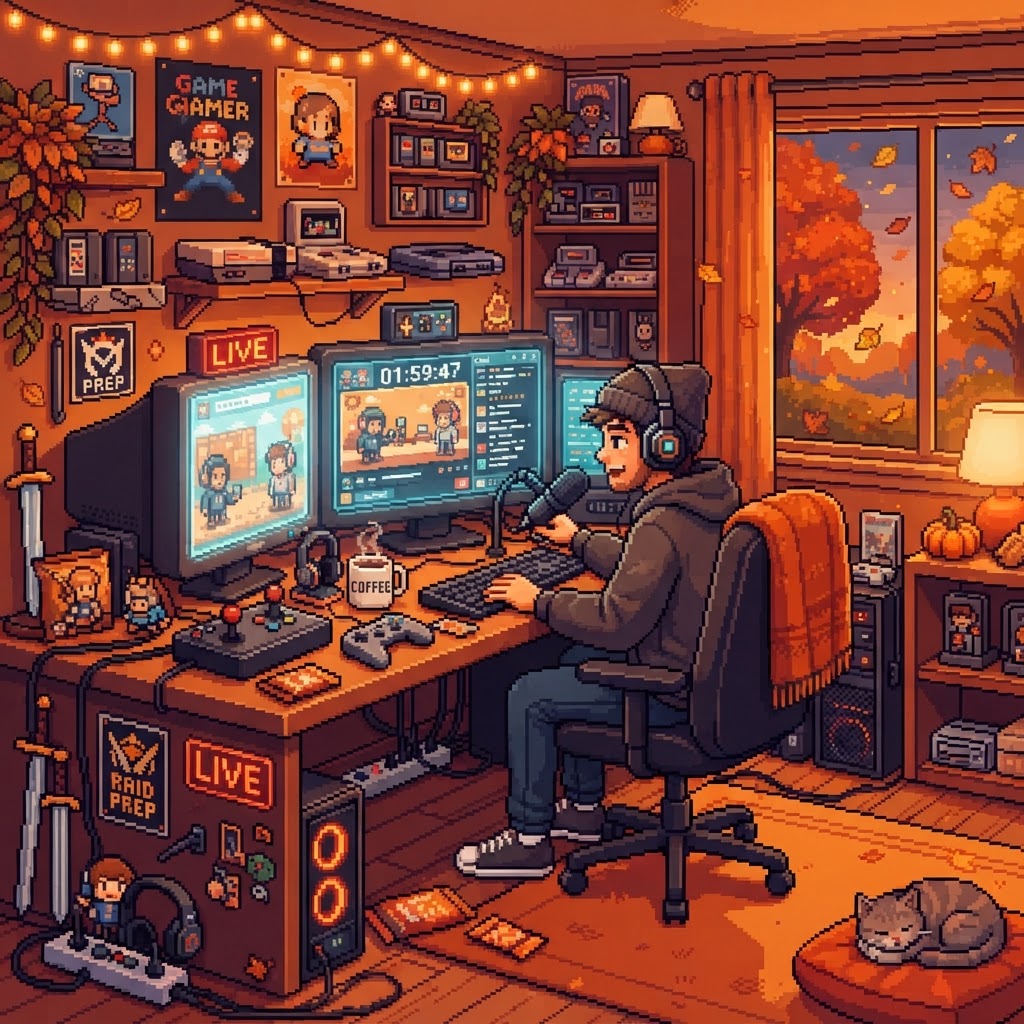
Unscripted: The 2 Hours Before We Go Live With a Raid
Your first brand raid doesn’t need a perfect script. Get a candid look at the two coffee-fueled hours where a creator and campaign team turn a brief into something that feels like your community.
Your stream starts in two hours. The overlay is almost ready, your Discord is already asking what’s happening, and a message from the brand partner says, “Let us know if you need anything.” You do need something: to know this won’t turn into a stiff ad read that makes your regulars wonder who took over your channel.
That’s a reasonable worry, especially when it’s your first partnership. So let’s go behind the scenes of a raid for our September-to-November Fall in Love with Gaming campaign. Not the polished recap, but the coffee cups, last-minute questions, and small decisions that make a sponsored moment feel like a community event.
2:00 before go-live: Start with your channel, not our talking points
The first thing we ask is not, “How many times can you mention the campaign?” It’s, “What would make this feel natural here?”
That could mean hearing how you normally welcome someone who arrives through a raid, what jokes your chat will understand, or which parts of your stream are sacred. Maybe you always take a few minutes to greet new viewers before returning to your game. Maybe your chat loves a poll, but hates being interrupted mid-match. That context is more useful than a generic list of lines to read.
We’ll share the essentials: what the campaign is, what viewers need to know, and any required details. Then we make room for you to put them in your own words. A brief should give you the facts and boundaries, not replace your personality.
For a small-to-mid creator, it’s worth asking practical questions early: Is the raid timing flexible? What should I do if my game runs long? Are there phrases or claims I need to use exactly? Who can I message if something changes? A good partner answers clearly. You shouldn’t have to guess what’s allowed while you’re live.
1:30 before go-live: Make a plan that can bend
Next, we sketch the shape of the moment together. For example: you finish the round you’re in, tell chat a raid is coming, welcome the incoming viewers, and give everyone a quick way to join the conversation. That’s a plan, not a script.
The distinction matters. A script assumes everything will go as expected. A plan gives you a few anchors while leaving the stream room to breathe. The target channel might be a minute late. Your squad might clutch a match at the exact wrong time. The incoming chat may be shy, or immediately start asking about your loadout. None of that means the raid has gone wrong. It means people are there, being people.
We also talk through the handoff itself. Who sends the raid? What will viewers see? Is there a link or instruction worth pinning? If the stream has a technical hiccup, what’s the backup? Small details can prevent a frantic scramble later, and they’re easier to sort out before your headset is on.
1:00 before go-live: Make the idea yours
This is usually where the stiff brief starts becoming a real stream. You might turn the campaign’s autumn theme into a cozy loadout challenge, invite chat to vote on a game-night pick, or ask viewers to share the co-op game they always return to when the weather turns. The best idea is not necessarily the biggest one. It’s the one that sounds like something you’d genuinely do with your community.
One creator might set aside ten minutes after the raid for everyone to recommend a comfort game. Another might keep it simple, with a warm welcome and a quick explanation of why the two communities are meeting. Both can work. The campaign gives you a reason to connect; you bring the format your audience already trusts.
And if your idea doesn’t fit the required details, we’ll work through that together. We don’t expect creators to become copywriters, producers, and compliance experts on top of running a stream. You should be able to ask, “Can I say this more naturally?” and get a useful answer, not a shrug.
0:15 before go-live: Lower the stakes
The final minutes are rarely cinematic. Someone checks the raid setting. Someone tops up a mug. You make sure the right scene is queued, then remember you haven’t told chat whether the next match is your last one. There may be a quick sound check and one more message confirming the timing.
This is where we try not to add noise. If the plan is clear, we don’t need to send a fresh paragraph of instructions at the last second. Your attention belongs on your stream and your community. And if something changes, a clear, calm message is more useful than pretending everything is perfectly on schedule.
Then the notification hits. New names appear in chat. You welcome them, your regulars help them settle in, and the conversation starts to take its own shape. That’s the part no brief can manufacture. A partner can help set the table, but the community makes the moment feel alive.
After the raid: Keep the conversation human
Once the stream ends, a useful follow-up is more than a request for numbers. We can review what happened, what viewers responded to, and what you’d change next time. Share the honest version. If a segment felt awkward, say so. If chat surprised you with a great idea, tell us. Feedback helps make the next collaboration better for you and for the people watching.
Your first brand partnership doesn’t have to mean handing over the channel you built. A good one should give you the information and support to make a clear, genuine experience in your own voice. The messy two hours before go-live are not a problem to hide. They’re where the partnership becomes collaborative.
If you’re considering your first raid, bring your questions, your boundaries, and the way you already talk to your community. We’ll bring the coffee and a flexible plan. Let’s figure out together what would make the handoff feel at home on your stream.
Ready to Join
the Raid?
Streamers earn points & rewards.
Brands get 3 months of real reach.