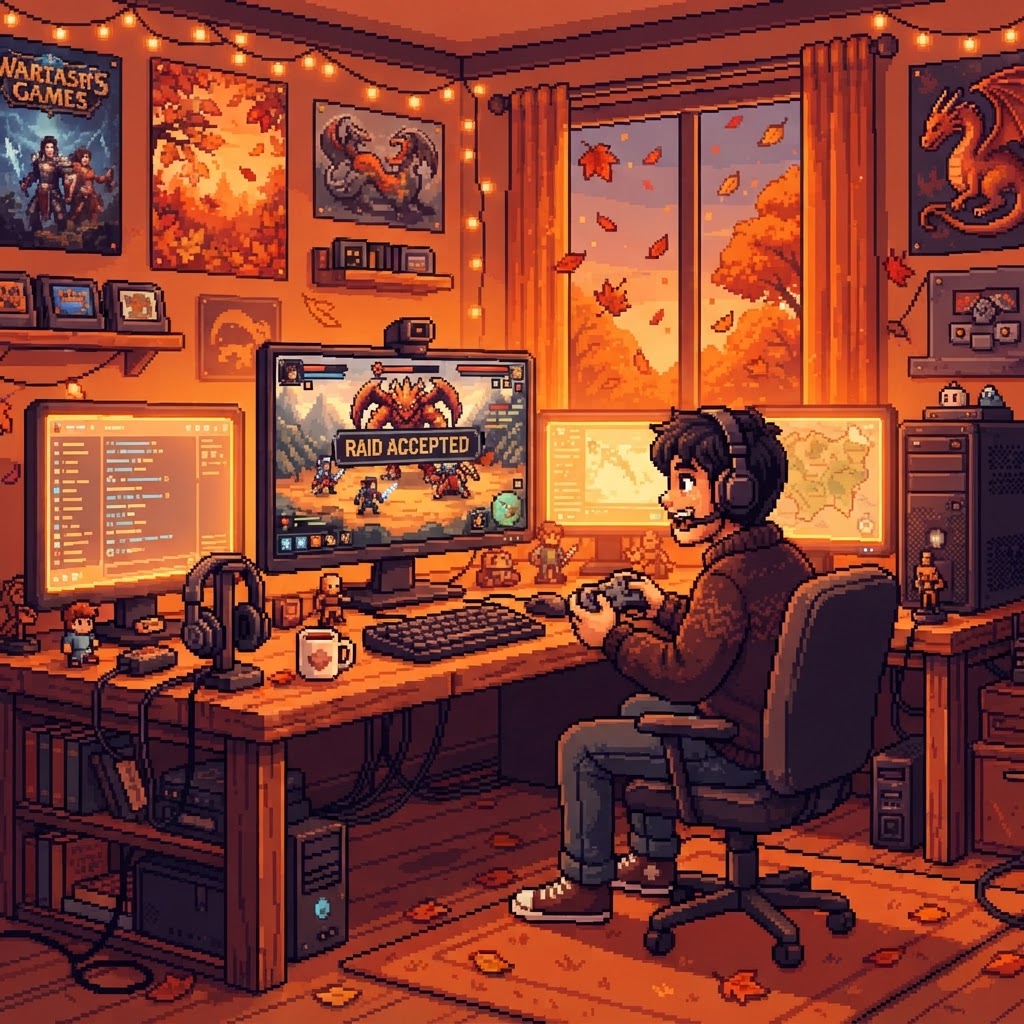
What Actually Happens When You Say Yes to the Raid Invite
A raid invite does not mean handing over your stream to a brand. Here’s what the planning, tech checks, and last-minute chaos actually look like, and where your creative control stays yours.
You’re live, mid-match, and somebody in chat asks whether you’re joining a branded raid. Your first thought might be: What exactly am I agreeing to? Do I have to follow a script? Will someone tell me what to play, say, or do with my channel?
Fair questions. So here’s a look inside the coordination behind the Fall in Love with Gaming autumn streamer raid campaign, running September through November 2026. Not the polished version, but the practical one: the shared notes, the tech checks, the “wait, whose turn is next?” messages, and the decisions that stay in your hands.
Before the raid: people, not marching orders
The campaign server is the coordination hub. It’s where participating streamers can find the raid schedule, share channel details, ask questions, and check in with the people they’ll be passing viewers to. Think less corporate control room, more group chat with a calendar and a few useful pinned messages.
Before anything goes live, you’ll see the basics: who’s participating, approximate time slots, how the handoff is expected to work, and who to contact if something changes. If there’s a campaign theme or optional talking point, it should be clear what’s required and what’s simply a suggestion. You should not have to guess whether “participation” means repeating a line word for word.
For example, if your slot starts at 7 p.m., the schedule might show the streamer before you, the person you’re raiding into, and a backup contact. That’s enough structure to make the handoff easier without deciding what you do for the two hours you’re live.
The day-of: a small amount of organized chaos
A raid is a live event, which means the plan meets reality. Someone may run late because a game update is taking forever. A mic might suddenly pick up keyboard noise. A streamer may need to end early. The server gives people a place to flag those changes quickly, so the next person isn’t left wondering whether to go live into an empty slot.
A typical handoff could look like this: you finish your stream, thank your chat, share a short intro to the next creator, then use your platform’s raid feature to send viewers over. The next streamer welcomes the incoming group and carries on with their own stream. That could mean continuing a ranked session, starting a cozy game, or answering chat questions. The point is the connection between channels, not making everyone’s stream look or sound the same.
The technical side is usually simple, but it helps to check it once before the moment arrives. Confirm that you can raid from your account, that your destination channel is spelled correctly, and that your platform’s current raid settings behave the way you expect. If you use a timer or scene transition, test that too. A two-minute check can prevent an awkward scramble while your chat waits.
And if something breaks anyway? Say so. A useful campaign server makes room for “my raid command failed” and “I need to swap slots,” not just perfect-looking updates. The social coordination matters as much as the buttons: people need to know who’s waiting, what changed, and whether they can help.
What remains yours
Your channel is still your channel. You choose your game, your pace, your jokes, your boundaries, and how much campaign context fits naturally into your stream. You can adapt a theme to your community, or keep the mention brief and get straight back to the game. Your viewers are there for you, so a raid should introduce them to another creator, not make you perform somebody else’s personality.
That also means it’s reasonable to ask questions before you opt in. What’s the schedule? Is there required language? How much notice will you get? What happens if you need to leave the campaign? If an answer is vague, ask again. A good collaboration should be understandable before you commit, and your participation should not depend on pretending every detail is already settled.
The shared plan can make room for boundaries, too. You can flag a time that doesn’t work, request a change, or say that a particular activity is not a fit for your audience. Coordination is useful precisely because it gives people a way to work things out together. It isn’t a reason to override someone’s comfort or creative judgment.
Why the raid is worth the coordination
The most memorable part often isn’t a flawless transition. It’s a viewer discovering a new streamer because you introduced them, or another creator dropping into chat to cheer you on. Those moments come from people being willing to share a little attention and make room for each other.
That’s the real behind-the-scenes work: making the logistics clear enough that creators can spend less time guessing and more time being themselves. The schedule helps. The channel checks help. The quick messages in the server help. None of them needs to turn a collaborative event into a script.
If you’re on the fence, you don’t have to decide based on the phrase “branded campaign.” Ask to see how the raid is organized, bring up the parts that worry you, and see whether the answers feel respectful. If you’d like to take part, we’d be glad to have you in the server and work out a slot that fits your stream. Come as yourself, bring your questions, and help make the handoff feel like one creator welcoming another.
Ready to Join
the Raid?
Streamers earn points & rewards.
Brands get 3 months of real reach.