Your Media Buy Is A Ghost Town, Join The Party Instead
Your media plan can deliver a million impressions and still leave people feeling nothing. Here’s why brand managers should trade interruption for participation, and what a first streamer partnership can look like.
Your media plan has a neat audience segment, a frequency cap, and a forecast that lands to two decimal places. It may also have a problem: people can ignore the ad, scroll past it, or leave the room without ever feeling that a brand spoke to them as a person.
That is the ghost town. Plenty of traffic, no real sense of company.
Traditional advertising is built to broadcast. A brand speaks, an audience receives, and the buy gets judged by reach and recall. There is a place for that. But if the whole plan is one-way, you are asking people to care about a message that never makes room for them.
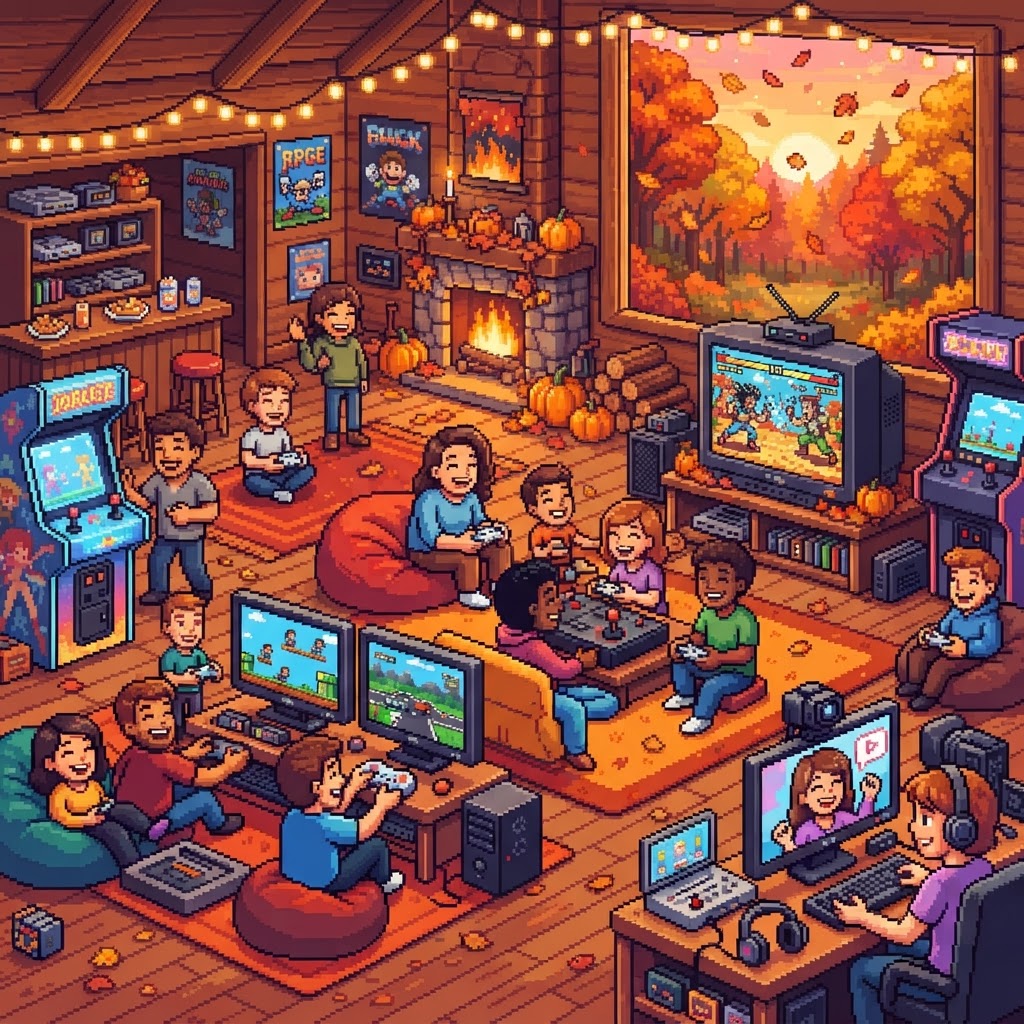
Gaming communities work differently. They are noisy, improvised, affectionate, occasionally chaotic, and very much alive. If you want people to notice your brand, stop treating the audience as a row in a media plan. Join the party.
Attention is not the same as belonging
A thirty-second spot can buy attention for thirty seconds. It cannot buy the feeling of being welcomed into a room where people already know one another.
Picture a streamer starting a fall stream. Someone asks about a new game. Another viewer shares a running joke from last week. The streamer greets a regular by name, then the chat fills with emotes when a familiar moment lands. This is not a passive audience waiting for a message. It is a community making its own culture in real time.
That difference matters to a brand manager who has never sponsored a streamer. You are not purchasing a little television screen with a face attached. You are supporting a creator and showing up in a space with its own expectations. The brand has to earn its place there, not take it for granted.
The plan can be imperfect. The connection cannot be fake.
Legacy media teaches us to sand away uncertainty. Approve every line. Lock every placement. Predict every response. In a live community, that instinct can make a brand feel like it arrived wearing a suit to a living-room hangout.
A better approach starts with respect. Choose a creator whose audience and values make sense for your brand. Give them room to speak in their own voice. Agree on the essentials, such as what you are offering, what must be disclosed, and any safety boundaries. Then trust the person who knows how to talk to that community.
The goal is not to pretend the sponsorship is invisible. People know when a partnership is a partnership. The goal is to make the reason for it feel clear, useful, and natural. A cozy-game streamer might invite chat to share their favorite autumn comfort games. A creator known for co-op nights could bring viewers into a playful challenge. The format should belong in that stream, not interrupt it like an ad break that wandered in from another channel.
Measure what happens after the impression
This is not an argument against measurement. It is an argument for measuring more than whether someone had an opportunity to see a logo.
Track the basics: who showed up, how long they stayed, what viewers engaged with, whether people clicked or redeemed an offer, and what the creator and audience said afterward. Compare results with your campaign goals, and ask what the numbers cannot tell you. Did the moment feel welcome? Did viewers understand why the brand was there? Would the creator work with you again?
One concrete example: if a stream runs for two hours and viewers spend even ten minutes talking about a shared game, that is not the same kind of contact as a fleeting impression. It does not prove sales on its own, and it should not be dressed up as proof that it does. But it gives you a real conversation to examine, learn from, and build on.
That is the advantage of the mess. You can hear the response. You can notice when a joke lands, when a message feels clumsy, and when a community turns a small moment into something memorable. Then you can improve instead of simply buying another placement and hoping for the best.
Fall is an invitation, not a costume
From September through November 2026, Fall in Love with Gaming gives brands a reason to explore streamer partnerships during a season made for cozy rituals, spooky nights, and long sessions with friends. But do not mistake autumn graphics for community. A themed overlay is decoration. The real work is showing up with a creator, offering something that fits, and listening to the people who are there.
You do not need to arrive with a giant sponsorship budget or a perfect gaming vocabulary. Start with curiosity. Watch a few streams without asking how to place a logo. Notice how the creator handles chat, what the audience responds to, and whether your brand would genuinely add anything. If you cannot answer that last question, keep listening before you buy.
Leave the ghost town behind
Your next media plan can still have reach, efficiency, and a spreadsheet that makes finance happy. It can also make room for real people talking to one another, with your brand present as a guest rather than a megaphone.
That means accepting a little unpredictability. A live moment might take an unexpected turn. Chat might be more interested in the creator’s cat than your carefully written talking point. That is not automatically a failure. It is a reminder that people are not media inventory, and attention is not something you can command into affection.
So, if you have never sponsored a streamer, come watch before you decide. Find a creator whose community feels like a place your brand would actually want to visit. Ask what would make the partnership worthwhile for them and their viewers. Then make something together that gives people a reason to stay.
The room is already full. Come in, say hello, and bring something worth sharing.
Ready to Join
the Raid?
Streamers earn points & rewards.
Brands get 3 months of real reach.