Your Static Ads Are Ghosting the People Who Matter
Your audience is not ignoring your brand by accident. They are choosing live communities over lifeless impressions, and the Fall in Love with Gaming raid campaign gives sponsors a practical way to show up where trust is already moving.
You already buy influencer partnerships. You know how to brief a creator, approve a talking point, track a link, and report the lift. Maybe the numbers look respectable. Maybe the comments are positive. Yet somewhere between the sponsored post and the final dashboard, the relationship goes missing.
That is the problem: your media can be visible without being present.
A static ad asks for attention. A live gaming raid earns a place in the moment.
Your impressions are not the relationship
Programmatic media is very good at finding people who resemble your customer. It is much worse at helping your brand behave like a welcome guest in that customer’s actual life.
You can target a demographic, serve an ad, and count a view. You can optimize toward clicks until the campaign looks beautifully efficient. But a completed impression is not the same thing as being remembered. A click is not the same thing as being trusted. A conversion, especially a heavily incentivized one, may not tell you whether anyone felt closer to your brand afterward.
This is not an argument against measurement. It is an argument against measuring only what is easiest to count.
Ask yourself what your customer experienced. Did your brand interrupt them between tasks, or did it become part of a shared event? Did the message arrive as a polished claim, or did a real person react to it in real time, with a chat full of people responding alongside them?
Those distinctions are where connection lives.
A raid is not an ad placement
A gaming raid is a handoff of attention and trust. One streamer finishes a session, brings their community to another creator’s live channel, and turns a transition into a collective entrance. The audience does not simply receive content. They participate in a social moment.
Picture a Friday night in October. A streamer wraps a tense match, thanks the chat, and says, “We are heading over together.” Within minutes, thousands of viewers arrive somewhere new, carrying the energy, jokes, and context of the first room with them. A sponsor that supports that moment is not shouting over the handoff. It is helping fund the gathering.
That difference matters.
In a traditional influencer deal, the creator may deliver a beautifully produced mention. In a raid campaign, the community itself becomes part of the story. Viewers greet one another, react to the new channel, ask questions, and decide whether the experience feels authentic. The brand has entered a living network, not rented a billboard shaped like a person.
Stop treating community as an audience segment
Your customers are not rows in a media plan. They have inside jokes, loyalties, rituals, and surprisingly sharp instincts for anything that feels bolted onto the room.
Gaming communities understand this immediately. They know when a creator genuinely uses a product, when a sponsorship fits the stream, and when a brand is trying to cosplay as a friend. That scrutiny is not a barrier. It is a quality filter.
If you are already working with influencers, you have made the first important move: you recognize that people can carry credibility that media inventory cannot. A raid campaign asks you to take the next step. Do not stop at the individual creator. Support the connections between creators and the communities that move with them.
That is where scale becomes human instead of merely large.
The autumn test
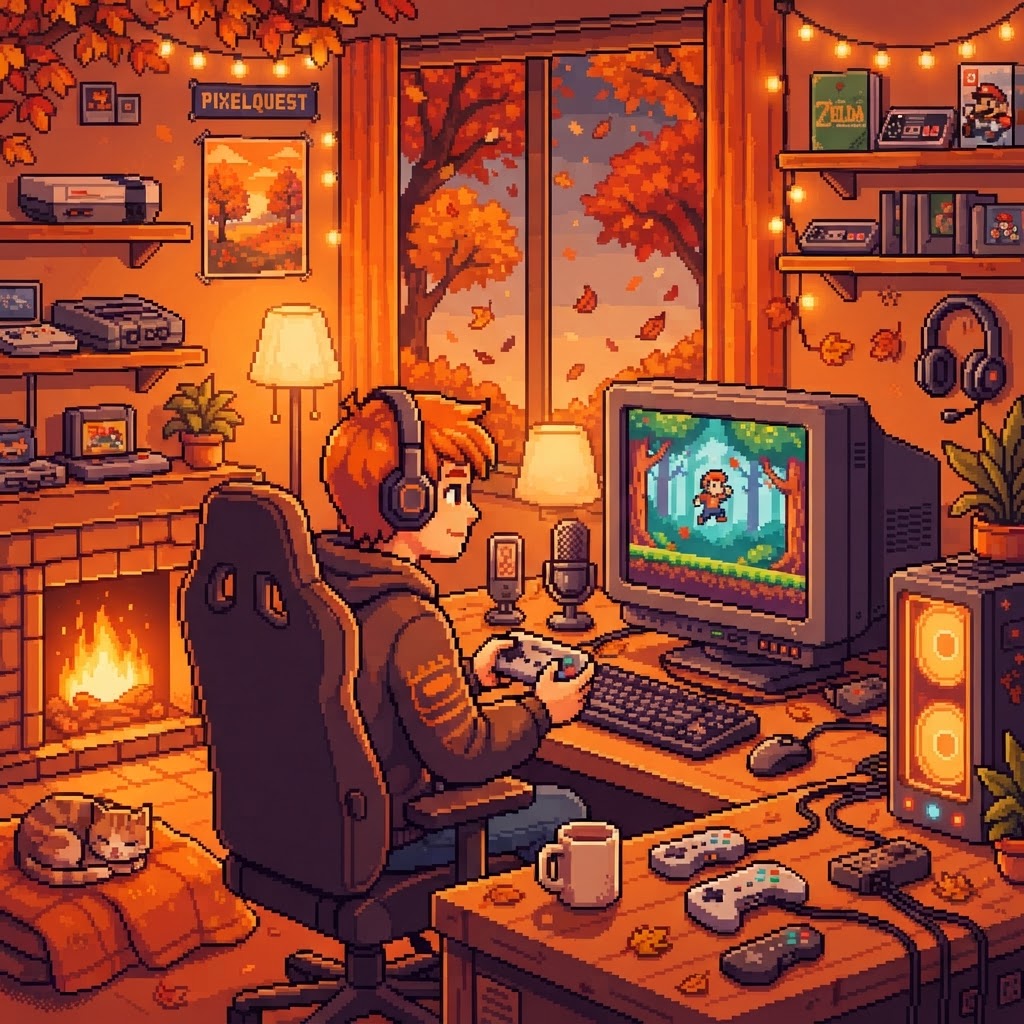
The Fall in Love with Gaming campaign, running from September through November 2026, is built for sponsors ready to make that shift. Its seasonal frame is useful because autumn already gives people reasons to gather: new releases, longer evenings, competitive seasons, Halloween streams, and the comfortable return of shared routines.
But the point is not to decorate a standard media plan with pumpkins and warm colors. The point is to participate in momentum.
Bring a product that can genuinely improve the experience. Give creators room to speak like themselves. Build activations that reward curiosity rather than interrupt it. Let the raid be a real handoff, not a scripted sequence of brand obligations. Measure the reach, certainly, but also examine the quality of the arrival: chat activity, returning viewers, community sentiment, participation, and the stories people repeat afterward.
A useful benchmark is not just “How many people saw us?” Try asking, “What did people do together because we were there?”
The invitation is deliberately uncomfortable
You do not need to abandon performance marketing. You do need to stop pretending that efficiency and intimacy are interchangeable.
Your next campaign can optimize impressions, or it can create a moment people voluntarily carry from one room to another. It can place your logo beside attention, or it can earn a role in a community ritual. It can report that viewers were exposed, or it can show that they stayed, responded, laughed, asked, shared, and came back.
The choice is not between professionalism and authenticity. The best raid campaigns demand both: serious planning behind the scenes, and enough trust to let the live experience breathe.
So, if your influencer program has delivered content but not closeness, try the handoff. Join the room while it is moving. Let your brand be useful, recognizable, and human in the same breath.
This fall, bring your team into a raid, listen before you script, and experience the difference between buying attention and being invited into it.
Ready to Join
the Raid?
Streamers earn points & rewards.
Brands get 3 months of real reach.